

Preventing suicide in nursing homes is possible. Here are 3 things we can do to make a start
- Written by: Briony Murphy, Research fellow, Monash University
Suicide among nursing home residents is a major concern. Between 2000 and 2013, around 140 Australian nursing home residents took their own lives.
This issue has been hidden for too long, and met with minimal efforts targeted at prevention.
We consulted with experts and stakeholders in aged care, geriatric medicine, old age psychiatry, suicide prevention and public policy to develop 11 recommendations for the prevention of suicide among nursing home residents.
Read more: Too many Australians living in nursing homes take their own lives
In our recently published study, we put forward three of these as the highest priorities for implementation: expanding suicide prevention frameworks to include aged care residents, aligning nursing home life with community living, and improving residents’ access to mental heath services.
The scope of the problem
Risk factors for suicide among nursing home residents include having diagnosed depression, declining physical health, and being within the first 12 months of residency. This suggests adjustment – to the onset of health problems or to life in a nursing home – can be problematic.
More than half of nursing home residents suffer symptoms of depression. This is compared to 10-15% of adults of the same age living in the community.
Notably, young people in nursing homes (64 years and younger) are three times more likely to take their own life than their counterparts aged 65 and over.
Although the reported number of suicides each year in nursing homes (around ten) is relatively small, deaths from suicide represent only the “tip of the iceberg” of self-harm and suicidal behaviour in nursing homes. Research has shown one in every seven residents exhibits self harming behaviours on a weekly basis, such as cutting, hitting, or eating foreign objects.
Read more: Reducing depression in nursing homes requires more than just antidepressants
Expanding suicide prevention frameworks
The first key recommendation is expanding existing state and national suicide prevention frameworks to include older adults and those living in institutional settings with targeted prevention strategies.
In practical terms, this would offer care providers clearer guidelines to recognise and address suicidal ideation and behaviour in nursing home residents, taking into account this group’s unique set of risk factors.
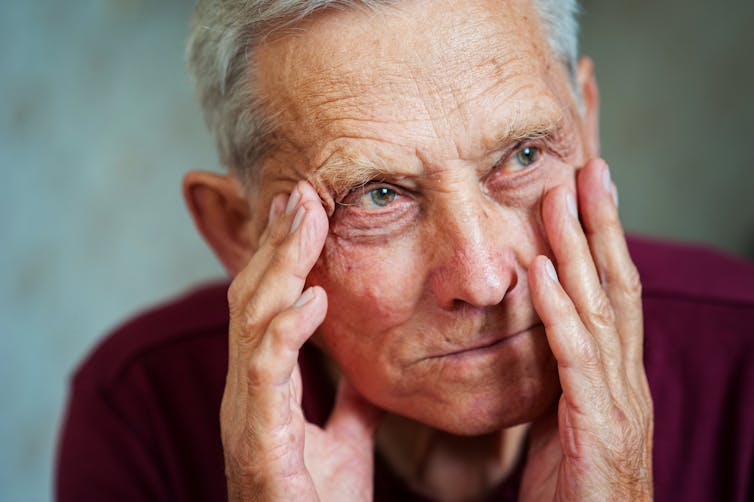 Older people living in nursing homes have a unique set of risk factors for mental health problems.
From shutterstock.com
Older people living in nursing homes have a unique set of risk factors for mental health problems.
From shutterstock.com
Making nursing homes less like institutions
The second recommendation is aligning nursing home life with community living to make nursing homes a place where most people would be happy to live.
This requires addressing the physical presence of the nursing home within our community. As one research participant commented:
[…] many care residences isolate residents from the community. Most residences are fortress-like, closed, inward-looking buildings with few public views to the outside.
Evidence points to better quality of life among residents of smaller cottage style or cluster communal residences, compared to standard Australian models of residential aged care.
We can also look to examples of innovative nursing home design outside of Australia.
Read more: How our residential aged-care system doesn't care about older people's emotional needs
Another aspect of this recommendation is addressing the atmosphere and organisational culture within the nursing home.
Organisational culture differs between facilities, but a common thread is staff being more task-oriented, or focused on ticking boxes, than person-centred in their care approach. This is due to time pressures and is notoriously difficult to change.
Improving the mood in nursing homes would involve emphasising person-centred care, and encouraging residents to be social and involved in the wider community.
Ultimately, we need to address negative community attitudes towards transitioning into a nursing home and challenge the prevailing societal view death is preferable to living in residential aged care.
Better access to mental health services
The third recommendation is improving residents’ access to mental health services, including allied health and medical specialists.
This will be essential to manage the high prevalence of depression, anxiety and other mental health issues, as well as to support residents with their progressive decline in health and independence.
We’ve already seen steps to change the Medicare system to ensure residents have access to medical and psychological treatments for mental health disorders, with additional funding announced in the 2018-19 federal budget.
Further steps might include routine mental health assessments alongside physical health check ups for all residents. This would see mental health issues identified early and treatment plans put in place.
 Encouraging social activities among residents can be part of aligning nursing home life with community living.
From shutterstock.com
Encouraging social activities among residents can be part of aligning nursing home life with community living.
From shutterstock.com
We also need to better recognise the traumatic impact of the nursing home environment, where more than one-quarter of residents die each year. One participant in our research noted:
The effect of a dying friend down the corridor is often put in the too hard basket.
Being more open about death and dying should prompt better support for residents, families and staff.
Read more: Aged care failures show how little we value older people – and those who care for them
Next steps
These recommendations provide the first substantive foundation for suicide prevention strategies in nursing homes in Australia. If no action is taken, older people, their families, staff and the community will continue to suffer.
The next step requires action from government, regulators, professional organisations and the aged care sector to support implementation and evaluation of these recommendations.
We don’t need to wait for the Royal Commission into Aged Care Quality and Safety to conclude before beginning this important work.
If this article has raised issues for you, or if you’re concerned about someone you know, call Lifeline on 13 11 14.
Authors: Briony Murphy, Research fellow, Monash University


















