

My home is in a district facing extreme or catastrophic fire danger. What should I do?
- Written by: Sarah McColl-Gausden, Research fellow, The University of Melbourne
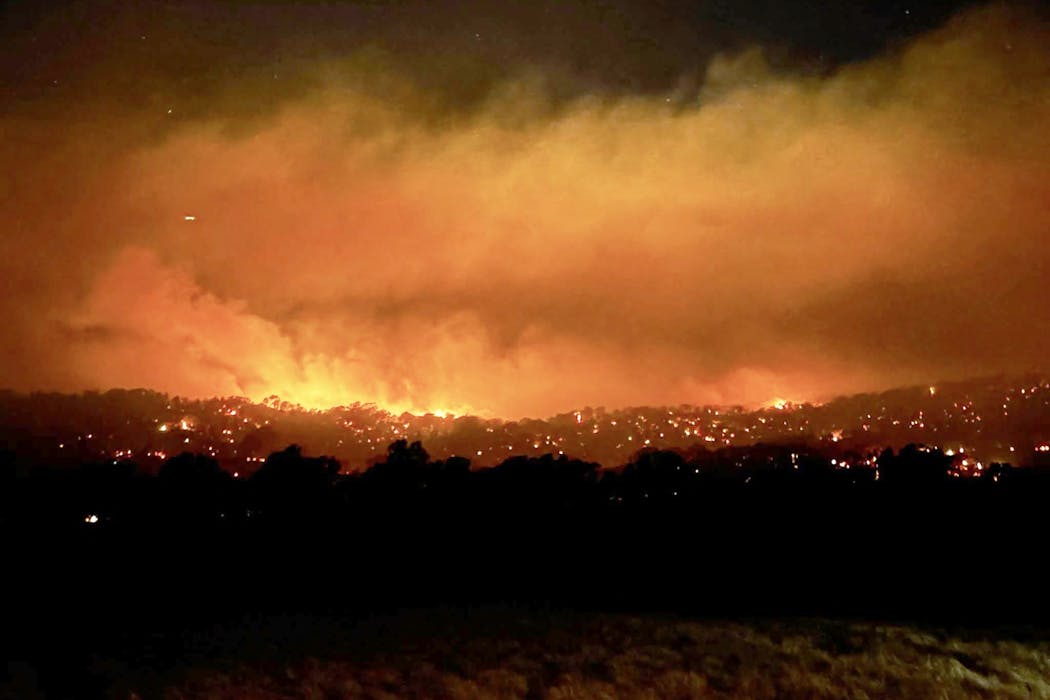
Across Australia there are a number of fire districts facing extreme or catastrophic fire danger ratings in this ongoing heatwave.
As of late Thursday in Victoria, the South-West, Wimmera, Northern Country and North Central districts have been assigned a catastrophic rating, while the rest of the state has been assigned an extreme rating. South Australia has nine districts with a forecast of extreme.
Australia’s fire danger ratings are designed to provide a clear, consistent warning system for communities.
There are four ratings that communicate to the public how dangerous a fire would be if one started, rather than how likely it is to occur. These ratings guide the actions that community members should take before and during a “bad” fire day.
Victoria fires in pictures
The warnings
A moderate warning suggests most fires can be controlled by fire agencies. You should “plan and prepare” by revisiting your bushfire plan, preparing your property and discussing evacuation plans.
A high warning means fires can become dangerous and there is a heightened risk to life and property. You should be “ready to act”, which includes being alert for fire in your area. Know what you will do if a fire does start and be prepared to act quickly. Pack an emergency kit in case you need to leave and alert emergency contacts.
An extreme warning means fires can spread quickly and are extremely dangerous. Fires under these conditions are unlikely to be suppressed. You should “take action now to protect life and property” by enacting your bushfire plan. This can include leaving bushfire danger areas early in the day.
And a catastrophic warning means fires are at their most dangerous. They will be uncontrollable and pose the greatest threat to human life. You should enact your bushfire plan and “leave bushfire risk areas early for your survival”, given homes cannot withstand fires under these conditions. For your survival, do not be in bushfire danger areas.
How are they decided?
Fire danger ratings are calculated by state and territory fire agencies. They consider factors such as:
- forecast weather data from the Bureau of Meteorology (BoM) such as temperature, relative humidity and wind speed
- vegetation fuel loads, including the amount of combustible materials, and
- short and long-term dryness conditions, such as grass curing and drought levels, respectively.
All of these factors can play a significant role in determining the type of fire behaviour that could occur if one breaks out.
Each state and territory is broken up into fire danger districts, and ratings are issued for each district. Ratings are available up to three days in advance, allowing the public to see upcoming conditions and prepare early.
You may need to act the day before a bad bushfire day, so it is wise to check upcoming fire danger ratings. With many people travelling at this time of year, it is also important to check each district you will visit or pass through.
Here’s where you can check current fire danger ratings for each state and territory:
Forecasts for each state and district are also available on the BoM website.
What to do next
If your area has been given a fire danger rating, examine your bushfire plan. Ideally your plan is in place before the bushfire season and includes considerations such as:
- Which Fire Danger Rating is your trigger to leave?
- Where will you go?
- What route will you take – and what is your alternative in the event that a fire is already in the area?
- What do you need to organise for pets or livestock?
- How will you stay informed about warnings and updates?
- What will you do if there is a fire in the area and you cannot leave?
Ensure your property is prepared and you understand your plan. Follow any actions given by authorities and the fire ratings. Leaving early is always the safest option.
If a fire does start in your area, the relevant fire agency will issue a further alert to describe the situation. There are three alert levels.
- Advice: A fire has started. There is no immediate danger. Stay up to date in case the situation changes.
- Watch and Act: There is a heightened level of threat. Conditions are changing and you need to start taking action now to protect yourself and your family.
- Emergency Warnings: An emergency warning is the highest level of bushfire alert. You may be in danger and need to take action immediately. Any delay puts your life at risk.
However, do not wait for an alert to be issued to take action. Fires can escalate quickly so there may not be any warning. These alert levels can also change rapidly, particularly under extreme and catastrophic fire danger conditions.
Stay informed through your local ABC radio station as the official emergency broadcaster, and through your state-based emergency app for notifications about fires and warning levels. In Victoria, for example, this is VicEmergency and in South Australia it is Alert SA.
A dangerous day ahead
Total fire bans will be in place on Friday across Victoria and for the nine South Australian districts with the extreme fire danger rating. This means no fires can be lit in the open air while the ban is in place, and heavy penalties apply.
Key things to do
- Examine your bushfire plan.
- Reconsider your plans. Any non-essential travel or activity in areas currently affected by fire, or with catastrophic ratings should be carefully considered and cancelled if possible.
- Complete final preparations for your property. If you are not prepared, plan to leave early. Under catastrophic conditions, help may not be available. The recommendation is to leave early, which may mean leaving the day before a high-risk day. Do not wait for a fire to start in your area.
- Download the relevant state-based emergency app for notifications about fires and warning levels.
Know your fire danger rating, be prepared, stay informed, and act early to ensure your safety.
Authors: Sarah McColl-Gausden, Research fellow, The University of Melbourne


















