

NZ is again being soaked this summer – record ocean heat helps explain it
- Written by Kevin Trenberth, Distinguished Scholar, NCAR; Affiliate Faculty, University of Auckland, Waipapa Taumata Rau
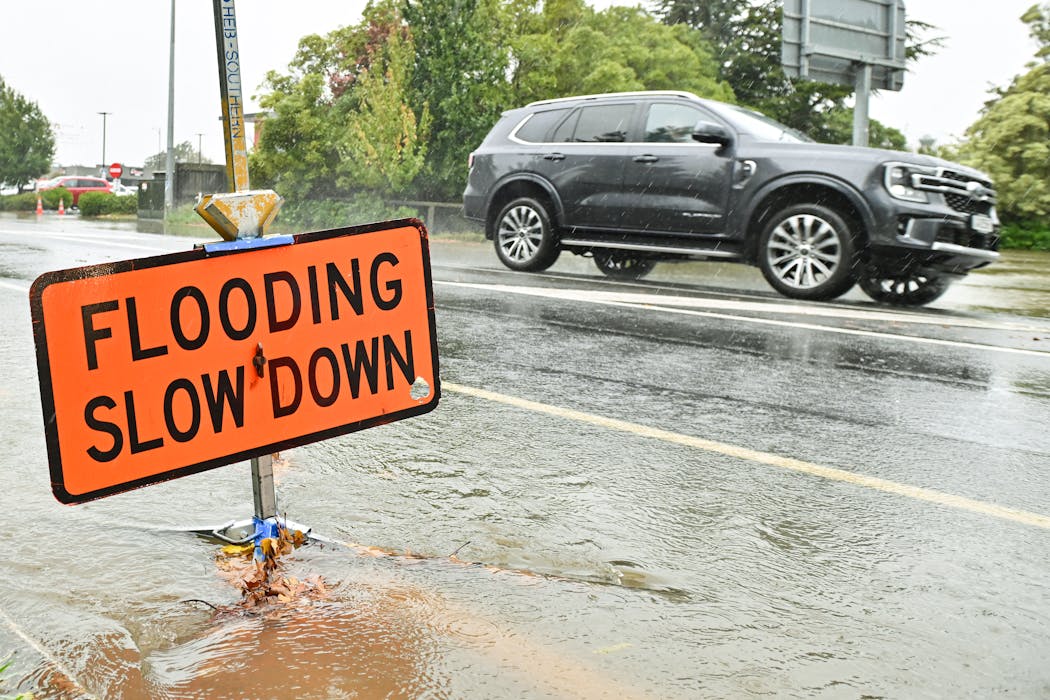
For many people this summer – especially those across Northland Auckland and Coromandel – showery days and bursts of heavy rain have become all too familiar.
This week, fresh downpours on already saturated ground have again triggered flood warnings and road closures across the upper North Island. These are individual weather events, but they are unfolding against unusually warm seas that load the atmosphere with extra moisture and energy.
Understanding ocean heat – and how it shapes rainfall, storms and marine heatwaves – is central to explaining what we experience on land.
Looking beyond the surface
For decades, scientists have recognised sea surface temperatures as a key influence on weather and climate. Warmer surfaces mean more evaporation, altered winds and shifting storm tracks.
But surface temperatures are only the skin of a deeper system. What ultimately governs how those sea surface temperatures persist and evolve is the ocean heat content stored through the upper layers of the ocean.
A clearer global picture of that deeper heat began to emerge in the early 2000s with the deployment of profiling floats measuring temperature and salinity down to 2,000 metres worldwide.
Those observations made it possible to extend ocean analyses back to 1958; before then, measurements were too sparse to provide a global view.
While sea surface temperatures remain vital for day-to-day weather, ocean heat content provides the foundation for understanding climate variability and change. It determines how long warm surface conditions last and how they interact with the atmosphere above.
Recent analysis by an international team, in which I was involved, show ocean heat content in 2025 reached record levels, rising about 23 zettajoules above that of 2024’s. That increase is equivalent to more than 200 times the world’s annual electricity use, or the energy to heat 28 billion Olympic pools from 20C to 100C.
Ocean heat content represents the vertically integrated heat of the oceans, and because other forms of ocean energy are small, it makes up the main energy reservoir of the sea.
The ocean’s huge heat capacity and mobility mean it has become the primary sink for excess heat from rising greenhouse gases. More than 90% of Earth’s energy imbalance now ends up in the ocean.
For that reason, ocean heat content is the single best indicator of global warming, closely followed by global sea-level rise.
This is not a passive process. Heat entering the ocean raises sea surface temperatures, which in turn influence exchanges of heat and moisture with the atmosphere and change weather systems. Because the ocean is stably stratified, mixing heat downward takes time.
Warming of the top 500 metres was evident globally in the late 1970s; heat in the 500–1,000 metre layer became clear in the early 1990s, the 1,000–1,500 metre layer in the late 1990s, and the 1,500–2,000 metre layer around 2004. Globally, it takes about 25 years for surface heat to penetrate to 2,000 metres.
Ocean heat content does not occur uniformly everywhere. Marine heatwaves develop, evolve and move around, contributing to impacts on local weather and marine ecosystems. Heat is moved via evaporation, condensation, rainfall and runoff.
As records are broken year after year, the need to observe and assess ocean heat content has become urgent.
What happens in the ocean, matters on land
It is not just record high OHC and rising sea level that matter, but the rapidly increasing extremes of weather and climate they bring.
Extra heat over land increases drying and the risk of drought and wildfires, while greater evaporation loads the atmosphere with more water vapour. That moisture is caught up in weather systems, leading to stronger storms – especially tropical cyclones and atmospheric rivers, such as one that has soaked New Zealand in recent days.
The same ocean warmth that fuels these storms also creates marine heatwaves at the surface.
In the ocean surrounding New Zealand and beyond, these marine heatwaves are typically influenced by the El Niño–Southern Oscillation. This Pacific climate cycle alternates between El Niño, La Niña and “neutral” phases, strongly shaping New Zealand’s winds, temperatures and rainfall from year to year.
During 2025, a weak La Niña, combined with record high sea surface temperatures around and east of New Zealand, has helped sustain the recent unsettled pattern. Such warm seas make atmospheric rivers and moisture-laden systems more likely to reach Aotearoa, as seen in early 2023 with the Auckland Anniversary Weekend floods and Cyclone Gabrielle.
For these reasons, continued observations – gathering, processing and quality control – are essential, tested against physical constraints of mass, energy, water and sea level.
Looking further ahead, the oceans matter not only for heat but also for water. Typically, about 40% of sea-level rise comes from the expansion of warming seawater; most of the rest is from melting glaciers and the Greenland and Antarctic ice sheets.
Sea levels are also influenced by where rain falls. During El Niño, more rain tends to fall over the Pacific Ocean, often accompanied by dry spells or drought on land. During La Niña, more rain falls on land – as seen across parts of Southeast Asia in 2025 – and water stored temporarily in lakes and soils can slightly reduce the amount returning to the ocean.
A striking example occurred in Australia in 2025, when heavy rains from May through to late in the year refilled Lake Eyre, transforming the desert saltpan into a vast inland sea. Such episodes temporarily take water out of the oceans and dampen sea-level rise.
Monitoring sea-level rise through satellite altimetry is therefore an essential complement to tracking ocean heat content. Tracking both heat and water is crucial to understanding variability and long-term trends.
Authors: Kevin Trenberth, Distinguished Scholar, NCAR; Affiliate Faculty, University of Auckland, Waipapa Taumata Rau

















