

Curious Kids: why don't burns bleed?
- Written by: Theresa Larkin, Lecturer Medical Sciences, University of Wollongong
Why don’t burns bleed? – from the year three and four students at Islington Public School in NSW

Hello year three and four students – thanks for your excellent question!
To understand burns, we need to understand some things about the skin. Did you know your skin is made up of three different layers?
You might have heard of burns being called first-degree, second-degree or third-degree burns.
This tells us how many layers of skin are affected and how deep the burn is.
First-degree burns
A first-degree burn affects just the outer layer of the skin, which is called the epidermis.
The epidermis protects the inside of our body, including our muscles, bones and organs.
It stops the sun’s harmful rays, sharp objects and water from getting through and damaging the inside of our body.
Read more: Curious Kids: how do wounds heal?
Could you imagine if we didn’t have a waterproof outer layer? You would fill with water and burst the next time you hopped in the bath!
When we have a first-degree burn, this affects just the outer layer of skin.
A first-degree burn, such as sunburn, is red, warm and painful to touch because the cells have been damaged.
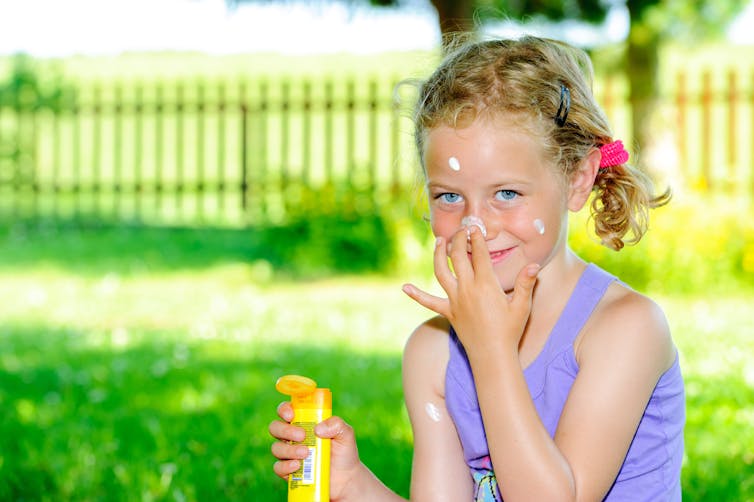 Our skin protects us from the sun’s harmful rays, but don’t forget the sunscreen so you don’t get burnt!
Shutterstock
Our skin protects us from the sun’s harmful rays, but don’t forget the sunscreen so you don’t get burnt!
Shutterstock
So why doesn’t a first-degree burn bleed? Because there actually isn’t any blood travelling in the epidermis.
The blood vessels, which carry blood around our body, are in the next layer down.
This second layer is called the dermis.
Second-degree burns
A second-degree burn affects the outer two layers of the skin: that is the epidermis and the dermis.
The dermis has blood vessels that carry our blood around our body.
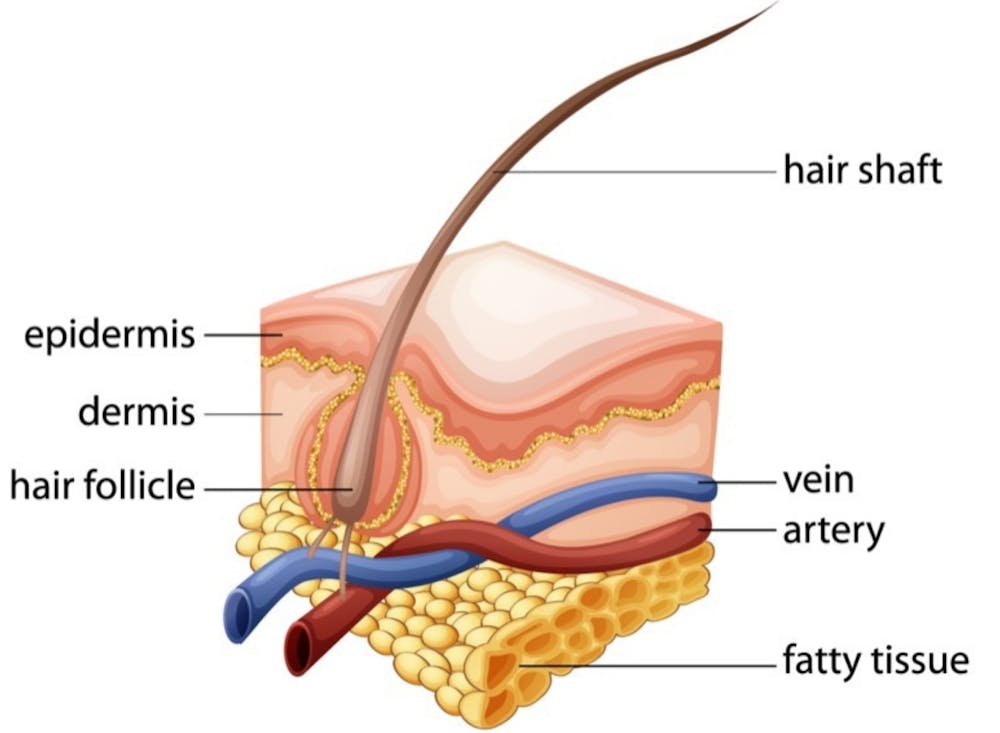 The ‘epidermis’ is the top layer of the skin. The ‘dermis’ is the second layer.
Shutterstock
The ‘epidermis’ is the top layer of the skin. The ‘dermis’ is the second layer.
Shutterstock
Now, you might think that because of the blood vessels in the dermis, a second-degree burn would bleed.
If you cut yourself into the dermis, say, with a deep paper cut, it might bleed.
The difference with a burn is the heat actually stops the blood from flowing.
A small bit of blood may ooze out at first, but it won’t actually bleed much.
Read more: I've always wondered: why do our veins look blue when our blood is red?
The dermis also has nerves that make us feel pain if they’re damaged.
A second-degree burn is the most painful burn because it damages the nerves of the skin.
Third degree burns
The third and deepest layer of our skin is called the hypodermis. This is mostly fat, but there are also blood vessels and nerves in this layer.
The veins that you can see on the back of people’s hands are in the hypodermis layer of the skin.
A third-degree burn affects all three layers of skin. This is very deep and will need medical treatment.
Read more: Curious Kids: why do we get bruises?
A third-degree burn doesn’t just damage cells like first-degree and second-degree burns, it actually kills them. The redness of sunburn, and even blisters, will gradually get better and return to normal. But dead cells cannot repair.
A third-degree burn also doesn’t bleed because it completely destroys the blood vessels and the heat stops the blood from flowing.
Even though a third-degree burn causes the most damage, it is actually not painful at that location because it has completely killed the nerves.
Think of a jacket
Our skin is like our own three-layered waterproof, padded jacket.
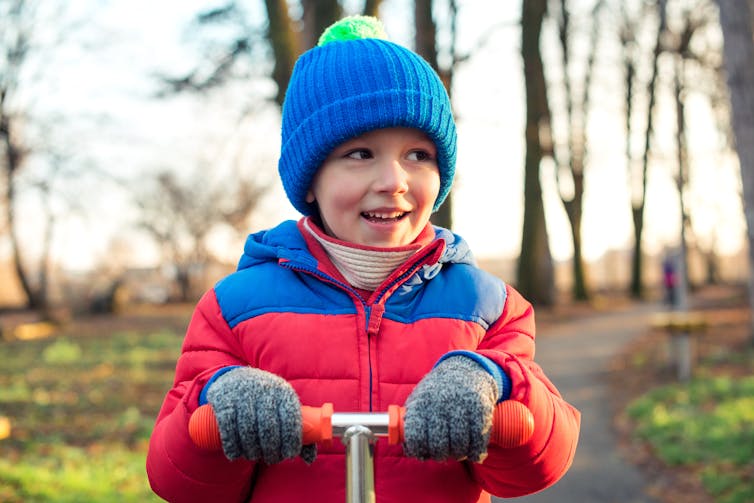 Your skin is like a jacket with three layers.
Shutterstock
Your skin is like a jacket with three layers.
Shutterstock
The outer layer (epidermis) is thin and protects against water.
The middle layer (dermis) is the material and threading holding the jacket together.
The deepest layer (hypodermis) is thick and padded to keep us warm just like our fat.
Hello, curious kids! Have you got a question you’d like an expert to answer? Ask an adult to send your question to curiouskids@theconversation.edu.au
Authors: Theresa Larkin, Lecturer Medical Sciences, University of Wollongong
Read more https://theconversation.com/curious-kids-why-dont-burns-bleed-130792


















