

a leading health expert on New Zealand's coronavirus shutdown, and the challenging weeks ahead
- Written by: Michael Baker, Professor of Public Health, University of Otago
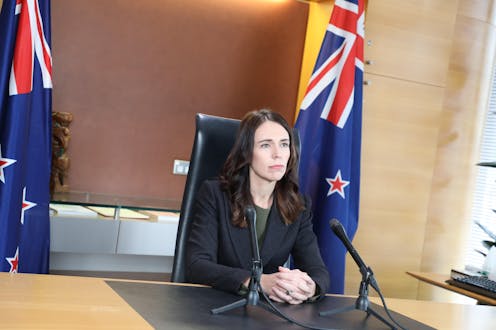
Overjoyed. That’s not a word epidemiologists normally use, but that’s how I felt after hearing Prime Minister Jacinda Ardern’s announcement about New Zealand’s COVID-19 shutdown of everything except essential services for at least four weeks from midnight on Wednesday. More than anything, I just felt a huge sense of relief.
That New Zealand would have to take this step has become more and more apparent with every passing day. Having looked at the COVID-19 exponential trajectory that we were on in New Zealand, there really was no sensible alternative but to do this.
As the prime minister said in her address to the nation, while New Zealand had 102 COVID-19 cases at the time of making the announcement, those numbers will rise further. She referred to the risk of “tens of thousands” of New Zealanders potentially dying in a worst case scenario.
This shutdown is crucial in changing the course of the pandemic in New Zealand. The restrictions on people’s work, schooling and movements will be in place for a minimum of four weeks, with controls potentially lifted region by region once it becomes clear that the shutdown has worked.
NZ’s shutdown might last beyond four weeks
The New Zealand government announcement stated that all but essential services will close over the next 48 hours, with New Zealanders asked to stay home, after it appeared the community spread of coronavirus within New Zealand had begun – as my colleague Professor Nick Wilson and I feared it would.
New Zealand’s COVID-19 cases are on an exponential climb now – so it could be more than two weeks before we start to see the number of new cases level off and hopefully decline. These delays are inevitable. Level 4 starts in 3 days. It will take time for people to adjust their behaviour so we are all keeping our distance (at least 2 metres when out for a walk or for a trip to buy essentials). We then need to add in the incubation period as people being infected now and over the next few days will not become cases for 5-6 days after that.
I think four weeks will be the minimum shutdown period. More likely it will need to be longer, depending on the level of COVID-19 infection in the community.
The challenge ahead: expats returning from hotspots and more testing
Even after a complete shutdown for 4 weeks it’s still likely there will be some new cases. You might see some chains of transmission that affect a few generations of the same family, if they’re a big family or in close proximity – even among people following the rules.
Obviously in the weeks ahead, New Zealand has to keep working on its border controls. We’ve got a lot of expats coming back, many of them returning from places with coronavirus epidemics. That will be a wave of potential cases we’ll need to manage well.
If those people returning to New Zealand follow the rules and quarantine themselves at home properly, they should not infect other people (if they themselves are infected). But controlling this source will be crucial. It may be necessary to consider more supervised quarantine arrangements
In the meantime, we’ve got to use this four-week window to really ramp up our testing, contact tracing and quarantine systems.
Why treating COVID-19 like an influenza pandemic was proving dangerous
COVID-19 is not influenza. All of our pandemic planning was based on treating this disease as if it was influenza, but this is a different virus. An eradication strategy for COVID-19 is a profoundly different approach to what we’d normally do with influenza – and our chances of success are so much better now that we’ve switched to this approach.
With a standard mitigation strategy, which is what usually applies with influenza pandemics, your response ramps up as the cases ramp up to ‘flatten the curve’.
But with eradication, you go full out at the start, and you eliminate the chains of transmission. In islands like Australia or New Zealand, it makes much more sense – but you have to turn the previous pandemic control approach on its head.
It felt extremely lonely for a while for my colleague Professor Nick Wilson and me, as we started to advocate for a different strategy.
Fortunately, Government leaders listened. And then all of a sudden, in just the past few days, the professional and public debate suddenly switched. Everyone I know, and every doctor in particular, was contacting me advocating a ‘lockdown’ of the whole country immediately. It’s been such a massive shift in thinking in a very short time.
There is a huge upside to the eradication approach. As Nick Wilson and I wrote in The Conversation last week:
Doing this now has the potential to slow undetected chains of transmission while containment measures are being ramped up. If containment is sustained, there may be the chance of avoiding the prolonged lockdowns seen in many countries.
The large health advantages of an eradication strategy, compared with a mitigation approach, have been described in another recent Conversation article.
- Stay in touch with The Conversation’s coverage from New Zealand experts by signing up for our weekly newsletter – delivered to you each Wednesday.
Authors: Michael Baker, Professor of Public Health, University of Otago


















