

Homelessness and overcrowding expose us all to coronavirus. Here's what we can do to stop the spread
- Written by: Nicole Gurran, Professor of Urban and Regional Planning, University of Sydney
Staying home and social distancing are now essential to control the spread of COVID-19. Suitable accommodation for quarantine and isolation are critical, but Australia’s broken housing system leaves us all exposed.
By now, almost every Australian will have thought about the coronavirus pandemic in terms of their own housing. For many home owners, this is an economic concern. They are dangerously in debt after a 20-year housing boom. Renters face greater uncertainty.
Read more: Why housing evictions must be suspended to defend us against coronavirus
But it’s people in overcrowded, informal or no housing at all who are most exposed. Crowded housing conditions are bad for all occupants, largely through the increased risks of infections, as WHO Guidelines on Health and Housing clearly identify.
Expose one, expose us all
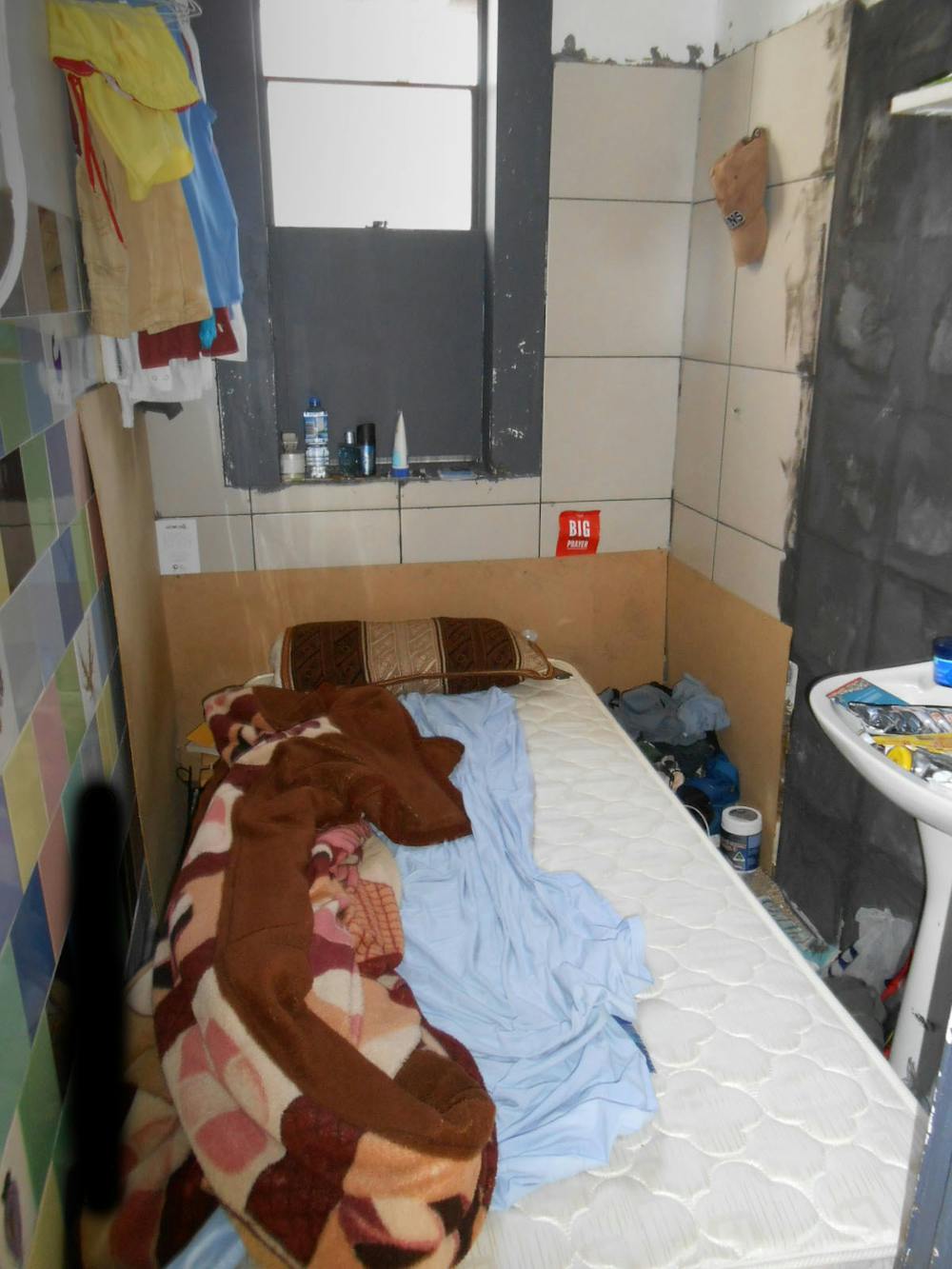 Leaving people to live in crowded and inadequate housing increases the risks for the whole community.
City of Sydney/AAP
Leaving people to live in crowded and inadequate housing increases the risks for the whole community.
City of Sydney/AAP
The increased risk of COVID-19 infection will have impacts on both the residents of crammed dwellings and the rest of the community. Improving the housing conditions of the most marginalised members of our society is an important biosecurity measure.
The number of Australians who are homeless grew dramatically from 2011-2016. The largest increase was people living in severely overcrowded dwellings.
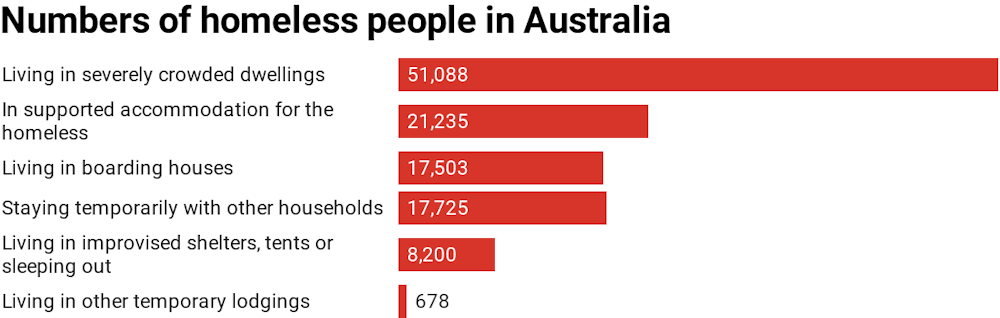 Data: ABS Census 2016, CC BY
This trend includes a sharp rise in older people living in crowded or marginal housing.
Data: ABS Census 2016, CC BY
This trend includes a sharp rise in older people living in crowded or marginal housing.
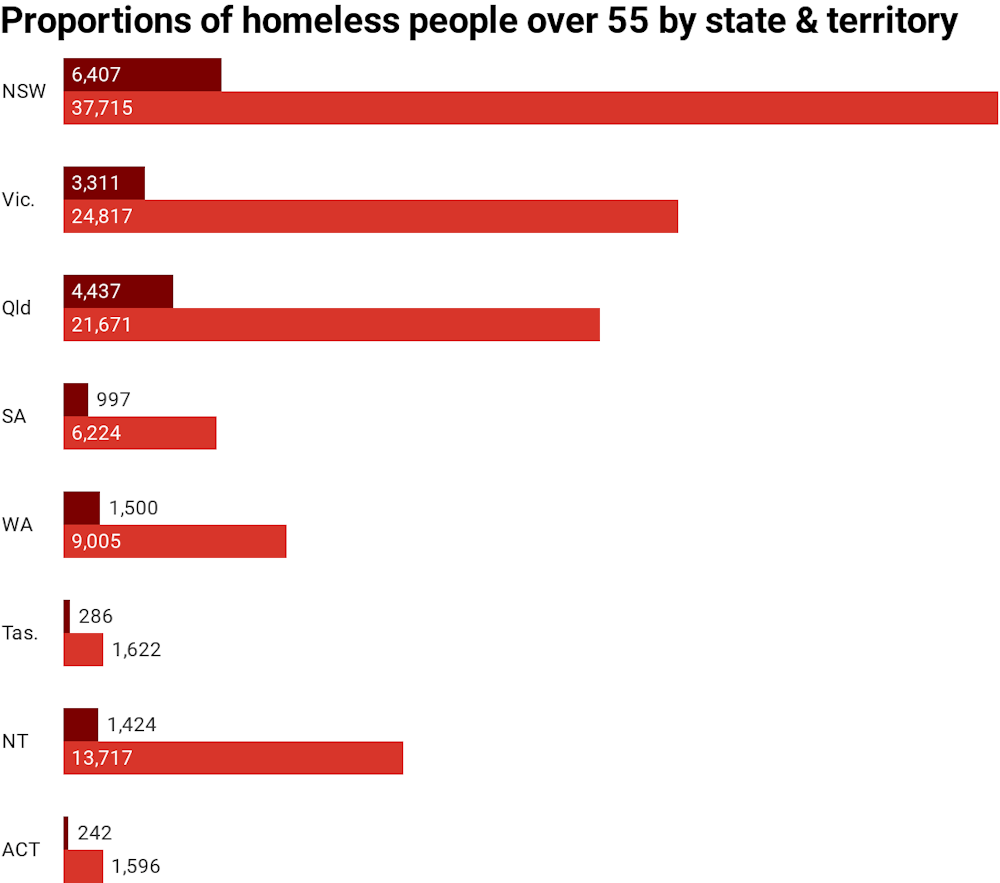 Data: ABS Census 2016, CC BY
Read more:
Informal and illegal housing on the rise as our cities fail to offer affordable places to live
Crowding is endemic in Indigenous communities. Poorly maintained and inadequate dwelling conditions make the impacts of crowding worse.
Previous experience with swine flu – Influenza A (H1N1) – indicates contagious disease outbreaks in Indigenous communities will be catastrophic. After over a decade of making remote areas harder places to be – as a result of cuts to housing and infrastructure allocations and increased water insecurity – they are now expected to operate as refuges.
Tertiary students, including international students, are also likely to be living in overcrowded share houses and room-share rentals. These arrangements already breach basic health and sanitation standards.
Read more:
Tracking the rise of room sharing and overcrowding, and what it means for housing in Australia
These problems aren’t due to a shortage of housing. Census data show the number of unoccupied dwellings increased during the same period that homelessness grew.
Data: ABS Census 2016, CC BY
Read more:
Informal and illegal housing on the rise as our cities fail to offer affordable places to live
Crowding is endemic in Indigenous communities. Poorly maintained and inadequate dwelling conditions make the impacts of crowding worse.
Previous experience with swine flu – Influenza A (H1N1) – indicates contagious disease outbreaks in Indigenous communities will be catastrophic. After over a decade of making remote areas harder places to be – as a result of cuts to housing and infrastructure allocations and increased water insecurity – they are now expected to operate as refuges.
Tertiary students, including international students, are also likely to be living in overcrowded share houses and room-share rentals. These arrangements already breach basic health and sanitation standards.
Read more:
Tracking the rise of room sharing and overcrowding, and what it means for housing in Australia
These problems aren’t due to a shortage of housing. Census data show the number of unoccupied dwellings increased during the same period that homelessness grew.
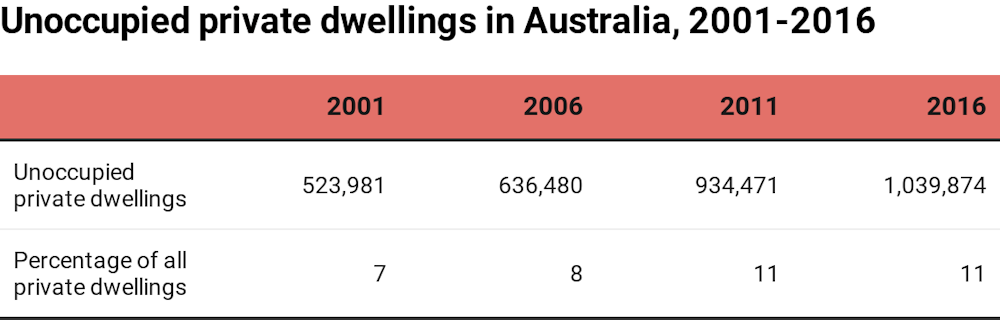 Data: ABS Census, CC BY
Rather than an absolute shortage of homes, our increasingly financialised property market has distorted access to decent accommodation. Housing is now treated as an asset instead of a basic right. In recent years platforms such as Airbnb have made this situation worse by transforming permanent rentals into short-term accommodation for tourists.
What should governments do?
Moves to prevent evictions and to offer mortgage relief during the pandemic period are an urgent first step in what needs to be rapid national action on housing.
Securing adequate housing for those in unstable accommodation, particularly those who need to isolate, is the next phase in this public health response. Suitable housing must be made available immediately in locations near hospitals and key health services. This can be triaged.
Options might include:
local hotels or motels – for people in metropolitan and some regional centres this seems to be an obvious option as many are likely empty of travellers
vacant holiday homes or temporary workforce housing
other health accommodation used for rehabilitation that can be repurposed
construction of temporary dwellings.
Hotels close to major teaching (university) hospitals could be commandeered for patients with COVID-19 who need quarantined nursing care, but not intubation to help them breathe.
These hotels could also provide places of rest for health workers who might wish to isolate themselves from their families while they fight in our favour. For example, the University of Tasmania has provided one of its hotel buildings, which has been used for student housing, to the Tasmanian government for this purpose.
Access to hotels and motels for civilian isolation practices more broadly is an obvious solution across urban areas and regional centres.
To reduce the risks arising from inadequate housing, the nation’s vast holiday rental supply should also be considered for people on priority waiting lists for social housing who are in crowded accommodation. Owners of currently empty holiday accommodation could receive the equivalent of rent assistance payments from the Commonwealth for making their housing available.
Read more:
Australia needs to triple its social housing by 2036. This is the best way to do it
A vast tourism workforce of property managers, maintenance and cleaning staff, already reeling from the bushfire crisis, is likely ready and able to repurpose residential tourist accommodation for those in need.
On the other side of the health crisis, it’s clear a rapid, nation-building expansion in social and affordable housing must be part of Australia’s plan. Well-designed, secure and maintained housing should be Australia’s first defence, not our weakest link, in combating health, climate and economic crises.
Read more:
Australia's housing system needs a big shake-up: here's how we can crack this
Data: ABS Census, CC BY
Rather than an absolute shortage of homes, our increasingly financialised property market has distorted access to decent accommodation. Housing is now treated as an asset instead of a basic right. In recent years platforms such as Airbnb have made this situation worse by transforming permanent rentals into short-term accommodation for tourists.
What should governments do?
Moves to prevent evictions and to offer mortgage relief during the pandemic period are an urgent first step in what needs to be rapid national action on housing.
Securing adequate housing for those in unstable accommodation, particularly those who need to isolate, is the next phase in this public health response. Suitable housing must be made available immediately in locations near hospitals and key health services. This can be triaged.
Options might include:
local hotels or motels – for people in metropolitan and some regional centres this seems to be an obvious option as many are likely empty of travellers
vacant holiday homes or temporary workforce housing
other health accommodation used for rehabilitation that can be repurposed
construction of temporary dwellings.
Hotels close to major teaching (university) hospitals could be commandeered for patients with COVID-19 who need quarantined nursing care, but not intubation to help them breathe.
These hotels could also provide places of rest for health workers who might wish to isolate themselves from their families while they fight in our favour. For example, the University of Tasmania has provided one of its hotel buildings, which has been used for student housing, to the Tasmanian government for this purpose.
Access to hotels and motels for civilian isolation practices more broadly is an obvious solution across urban areas and regional centres.
To reduce the risks arising from inadequate housing, the nation’s vast holiday rental supply should also be considered for people on priority waiting lists for social housing who are in crowded accommodation. Owners of currently empty holiday accommodation could receive the equivalent of rent assistance payments from the Commonwealth for making their housing available.
Read more:
Australia needs to triple its social housing by 2036. This is the best way to do it
A vast tourism workforce of property managers, maintenance and cleaning staff, already reeling from the bushfire crisis, is likely ready and able to repurpose residential tourist accommodation for those in need.
On the other side of the health crisis, it’s clear a rapid, nation-building expansion in social and affordable housing must be part of Australia’s plan. Well-designed, secure and maintained housing should be Australia’s first defence, not our weakest link, in combating health, climate and economic crises.
Read more:
Australia's housing system needs a big shake-up: here's how we can crack this
Authors: Nicole Gurran, Professor of Urban and Regional Planning, University of Sydney


















