

I travelled Australia looking for peacock spiders, and collected 7 new species (and named one after the starry night sky)
- Written by Joseph Schubert, Entomology/Arachnology Registration Officer, Museums Victoria
After I found my first peacock spider in the wild in 2016, I was hooked. Three years later, I was travelling across Australia on a month-long expedition to document and name new species of peacock spiders.
Peacock spiders are a unique group of tiny, colourful, dancing spiders native to Australia. They’re roughly between 2.5 and 6 millimetres, depending on the species. Adult male peacock spiders are usually colourful, while female and juvenile peacock spiders are usually dull brown or grey.
Read more: The spectacular peacock spider dance and its strange evolutionary roots
Like peacocks, the mature male peacock spiders display their vibrant colours in elegant courtship displays to impress females. They often elevate and wave their third pair of legs and lift their brilliantly coloured abdomens – like dancing.
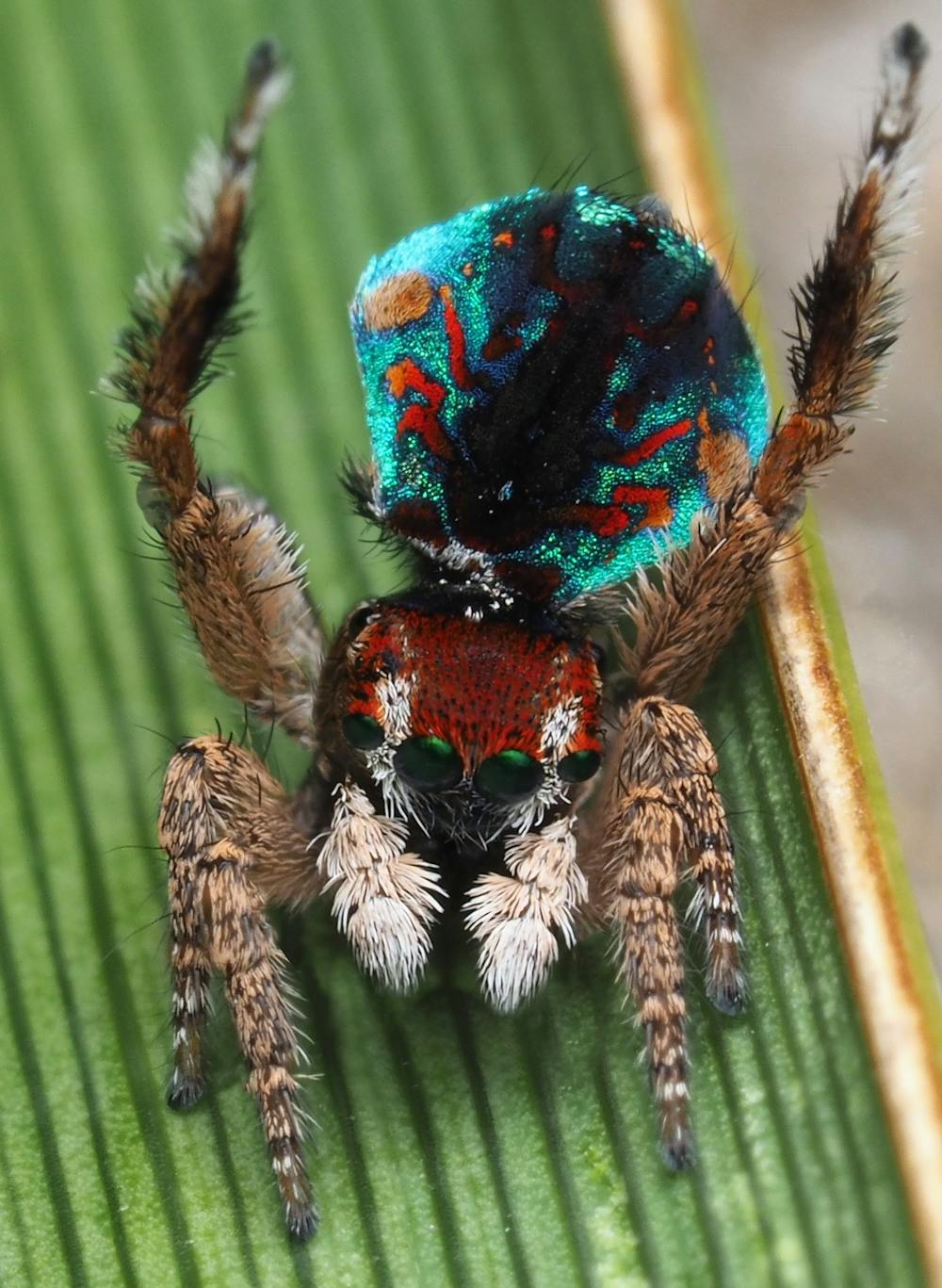 Maratus laurenae. Male peacock spiders have brilliant colours on their abdomen to attract females.
Author provided
Maratus laurenae. Male peacock spiders have brilliant colours on their abdomen to attract females.
Author provided
Up until 2011, there were only seven known species of them. But since then, the rate of scientific discovery has skyrocketed with upwards of 80 species being discovered in the last decade.
Thanks to my trip across Australia and the help from citizen scientists, I’ve recently scientifically described and named seven more species from Western Australia, South Australia and Victoria. This brings the total number of peacock spider species known to science up to 86.
Spider hunting: a game of luck
Citizen scientists – other peacock spider enthusiasts – shared photographs and locations of potentially undocumented species with me. I pulled these together to create a list of places in Australia to visit.
I usually find spider hunting to be a relaxing pastime, but this trip was incredibly stressful (albeit amazing).
The thing about peacock spiders is they’re mainly active during spring, which is when they breed. Colourful adult males are difficult – if not impossible – to find at other times of year, as they usually die shortly after the mating season. This meant I had a very short window to find what I needed to, or I had to wait another year.
Classic.Even when they’re active, they can be difficult to come across unless weather conditions are ideal. Not too cold. Not too rainy. Not too hot. Not too sunny. Not too shady. Not too windy. As you can imagine, it’s largely a game of luck.
The wild west
I arrived in Perth, picked up my hire car and bought a foam mattress that fitted in the back of my car – my bed for half of the trip. I stocked up on tinned food, bread and water, and I headed north in search of these tiny eight-legged gems.
My first destination: Jurien Bay. I spent the whole day under the hot sun searching for a peculiar, scientifically unknown species that Western Australian photographer Su RamMohan had sent me photographs of. I was in the exact spot it had been photographed, but I just couldn’t find it!
 I travelled across Denmark, Western Australia.
Author provided
I travelled across Denmark, Western Australia.
Author provided
The sun began to lower and I was using up precious time. I made what I now believe was the right decision and abandoned the Jurien Bay species for another time.
I spent days travelling between dramatic coastal landscapes, the rugged inland outback, and old, mysterious woodlands.
 Kalbarri Gorge, Western Australia, where Maratus constellatus was found.
Author provided
Kalbarri Gorge, Western Australia, where Maratus constellatus was found.
Author provided
I hunted tirelessly with my eyes fixed on the ground searching for movement. In a massive change of luck from the beginning of my trip, it seemed conditions were (mostly) on my side.
With the much-appreciated help of some of my field companions from the University of Hamburg and volunteers from the public, a total of five new species were discovered and scientifically named from Western Australia.
The Little Desert
Two days after returning from Western Australia, I headed to the Little Desert National Park in Victoria on a Bush Blitz expedition, joined by several of my colleagues from Museums Victoria.
I’d thought the landscape’s harsh, dry conditions were unsuitable for peacock spiders, as most described species are known to live in temperate regions.
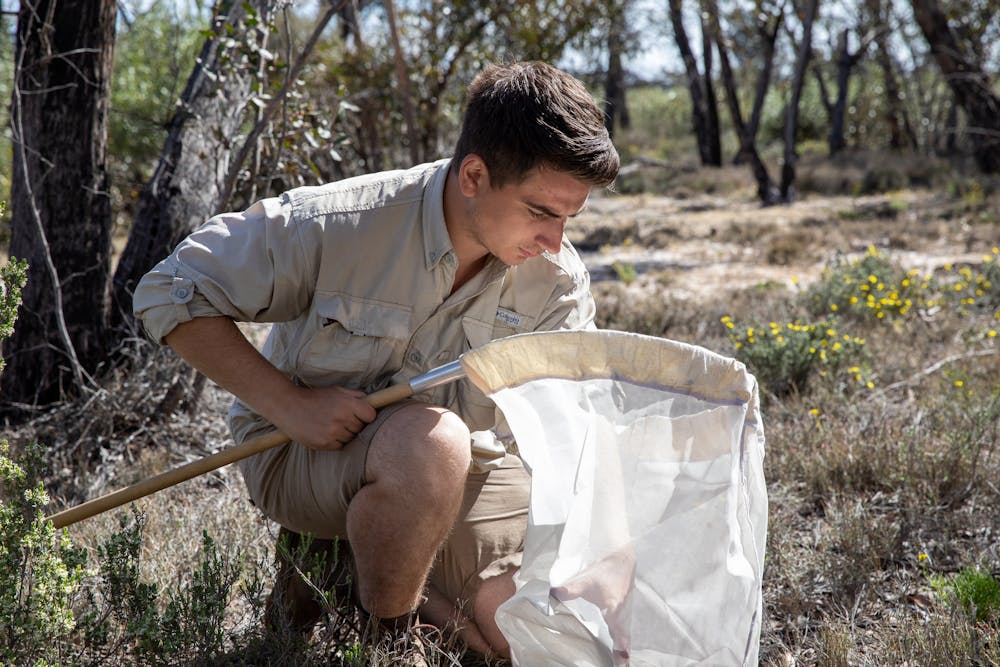 Capturing spiders in a bug net.
Heath Warwick, Author provided
Capturing spiders in a bug net.
Heath Warwick, Author provided
To my surprise, we found a massive diversity of them, including two species with a bigger range than we thought, and the discovery of another species unknown to science.
This is the first time two known species – Maratus robinsoni and Maratus vultus – had been found in Victoria. Previously, they had only been known to live in eastern New South Wales and southern Western Australia respectively.
Read more: Don't like spiders? Here are 10 reasons to change your mind
Our findings suggest other known species may have much bigger geographic ranges than we previously thought, and may occur in a much larger variety of habitats.
And our discovery of the unknown species (Maratus inaquosus), along with another collected by another wildlife photographer Nick Volpe from South Australia (Maratus volpei) brought the tally of discoveries to seven.
What’s in a name?
Writing scientific descriptions, documenting, and naming species is a crucial part in conserving our wildlife.
Read more: Spiders are a treasure trove of scientific wonder
With global extinction rates at an unprecedented high, species conservation is more important than ever. But the only way we can know if we’re losing species is to show and understand they exist in the first place.
- Maratus azureus: “Deep blue” in Latin, referring to the colour of the male.
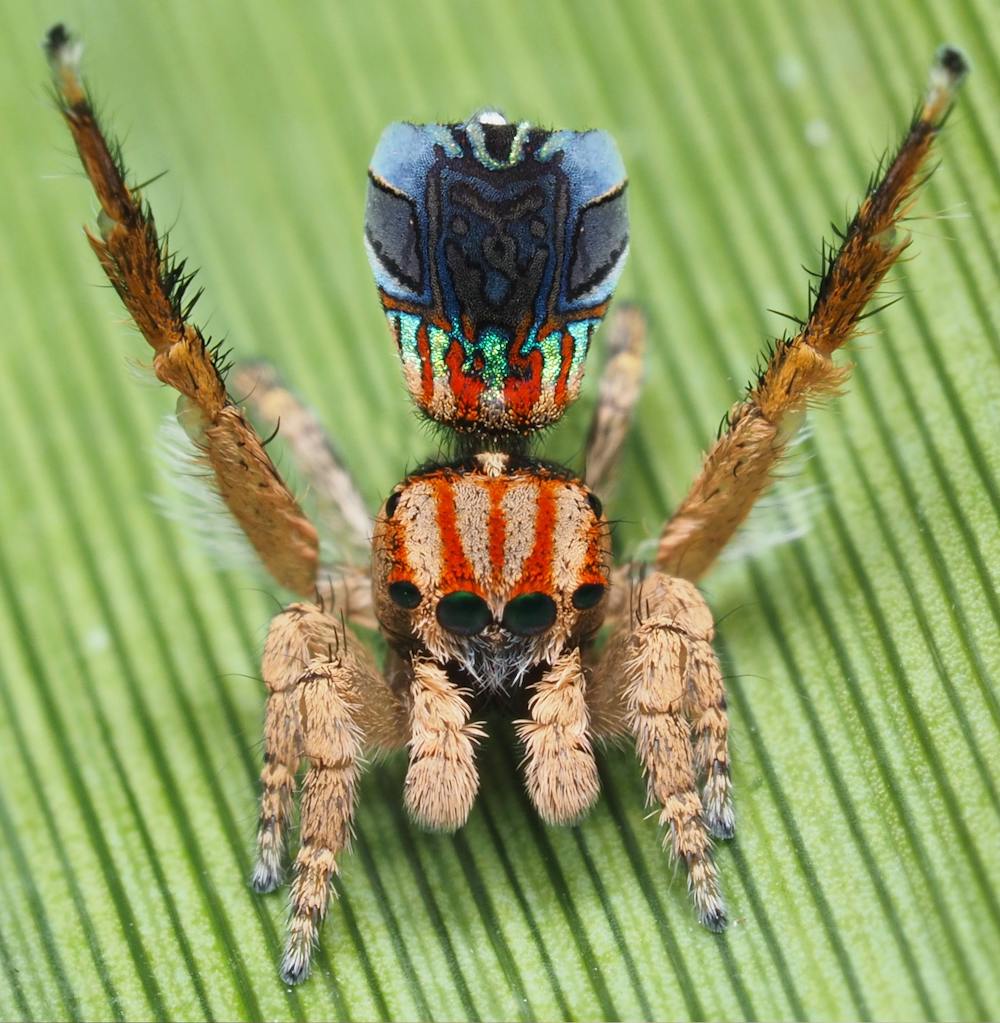 Maratus azureus.
Author provided
Maratus azureus.
Author provided
- Maratus constellatus: “Starry” in Latin, referring to the markings on the male’s abdomen which look like a starry night sky.
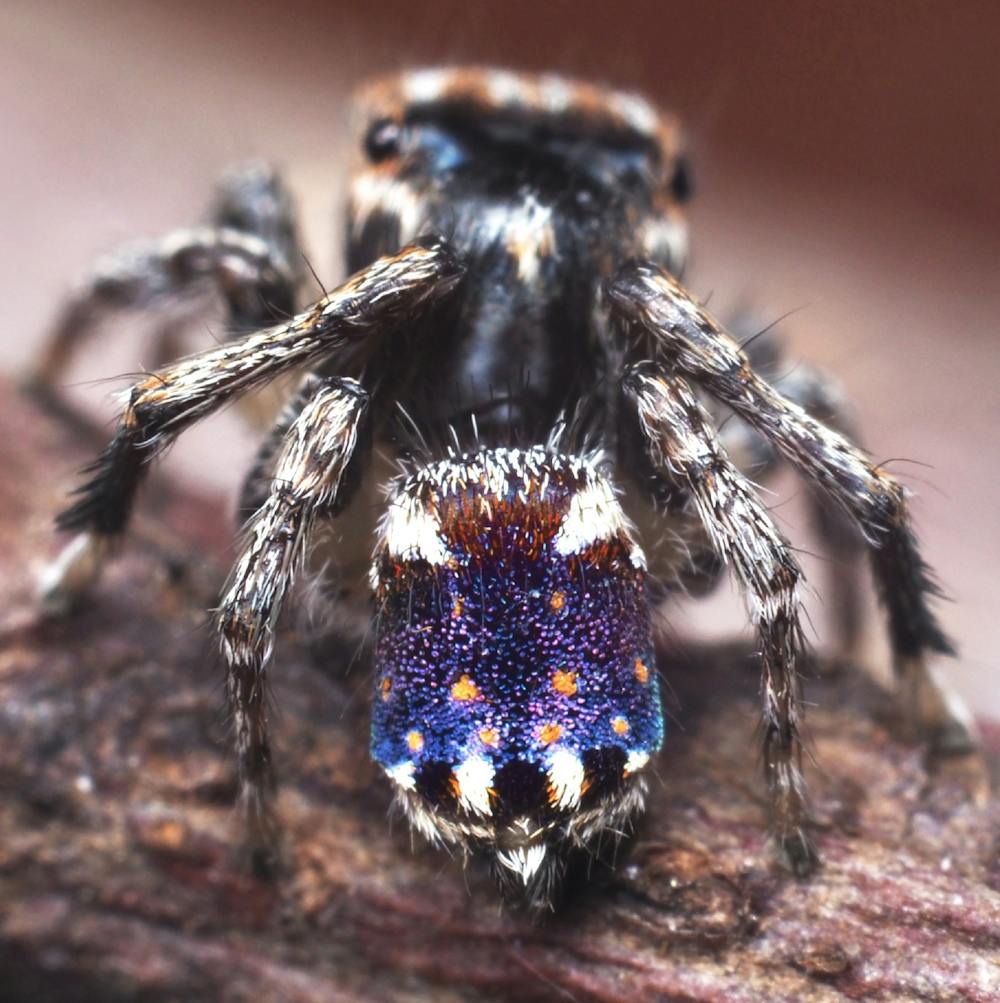 Maratus constellatus.
Author provided
Maratus constellatus.
Author provided
- Maratus inaquosus: “Dry” or “arid” in Latin, for the dry landscape in Little Desert National Park this species was found in.
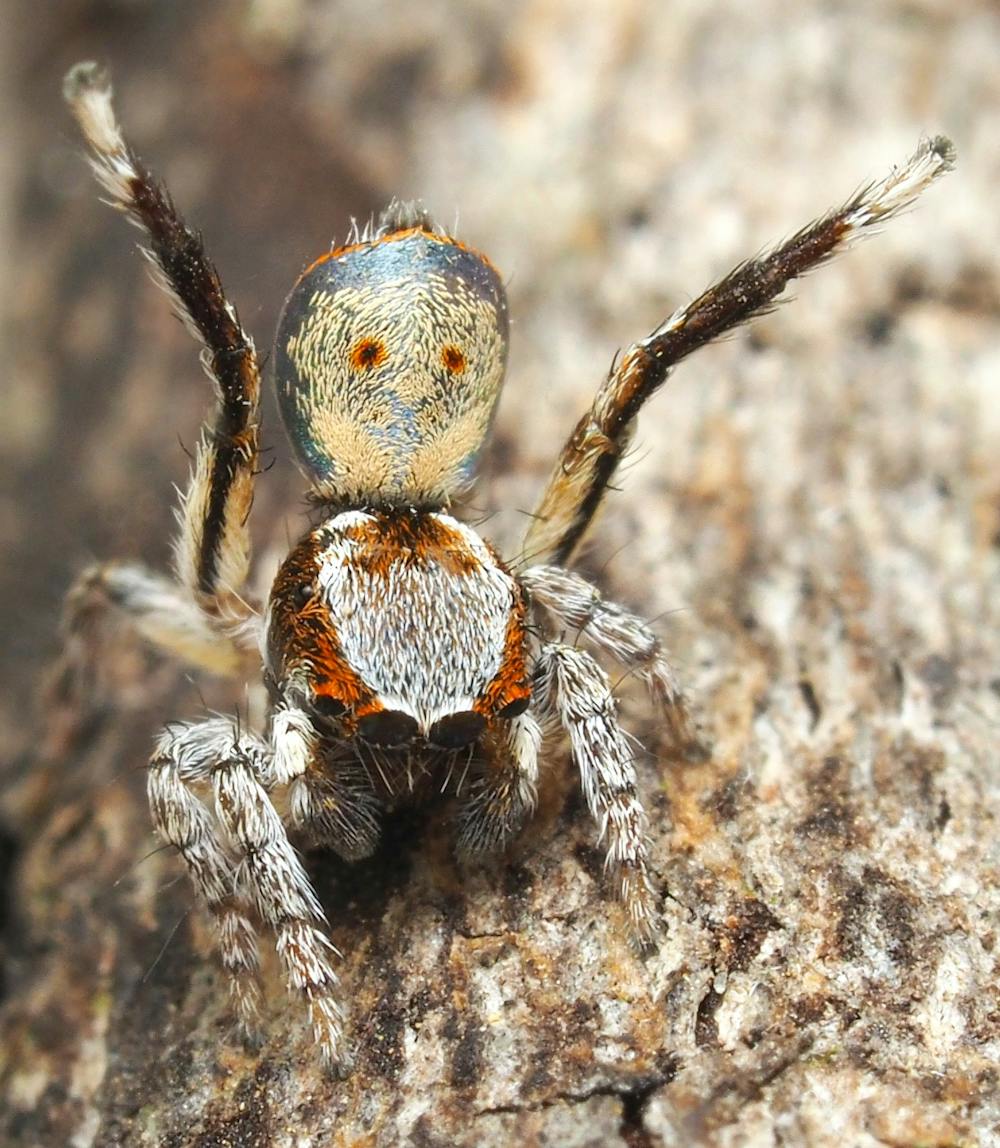 Maratus inaquosus
Author provided
Maratus inaquosus
Author provided
- Maratus laurenae: Named in honour of my partner, Lauren Marcianti, who has supported my research with enthusiasm over the past few years.
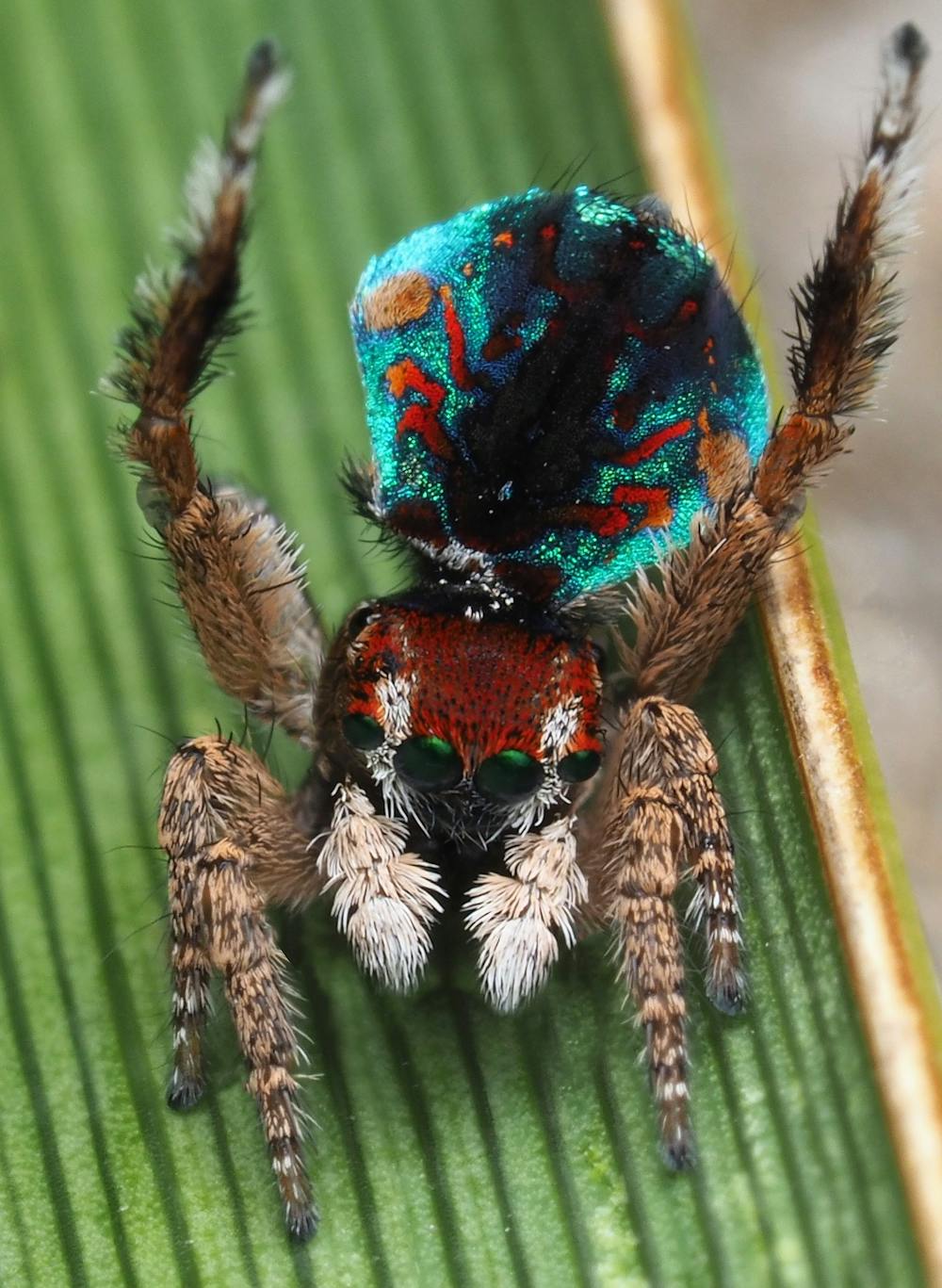 Maratus laurenae
Author provided
Maratus laurenae
Author provided
- Maratus noggerup: Named after the location where this species was found: Noggerup, Western Australia.
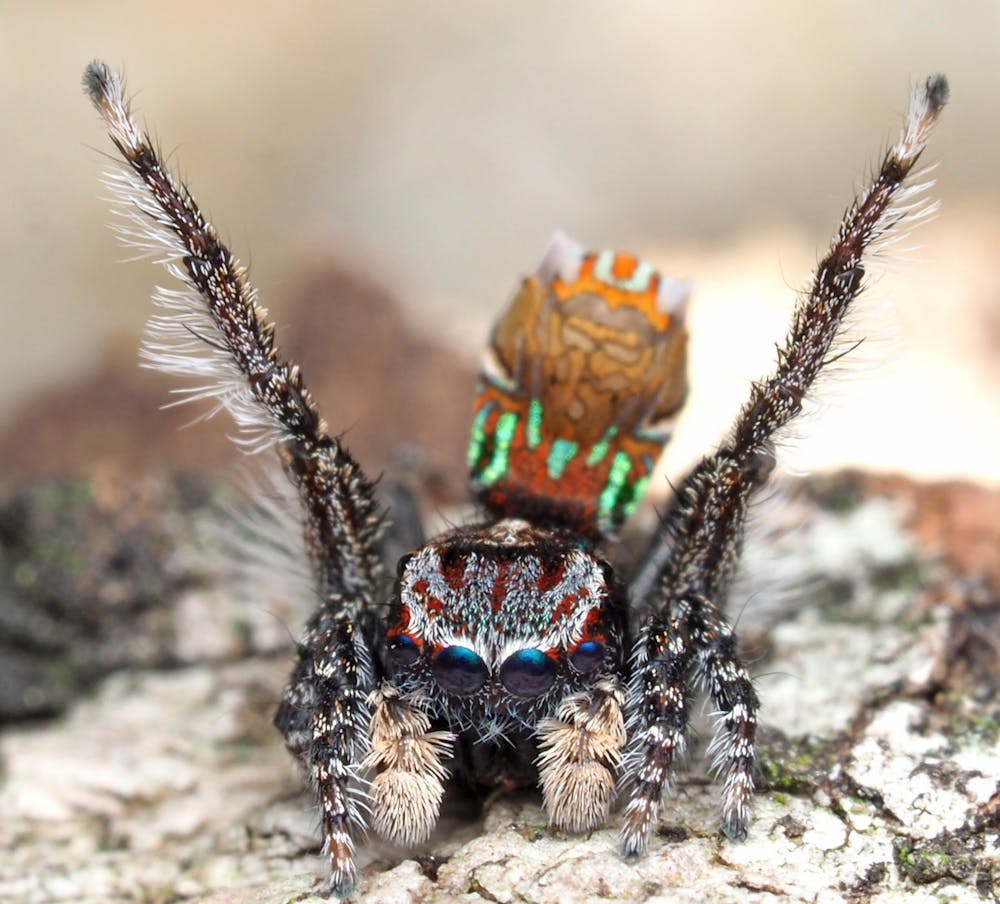 Maratus noggerup
Author provided
Maratus noggerup
Author provided
- Maratus suae: Named in honour of photographer Su RamMohan who discovered this species and provided useful information about their locations in Western Australia.
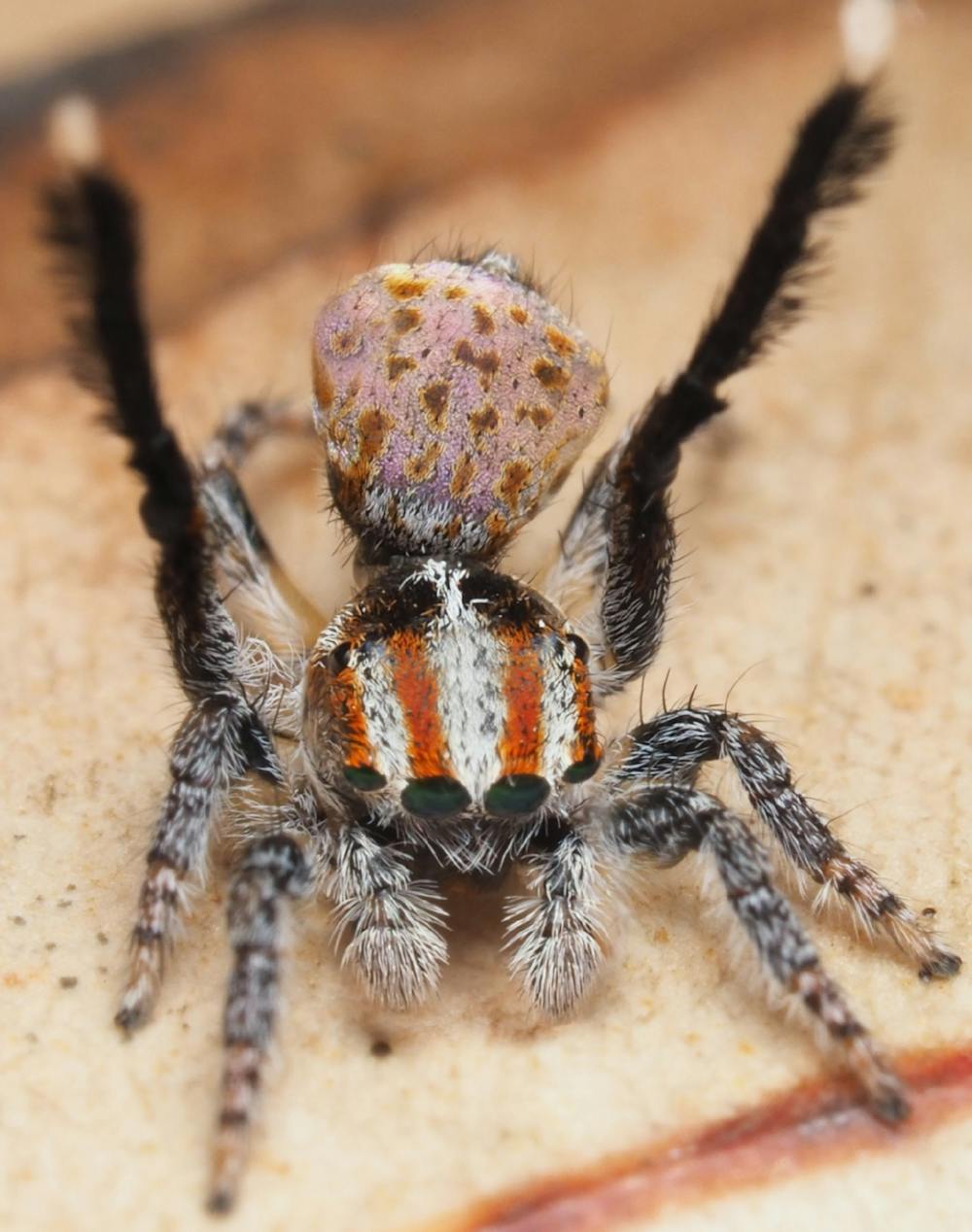 Maratus suae
Author provided
Maratus suae
Author provided
- Maratus volpei: Named in honour of photographer Nick Volpe who discovered and collected specimens of this species to be examined in my paper.
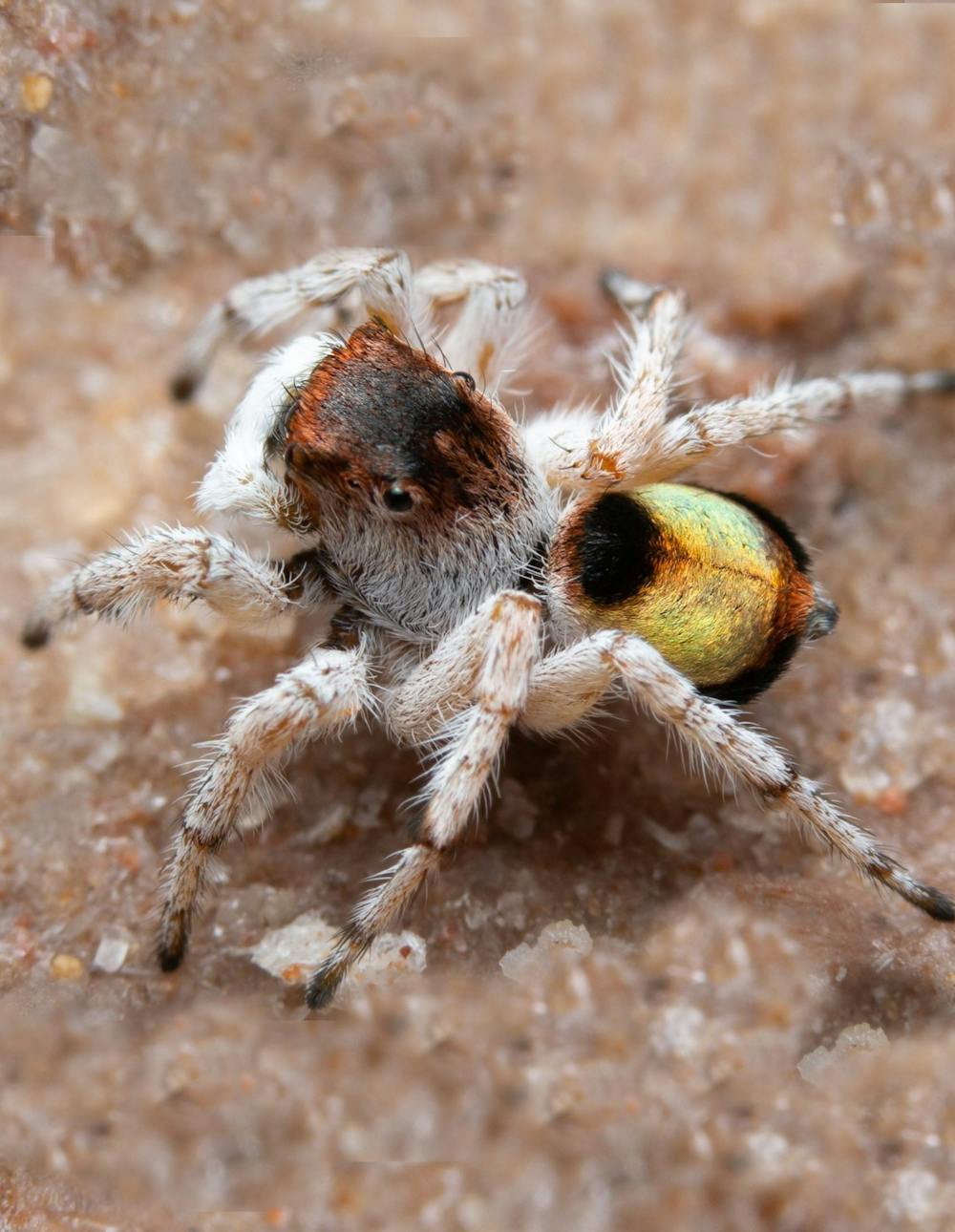 Maratus volpei
Nick Volpe, Author provided
Maratus volpei
Nick Volpe, Author provided
These names allow us to communicate important information about these animals to other scientists, as well as to build legislation around them in the case there are risks to their conservation status.
I plan on visiting some more remote parts of Australia in hopes of finding more new peacock spider species. I strongly suspect there’s more work to be done, and more peacock spiders to discover.
Authors: Joseph Schubert, Entomology/Arachnology Registration Officer, Museums Victoria

















