

The need to house everyone has never been clearer. Here's a 2-step strategy to get it done
- Written by: Ron Wakefield, Professor of Construction, Deputy Pro-Vice Chancellor, International, and Dean, School of Property, Construction and Project Management, RMIT University
The COVID-19 pandemic has shown us our health is intimately connected to the health of the person next to us, and that everyone needs shelter. It has created unprecedented urgency about moving people who are homeless into emergency accommodation – for their health and ours. So what happens next?
Getting people into hotel and motel rooms and off the streets is a good thing, but these are stopgap measures. They don’t provide a home.
Read more: 6 steps towards remaking the homelessness system so it works for young people
The rush to shelter people before the peak of the virus has been driven by a pressing need to protect us all. As the only seven-day-a-week mobile outreach service still operating in Victoria, Launch Housing has temporarily housed 800 people, half of whom were sleeping rough. So what will happen to them and the thousands of other Australians in emergency accommodation when social-distancing restrictions ease and our world returns to something resembling normal?
Will they exit back into street homelessness to become the face of fear and stigma, while the rest of the community returns to more social activities?
A way to find homes right now
Australia has a significant but solvable homelessness problem, so let’s start solving it right now.
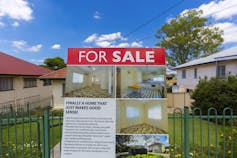
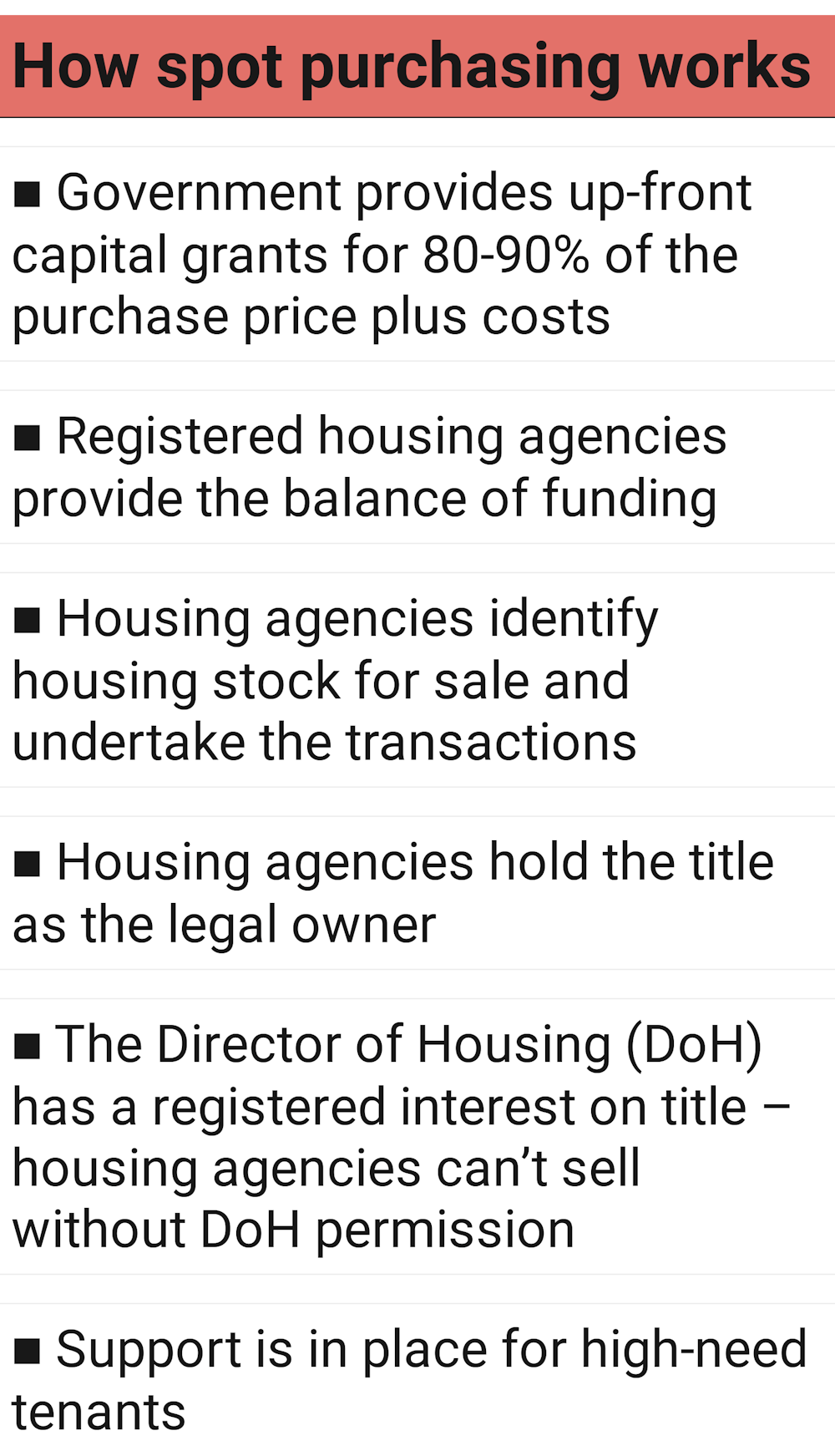 Image: AAP, Author provided
To avoid people being deposited back onto the streets, we’re asking state and territory governments to fund a rapid spot-purchasing program. The Victorian government has done it before on a smaller scale in 2016, and it worked. It’s time to do it again, but on a bigger scale and around the country.
The spot-purchasing program would fund community housing agencies to enter the property market to buy up “distressed” or cheap housing assets. These properties would be let at below market rent to people who pay 30% of their income as a social rent.
Vendors and developers would get much-needed sales and thousands of people would get a home. Taxpayers would get an enduring social benefit for years to come, as expensive nightly motel bills – without any long-term benefit – get converted to community-owned property assets.
We estimate the program would cost about A$210 million in Victoria and a similar amount in other states. It costs more to treat street homelessness than it does to fix it. So, it makes economic and social sense to put the fix in now.
This is our mirror moment. We simply can’t afford to drop people when no one is looking and attention turns elsewhere.
People in emergency accommodation can’t wait years for new housing to be built. They (and we) need those homes now while longer-term solutions are developed.
Meeting rising needs in the longer term
Many people who are not homeless have lost jobs or had their work hours cut, and are facing their first-ever brush with housing insecurity. They are struggling, paying more than 30% of their income for housing.
There was a housing crisis before this latest upheaval, and these conditions haven’t changed. Rents were too high and there weren’t enough affordable homes.
Read more:
Growing numbers of renters are trapped for years in homes they can't afford
The health and economic fallout from COVID-19 has exposed the urgent need for more homes that are cheaper to rent for people on moderate, low or no incomes.
Crucially, we are also calling for the Australian government to fast-track the building of more social and affordable housing as part of an economic stimulus package.
A national social housing stimulus package will help get people back to work, speed the recovery, give the building industry the confidence to retain more workers and put roofs over people’s heads.
Read more:
Why the focus of stimulus plans has to be construction that puts social housing first
Initiatives to fund the construction of new social housing could be rolled out quickly. The industry capacity is there to do it, in partnership with the community housing sector.
The early stages of the stimulus would bring forward maintenance and new construction projects that are already on the drawing board.
By targeting locations with transport and facilities but high levels of rental stress, new social housing buildings can be built quickly and integrated well into local communities.
The stimulus should be designed to encourage new mixed housing models, including properties that are “built to rent”.
It would increase the supply of social housing for households that are homeless, or at risk of becoming so, and would stimulate the building, maintenance and construction industry.
Read more:
Australia's social housing policy needs stronger leadership and an investment overhaul
A building-led recovery
The program would build on the Social Housing Initiative that was launched in response to the 2008 Global Financial Crisis. Some 20,000 new social housing units were built throughout Australia.
This time, we think it is possible to deliver 30,000 new units. Community housing organisations could raise extra private finance to build another 5,000 homes.
We’ll need this social infrastructure more than ever after the pandemic. Rental stress and homelessness are increasing and the lack of low-price rental housing are issues we can no longer ignore.
Read more:
Is social housing essential infrastructure? How we think about it does matter
The pandemic has created some very real challenges, but it also creates some unique opportunities to accelerate progress on ending homelessness, to recognise our interconnectedness and to give people the best possible protection of all – a home.
This article was co-authored by Bevan Warner, CEO of Launch Housing.
Image: AAP, Author provided
To avoid people being deposited back onto the streets, we’re asking state and territory governments to fund a rapid spot-purchasing program. The Victorian government has done it before on a smaller scale in 2016, and it worked. It’s time to do it again, but on a bigger scale and around the country.
The spot-purchasing program would fund community housing agencies to enter the property market to buy up “distressed” or cheap housing assets. These properties would be let at below market rent to people who pay 30% of their income as a social rent.
Vendors and developers would get much-needed sales and thousands of people would get a home. Taxpayers would get an enduring social benefit for years to come, as expensive nightly motel bills – without any long-term benefit – get converted to community-owned property assets.
We estimate the program would cost about A$210 million in Victoria and a similar amount in other states. It costs more to treat street homelessness than it does to fix it. So, it makes economic and social sense to put the fix in now.
This is our mirror moment. We simply can’t afford to drop people when no one is looking and attention turns elsewhere.
People in emergency accommodation can’t wait years for new housing to be built. They (and we) need those homes now while longer-term solutions are developed.
Meeting rising needs in the longer term
Many people who are not homeless have lost jobs or had their work hours cut, and are facing their first-ever brush with housing insecurity. They are struggling, paying more than 30% of their income for housing.
There was a housing crisis before this latest upheaval, and these conditions haven’t changed. Rents were too high and there weren’t enough affordable homes.
Read more:
Growing numbers of renters are trapped for years in homes they can't afford
The health and economic fallout from COVID-19 has exposed the urgent need for more homes that are cheaper to rent for people on moderate, low or no incomes.
Crucially, we are also calling for the Australian government to fast-track the building of more social and affordable housing as part of an economic stimulus package.
A national social housing stimulus package will help get people back to work, speed the recovery, give the building industry the confidence to retain more workers and put roofs over people’s heads.
Read more:
Why the focus of stimulus plans has to be construction that puts social housing first
Initiatives to fund the construction of new social housing could be rolled out quickly. The industry capacity is there to do it, in partnership with the community housing sector.
The early stages of the stimulus would bring forward maintenance and new construction projects that are already on the drawing board.
By targeting locations with transport and facilities but high levels of rental stress, new social housing buildings can be built quickly and integrated well into local communities.
The stimulus should be designed to encourage new mixed housing models, including properties that are “built to rent”.
It would increase the supply of social housing for households that are homeless, or at risk of becoming so, and would stimulate the building, maintenance and construction industry.
Read more:
Australia's social housing policy needs stronger leadership and an investment overhaul
A building-led recovery
The program would build on the Social Housing Initiative that was launched in response to the 2008 Global Financial Crisis. Some 20,000 new social housing units were built throughout Australia.
This time, we think it is possible to deliver 30,000 new units. Community housing organisations could raise extra private finance to build another 5,000 homes.
We’ll need this social infrastructure more than ever after the pandemic. Rental stress and homelessness are increasing and the lack of low-price rental housing are issues we can no longer ignore.
Read more:
Is social housing essential infrastructure? How we think about it does matter
The pandemic has created some very real challenges, but it also creates some unique opportunities to accelerate progress on ending homelessness, to recognise our interconnectedness and to give people the best possible protection of all – a home.
This article was co-authored by Bevan Warner, CEO of Launch Housing.
Authors: Ron Wakefield, Professor of Construction, Deputy Pro-Vice Chancellor, International, and Dean, School of Property, Construction and Project Management, RMIT University


















