Carriageworks was in trouble before coronavirus
- Written by: Caroline Wake, Senior Lecturer in Theatre and Performance, UNSW
This week news broke that Carriageworks – Australia’s largest contemporary multi-arts centre – had gone into voluntary administration.
It’s sad but not surprising, as the organisation was struggling even in regular trading conditions. COVID-19 is not so much the spark, as the accelerant on a slow-burning fire. The organisation’s troubles are emblematic of an arts sector on the edge – but there might be a way forward.
The books
From 2012 to 2018, Carriageworks only once turned a profit, according to data available via the Australian Charities and Not-for-Profits Commission. That was in 2017, when it made A$205,778.
For every other year, the deficit has ranged from $34,691 (in 2012) to $559,236 (2018).
In 2018 - the most recent figures we have – Carriageworks received $3.8 million in government grants. The rest of its income – $7.8 million – came from goods and services, donations and bequests, and other revenue. So Carriageworks was generating 66% of its own income, a figure that had since risen to 75%, according to the board’s statement on May 5.
These are the income ratios that funding agencies across the country tell arts companies to adopt. Create NSW, for instance, expects organisations seeking over $140,000 in annual support to independently generate at least 50% of their income.
While this split may work when times are good, it doesn’t when times are bad. In fact, it leaves companies exposed, which is why Carriageworks has the wobbles. Similarly, Opera Australia is considering selling one of its buildings, and other companies have stood down their staff.
Read more: Carriageworks is my home away from home
The cast
Pity Carriageworks CEO, Blair French, who arrived in August. And acting chair Cass O’Connor, who joined the board in 2016.
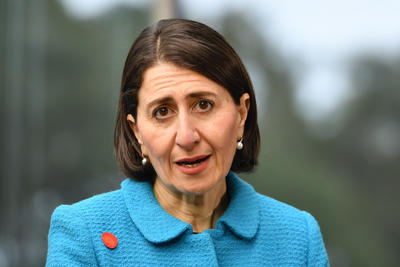
They, in turn, are dealing with an acting minister for the arts who is also the premier, Gladys Berejiklian. Former minister Don Harwin was known to meddle and prioritise classical music. He once ran a funding round where only 2.7% of applications were successful.
In Canberra, Communications Minister Paul Fletcher is saddled with a department that does not even have arts in its title.
Though the characters may change, the structural problem remains the same: chronic underfunding. Already highlighted by Esther Anatolitis, Jo Caust, Alison Croggon, Ben Eltham, and Julian Meyrick among others, it bears repeating.
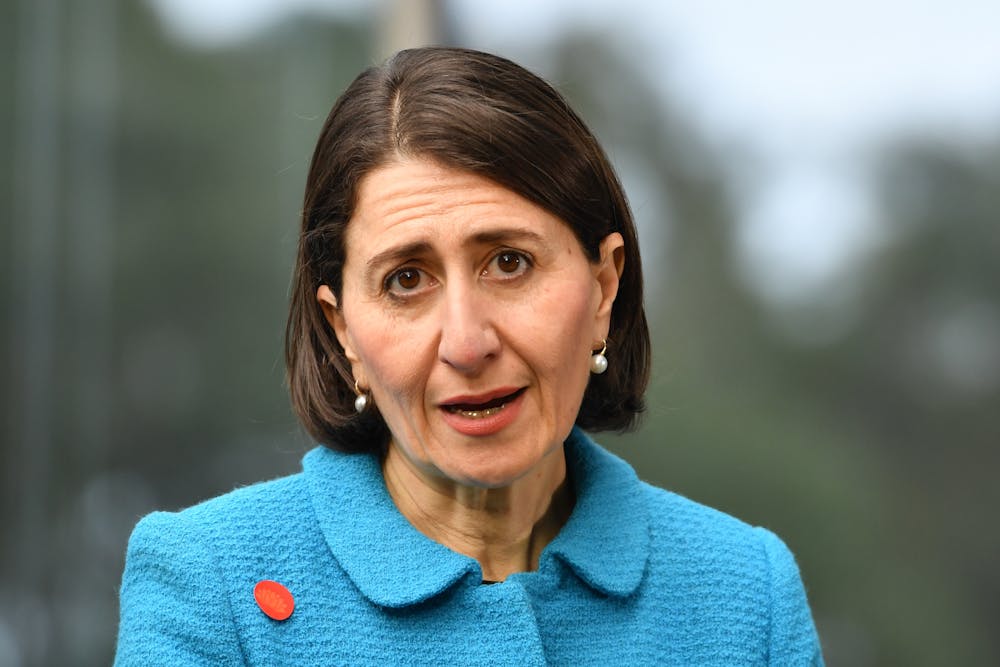 The NSW Acting Arts Minister is also its busy Premier, Gladys Berejiklian.
AAP/Dean Lewins
The NSW Acting Arts Minister is also its busy Premier, Gladys Berejiklian.
AAP/Dean Lewins
Federal funds
Federal funding is falling, as detailed in the Australia Council for the Arts annual report.
In 2013-14, the Council had a grants budget of $199.2 million; in 2018-19, it has $186 million, a reduction 6.6% even without adjusting for inflation. The pain has not been evenly shared. In 2013-14, the 29 major performing arts groups received $103.1 million (51% of the funds available); in 2018-19, they received $113.6 million (61%).
Contrast this with the amount available for project funding, fellowships and awards: $45.3 million in 2013-14 (22.7% of available funds) and $23.5 million in 2018-19 (13%). Whereas the majors have had a 10% increase, individual artists and companies have had a 48% decrease. To borrow Alison Croggon’s example, between 2013 and 2016, grants for individuals dropped by 70%, from 1340 to 405.
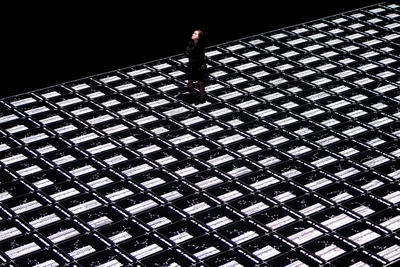
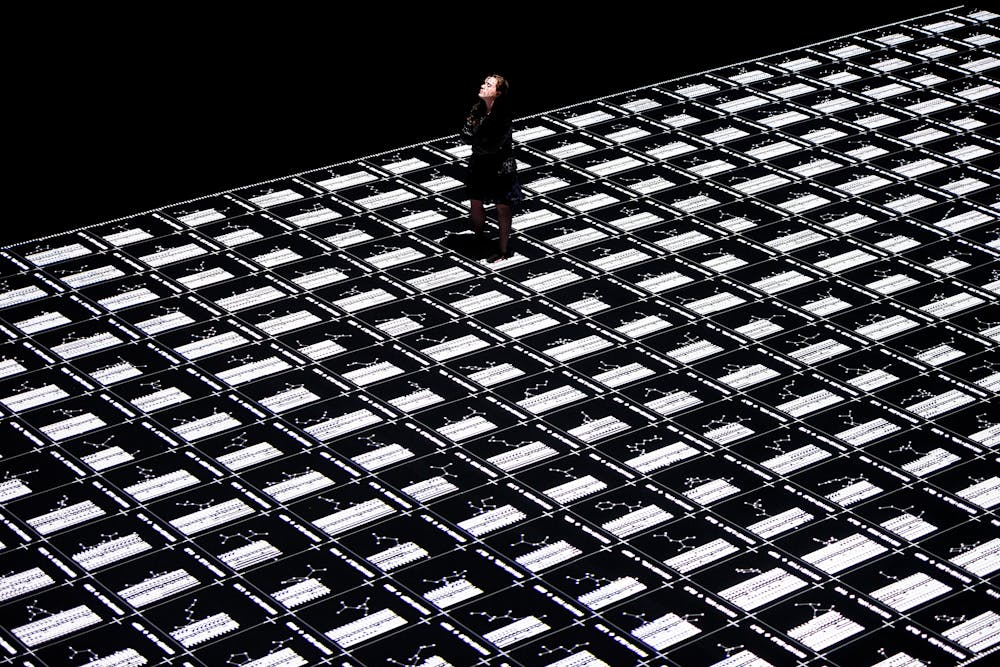 If Carriageworks can’t make it work, what of smaller organisations? Ryoji Ikeda installation micro/macro at Carriageworks in 2018.
AAP/Dan Himbrechts
If Carriageworks can’t make it work, what of smaller organisations? Ryoji Ikeda installation micro/macro at Carriageworks in 2018.
AAP/Dan Himbrechts
The funds for small-to-medium organisations look marginally better, growing from $22.8 million in 2013-14 to $28.7 million in 2018-19 – but the number of companies supported has dropped from 144 (2015) to 95 (2021-24), shrinking the sector by 34%.
Carriageworks is one of the lucky ones. It was listed in last month’s four-year funding announcements. We do not know how much they received, but we do know there is a $500,000 per annum cap – nowhere near enough to maintain a world-class, heritage-listed venue and deliver an ambitious program.
State support
Funding in NSW is harder to track. In the past six years, Create NSW has changed names, merged with Screen NSW, and bounced between four different departments.
Figures for 2013-14 can be found in the Department of Trade & Investment’s annual report, which indicates that Arts NSW – as it was then – allocated $53 million to arts and cultural development. Figures for 2018-19 are in the Department of Planning, Environment and Heritage’s annual report, and indicate that Create NSW allocated $55.4 million in arts grants, an increase of $2.4 million or 4.5%, again not adjusted for inflation.
“I guess it’s a bit of poetry in the world.” Rebecca Baumann’s Radiant Flux plays with light and structures at Carriageworks.During this same period, the government launched its Cultural Infrastructure Plan, which committed $645 million to the Powerhouse in Parramatta, $245 million to the Walsh Bay Arts Precinct, $244 million to the Art Gallery of NSW’s Sydney Modern Project, $238 million to the Sydney Opera House renovations, $100 million to Parramatta Riverside Theatre’s redevelopment, $100 million to the Regional Cultural Fund, and $50.5 million for the Australian Museum’s expansion. The $1.6 billion total is a conservative estimate given several of these projects have since had budget blowouts.
This focus on infrastructure (buildings) comes at the expense of people and programs. The “edifice complex” is an old problem in the arts. It’s very one that produced Carriageworks, where the government spent on construction and then scrimped on commissions.
Spending all your money on buildings means there is none for emergencies. Governments in South Australia, Queensland, and Victoria have announced sector support packages of $1.5 million, $8 million and $16.8 million respectively. Create NSW has merely redirected $2 million of its existing budget to address the crisis.
What now for Carriageworks?
Reports suggest the Sydney Opera House may take over Carriageworks. This could work as the current Sydney Opera House head of programming, Fiona Winning, was artistic director of Performance Space from 1998 to 2008, when it moved to Carriageworks.
Meanwhile, the Media Entertainment and Arts Alliance has called for an urgent state rescue.
Carriageworks could become the first major Sydney venue to be led by Indigenous artists.What about another option? There are already plans afoot for an Indigenous Cultural Hub) in the old Redfern Post Office. The government could build on these plans and turn Carriageworks into an Indigenous Arts Hub, making it the first major Sydney venue to be led by Aboriginal and Torres Strait Islander creatives and producers.
This idea has already been floated by various Aboriginal arts leaders, including Lily Shearer and Liza-Mare Syron. Bangarra Dance Theatre also expressed interest, when contemplating what to do while the Wharf is refurbished.
With proper consultation and support, a consortium of First Nations-led companies could create a Carriageworks properly embedded in local community.
Imagine what current head curator of Aboriginal programs, Hannah Donnelly, and resident company Moogahlin Performing Arts could do there. Or what Wesley Enoch and Brook Andrews, curators of the Sydney Festival and Biennale respectively, might dream up. Or what sort of writers festival Larissa Behrendt and Anita Heiss might program.
What looks like a bonfire could yet become a cultural burn. Carriageworks could emerge brighter, better, and braver.
Authors: Caroline Wake, Senior Lecturer in Theatre and Performance, UNSW