

How Technology Is Reshaping the Modern Australian Commercial Kitchen
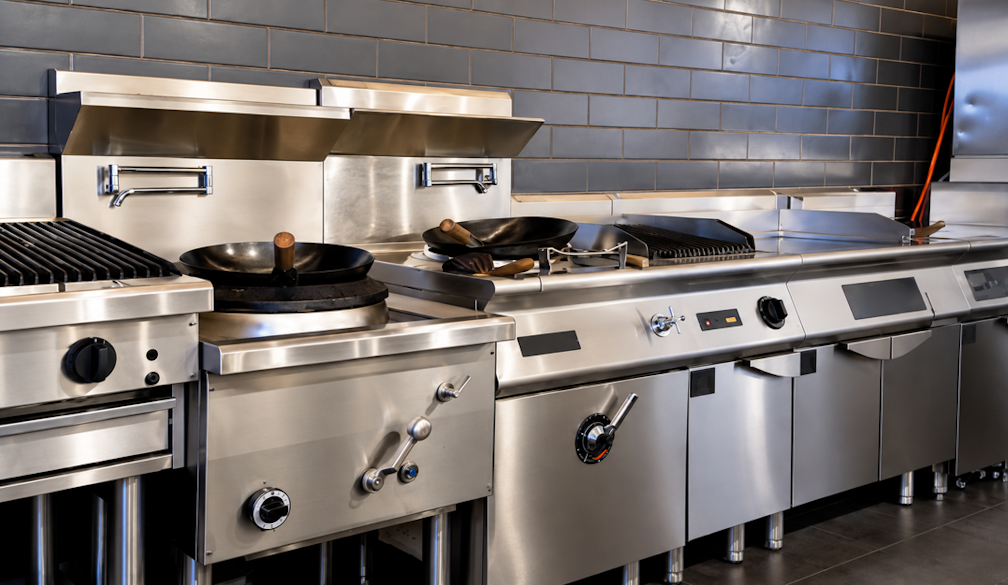
The commercial kitchen has always been shaped by technology. Refrigeration changed how ingredients could be stored, modern ventilation transformed kitchen design, and advances in cooking equipment have continually changed the speed and consistency with which chefs can work.
Today, another shift is underway.
Australian hospitality operators are placing greater emphasis on energy efficiency, precise control, staff comfort, flexible kitchen layouts and equipment that can support increasingly demanding services. At the same time, electrification and induction technology are giving chefs and designers more options when deciding how a commercial cooking line should operate.
The result is not simply a collection of smarter appliances. Technology is beginning to influence the design and workflow of the kitchen itself.
From Raw Power to Precise Control
Commercial kitchens have traditionally placed a strong emphasis on power. High-output burners and rapid heat have obvious advantages during a busy service, but raw output alone does not guarantee better cooking.
Increasingly, the focus is shifting towards control.
Modern induction equipment can transfer energy directly into compatible cookware and respond quickly when the operator adjusts the power level. That allows chefs to move from rapid heating to controlled simmering without waiting for a conventional heating surface to change temperature.
For professional kitchens, this responsiveness can help with consistency as well as speed. When a cooking process can be repeated with greater control, the equipment becomes part of maintaining a reliable result across different shifts and services.
Induction Is Expanding Beyond the Cooktop
Induction was once commonly associated with individual cooktops, but commercial applications have expanded considerably.
Professional kitchens can now use induction technology across cooktops, griddles, fryers, stockpot boilers, oven ranges, noodle cookers and specialist wok equipment.
Australian commercial kitchen equipment company Luus Industries, for example, now offers a broad commercial induction range covering multiple cooking applications rather than treating induction as a standalone appliance category.
That matters from a design perspective. If multiple stations can operate on compatible modular platforms, induction can be considered as part of an integrated cookline rather than simply an appliance added to a predominantly gas kitchen.
Energy Efficiency Is Becoming an Operational Issue
Sustainability is often discussed in environmental terms, but for hospitality businesses it is also an operational question.
Energy that does not reach the food is effectively wasted. Traditional open-flame cooking releases a significant amount of heat into the surrounding kitchen, whereas induction transfers energy directly into compatible cookware.
Luus specifies thermal efficiency of more than 90 per cent across a number of its induction products. Its induction cooktops also use automatic pan detection, allowing heating to stop when cookware is removed.
For operators, improved energy transfer has the potential to influence both direct energy consumption and the amount of unwanted heat that must be managed elsewhere in the kitchen.
A Cooler Kitchen Can Be a Better Workplace
The temperature of a commercial kitchen affects more than comfort.
Chefs and kitchen staff can spend hours working close to cooking equipment, particularly during high-volume services. Heat generated by open flames and hot cooking surfaces contributes to an already demanding workplace.
Induction technology reduces the amount of heat released around the cookware because energy is transferred directly into the pan or pot. Luus identifies lower ambient heat as a feature across its induction cooktops, woks, fryers and other induction equipment.
This does not remove the need for appropriate ventilation and kitchen design, but it gives operators another tool when considering the working environment.
As hospitality businesses compete for skilled staff, workplace design and ergonomics are likely to become increasingly important considerations alongside traditional measures such as equipment output.
Technology Is Reaching High-Heat Cooking
One of the more interesting developments is the use of induction in applications traditionally associated with intense gas heat.
Commercial wok cooking is a good example.
Modern high-powered induction wok systems are designed to provide rapid energy transfer while retaining the responsiveness required for fast Asian cooking. Luus's high-powered induction wok range includes 15kW-per-ring models designed for large commercial woks.
This illustrates a broader change in the technology. Induction is no longer confined to relatively light-duty applications. It is increasingly being engineered around the requirements of high-volume professional kitchens.
For chefs and operators, this expands the range of cooking tasks that can be considered when planning an electric or hybrid kitchen.
Faster Recovery Can Improve Workflow
Speed in a commercial kitchen is not only about how quickly equipment reaches temperature when it is first switched on. Recovery during service can be equally important.
Every time cold food is added to a fryer, a loaded pan is placed on a cooking zone or a griddle is heavily used, the equipment needs to recover.
Modern induction systems are designed around rapid energy transfer. Luus's commercial induction fryer, for example, specifies a nine-minute heat-up time for 25 litres of oil from ambient temperature to 180 degrees Celsius, while its induction griddles are designed for rapid heating and recovery.
These characteristics can affect workflow because chefs spend less time working around equipment that is struggling to return to operating temperature.
Smarter Equipment Can Simplify Operation
Digital controls, timers, power displays and automatic detection systems are also becoming more common in commercial cooking equipment.
The purpose of these features should not be technology for technology's sake. In a busy kitchen, controls need to remain intuitive and robust.
Used appropriately, however, better feedback can help chefs understand exactly how equipment is operating. Visual power settings, thermostatic controls and timers can make cooking processes easier to repeat and reduce some of the guesswork involved in maintaining consistent output.
The most useful technology is often the technology that becomes almost invisible during service because it supports the chef rather than demanding additional attention.
Modular Design Is Changing the Cooking Line
Technology is also influencing the physical organisation of commercial kitchens.
Rather than viewing every appliance as a separate piece of equipment, modular cooking platforms allow designers to create more unified cooking lines. Equipment can be selected around the menu and arranged to reduce unnecessary movement between stations.
This becomes particularly valuable where kitchen space is constrained.
A modular approach can allow cooktops, griddles, ovens and other equipment to work together visually and functionally, while still giving operators flexibility to choose the combination that suits their menu.
The result can be a cleaner, more coherent workspace built around how chefs actually move during service.
The Future Is Likely to Be Flexible
The move towards induction does not mean every Australian commercial kitchen will suddenly abandon gas.
Different cuisines, existing infrastructure, chef preferences and operating requirements will continue to influence equipment choices. For many venues, hybrid kitchens combining gas, electric and induction technologies may make the most practical sense.
What is changing is the range of credible options available.
Restaurant owners and kitchen designers can increasingly compare technologies according to the particular task rather than simply defaulting to the energy source that has traditionally been used.
That creates an opportunity to design kitchens around performance, efficiency, staff comfort and long-term operating requirements from the outset.
Building a Kitchen for What Comes Next
Technology is most valuable when it solves practical problems.
For the modern Australian commercial kitchen, those problems include controlling energy use, maintaining consistency, improving workflow, managing heat and creating equipment layouts capable of handling demanding services.
Induction is one part of that evolution, alongside better controls, modular equipment and more thoughtful kitchen design.
For hospitality operators planning a new fit-out or replacing ageing equipment, the question is therefore becoming less about whether new technology belongs in a professional kitchen and more about where it can deliver the greatest operational benefit.
The kitchens that adapt successfully will not necessarily be those with the most technology. They will be those that use it intelligently to create a more efficient, controllable and productive working environment.


















