
15 South Indian Dishes Everyone Should Try
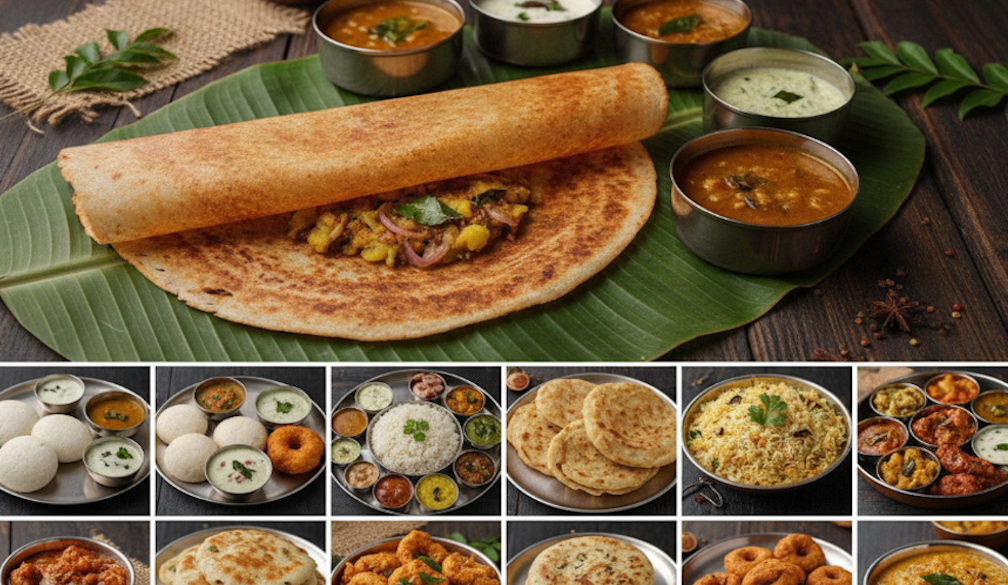
If your only experience of "Indian food" is butter chicken and garlic naan, South Indian cuisine is going to feel like discovering an entirely new country. Built around rice rather than wheat, and leaning heavily on fermentation, coconut, tamarind, and curry leaves, South Indian food has its own logic, its own textures, and its own incredible range of flavours.
Whether you're heading to a South Indian restaurant for the first time or you've been ordering the same masala dosa for years and want to branch out, here are 15 dishes that genuinely deserve a place on your plate, and on your radar.
Must Have South Indian Dishes
1. Masala Dosa
The undisputed gateway dish. A masala dosa is a large, thin, crispy crepe made from a fermented batter of rice and urad dal (black lentils), folded around a filling of spiced, mashed potato. The fermentation gives the batter a subtle tang, while the slow cooking on a hot griddle creates a lacy, golden-brown crust.
It's usually served with coconut chutney and sambar, and the combination of crisp exterior, soft potato filling, and tangy-spicy sides is part of why dosa has become one of the most internationally recognised South Indian dishes. Variations abound, including cheese dosa, paneer dosa, and the famously oversized "paper dosa," which can stretch well beyond the length of the plate.
2. Idli
If dosa is the showy older sibling, idli is the quiet, reliable one. These soft, fluffy steamed cakes are made from the same fermented rice and lentil batter as dosa, but steamed rather than griddled, giving them a light, spongy texture.
Idlis are often described as one of the healthiest breakfast foods around, since they're steamed rather than fried, and the fermentation process makes them easier to digest while boosting their nutritional value. Served with coconut chutney and sambar, idlis are gentle on the stomach but still deeply satisfying, which is why they remain a staple across South Indian households.
3. Medu Vada
Sometimes described as a savoury doughnut, medu vada is made from ground urad dal batter, shaped into a ring, and deep-fried until the outside is crisp and golden while the inside stays soft and airy. The texture contrast is the whole point: crunchy shell, fluffy centre.
Medu vada is typically served alongside idli and dosa as part of a larger breakfast spread, paired with coconut chutney and sambar. On its own, it also works beautifully as a snack, and "vada curry," where leftover vadas are simmered in a spiced gravy, is a popular way to repurpose them into a heartier dish.
4. Uttapam
Think of uttapam as dosa's thicker, more toppings-friendly cousin. Made from the same fermented batter, uttapam is poured thicker onto the griddle and topped with a colourful mix of finely chopped onions, tomatoes, green chillies, and sometimes coriander or grated carrot, which get cooked into the surface as it griddles.
The result is closer to a savoury pancake than a crepe, with a soft, slightly chewy texture and bursts of flavour from the vegetable toppings. Uttapam is highly customisable, and many South Indian restaurants offer multiple versions, from a simple onion uttapam to more elaborate vegetable-loaded versions.
5. Sambar
No South Indian meal is really complete without sambar. This tangy, spiced lentil stew is made from toor dal (split pigeon peas) simmered with tamarind, vegetables, and a distinctive spice blend, often including mustard seeds, curry leaves, and a touch of asafoetida.
Sambar is less a side dish and more a foundational element of the cuisine, served alongside idli, dosa, vada, and rice. Its sour-savoury balance, driven largely by tamarind, is one of the defining flavours of South Indian cooking, and once you can recognise that flavour, you'll start noticing it everywhere.
6. Rasam
If sambar is the hearty lentil stew, rasam is its lighter, peppery cousin. Made from tamarind juice, tomatoes, black pepper, cumin, and a blend of spices, rasam is a thin, almost soup-like dish that's traditionally served with rice or sipped on its own, especially when someone in the house has a cold.
Rasam has a reputation for being good for digestion, and its warming, slightly spicy profile makes it a comforting dish, particularly in cooler weather. It's often the dish that surprises newcomers most, since it doesn't resemble any "soup" most people have tried before.
7. Pongal
Pongal is comfort food in its purest form. Made by cooking rice and moong dal together until soft, then seasoning generously with black pepper, cumin, ginger, and ghee, pongal has a porridge-like texture and a warm, mellow flavour.
It's especially associated with festivals (the Pongal harvest festival shares its name with the dish), but it's also a everyday breakfast staple. Ven Pongal, the savoury version, is the most common, though a sweet version made with jaggery also exists for festive occasions. If idli and dosa feel a bit too "textured" for your first South Indian meal, pongal is a gentler, more familiar-feeling place to start.
8. Upma
Upma is the South Indian answer to a quick, nourishing breakfast porridge, made from roasted semolina (rava) cooked with mustard seeds, curry leaves, ginger, and often vegetables like carrots, peas, or onions. Unlike idli or dosa, upma requires no fermentation, which makes it a faster dish to prepare from scratch.
The texture is somewhere between a risotto and a couscous, with each grain of semolina staying separate rather than clumping together. It's light, slightly savoury, and a good option if you want something filling but not heavy.
9. Bisi Bele Bath
A specialty of Karnataka, bisi bele bath translates roughly to "hot lentil rice," and that's exactly what it is: a one-pot dish combining rice, lentils, vegetables, and a distinctive spice blend that gives it a spicy, tangy, deeply savoury flavour.
What makes bisi bele bath stand out is its complexity for what is essentially a rice-and-lentil dish. The spice mix, often roasted and ground specifically for this dish, includes ingredients like dried red chillies, coriander seeds, and cinnamon, giving it a warmth that's quite different from the tamarind-forward sourness of sambar. It's often served with a side of crunchy fried boondi or papad for textural contrast.
10. Curd Rice
After a meal full of spice, tang, and heat, curd rice is the dish that brings everything back into balance. Made by mixing cooked rice with yoghurt and tempering it with mustard seeds, curry leaves, and green chillies, curd rice is cooling, mild, and quietly probiotic-rich.
It's often eaten at the end of a meal, almost as a palate cleanser, and is a staple in South Indian households for exactly that reason. If you've just worked through a fiery rasam or a spicy curry, a bowl of curd rice is the perfect way to finish.
11. Chettinad Chicken
For those who eat meat, Chettinad chicken is one of South India's most celebrated non-vegetarian dishes. Originating from the Chettinad region of Tamil Nadu, this dish is known for its intensely aromatic, fiery spice blend, often including black pepper, fennel, star anise, and dried red chillies, all roasted before being ground and cooked with the chicken.
The result is a deeply flavoured, spicy curry that's noticeably different from the creamier, tomato-based curries more commonly associated with North Indian cooking. Chettinad cuisine in general is known for its bold use of spice, and the chicken dish is often the easiest entry point for those wanting to explore it.
12. Kerala Parotta
Don't confuse this with the North Indian paratha. Kerala parotta (sometimes spelled porotta) is a layered, flaky flatbread made by folding and rolling dough repeatedly before cooking it on a hot griddle, then "clapping" it between the hands to release the layers into flaky shards.
The texture is the whole point: crisp on the outside, soft and chewy in layers underneath. Parotta is traditionally eaten with rich curries, particularly Kerala-style black pepper chicken or beef varuval, where the protein is coated in a spiced batter, fried, and then wok-tossed with curry leaves and spices. In restaurants known for their parotta, it's common to order at least two per person, since one rarely feels like enough.
13. Appam with Stew
Appam is a bowl-shaped, lacy rice pancake made from a fermented batter of rice and coconut milk, cooked in a small wok-like pan so that the edges turn thin and crisp while the centre stays soft and slightly spongy. It's a Kerala specialty and pairs beautifully with a mild coconut-based vegetable or meat stew.
The combination of the slightly sweet, fermented appam with a gently spiced, coconut milk-based stew is one of the more delicate pairings in South Indian cuisine, and a nice contrast to some of the more intensely spiced dishes on this list.
14. Pesarattu
Pesarattu is a green gram (moong dal) crepe, similar in shape to a dosa but made from a different lentil, giving it a slightly different flavour and a notably higher protein content. Often enjoyed with ginger chutney or peanut chutney, pesarattu is a specialty of Andhra Pradesh.
It's a great dish for anyone wanting a dosa-like experience with a different flavour profile, and its protein content makes it a popular choice for those looking for a more substantial, nutrient-dense breakfast option.
15. Payasam
No list of South Indian dishes would be complete without something sweet, and payasam is the cuisine's signature dessert. A type of sweet pudding, payasam can be made from a variety of bases, including rice, vermicelli, or lentils, simmered slowly with milk, jaggery or sugar, and flavoured with cardamom, saffron, and nuts.
Payasam is closely associated with festivals and special occasions, and different regions and even different families have their own preferred versions. The texture ranges from thin and soup-like to thick and creamy depending on the base ingredient, but the common thread is a comforting sweetness that rounds off a meal perfectly.
How to Build Your Own South Indian Tasting Plate
If you're trying South Indian food for the first time, one of the best approaches is to order a thali, a platter that brings together rice, a couple of curries, sambar, rasam, a vegetable side, yoghurt or curd rice, and a small sweet, often payasam. This gives you a taste of multiple dishes from this list in one sitting, and it's a format designed specifically to showcase the range of flavours and textures South Indian cuisine has to offer. Many restaurants and providers offering South Indian catering in Melbourne also feature thali-style meals or curated menus that introduce guests to a wide variety of traditional dishes.
For a lighter introduction, start with idli or pongal, both gentle on the stomach and easy to enjoy even if you're not used to spicier food. From there, move on to dosa and uttapam, then work your way towards the more intensely flavoured dishes like bisi bele bath, Chettinad chicken, or Kerala parotta with black pepper chicken once your palate has had a chance to adjust.
Final Thoughts
South Indian cuisine rewards curiosity. What looks, at first glance, like a menu of similar-sounding rice and lentil dishes actually contains an enormous range of textures, flavours, and regional traditions, from the fermented tang of dosa and idli to the fiery intensity of Chettinad chicken and the cooling comfort of curd rice. Working through this list is a genuinely enjoyable way to understand why South Indian food has such a devoted following, both in India and increasingly around the world.


















