

After the bushfires, we helped choose the animals and plants in most need. Here's how we did it
- Written by: John Woinarski, Professor (conservation biology), Charles Darwin University
No other event in our lifetimes has brought such sudden, drastic loss to Australia’s biodiversity as the last bushfire season. Governments, researchers and conservationists have committed to the long road to recovery. But in those vast burnt landscapes, where do we start?
We are among the wildlife experts advising the federal government on bushfire recovery. Our role is to help determine the actions needed to stave off extinctions and help nature recover in the months and years ahead.
Our first step was to systematically determine which plant and animal species and ecosystems needed help most urgently. So let’s take a closer look at how we went about it.
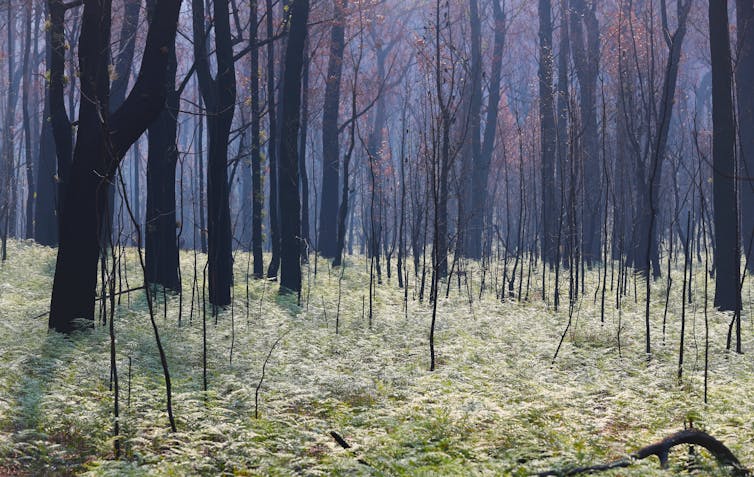 Plants and animals are recovering from the fires, but some need a helping hand.
David Crosling/AAP
Plants and animals are recovering from the fires, but some need a helping hand.
David Crosling/AAP
Sorting through the smoke
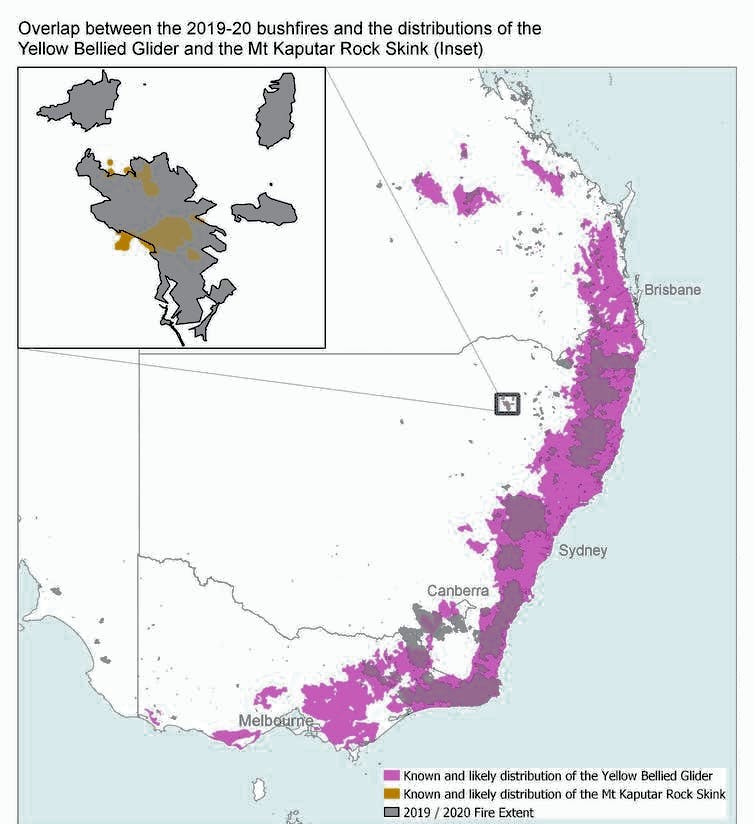
One way to work out how badly a species is affected by fire is to look at how much of its distribution – or the area in which it lives – was burnt.
This is done by overlapping fire maps with maps or records showing the species’ range. The greater the overlap, the higher the potential fire impact. But there are several complicating factors to consider:
1. Susceptibility: Species vary in how susceptible they are to fire. For instance, animals that move quickly - such as red-necked wallabies and the white-throated needletail - can escape an approaching fire. So too can animals that burrow deeply into the ground, such as wombats.
Less mobile animals, or those that live in vegetation, are more likely to die. We also considered post-fire recovery factors such as a species’ vulnerability to predators and reproductive rate.
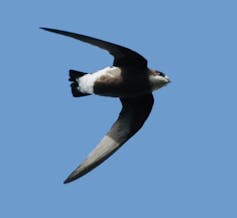 The white-throated needle tail can escape the flames.
Tom Tarrant/Flickr
The white-throated needle tail can escape the flames.
Tom Tarrant/Flickr
2. What we know: The quality of data on where species occur is patchy. For example, there are thousands of records for most of Australia’s 830 or so bird species. But there are very few reliable records for many of Australia’s 25,000-odd plant species and 320,000-odd invertebrate species.
So while we can estimate with some confidence how much of a crimson rosella’s distribution burned, the fire overlaps for less well-known species are much less certain.
3. The history of threats: The impact of fires on a region depends on the extent of other threats, such as drought and the region’s fire history. The time that elapses between fires can influence whether populations have recovered since the last fire.
For instance, some plants reproduce only from seed rather than resprouting. Fires in quick succession can kill regrowing plants before they’ve matured enough to produce seed. If that happens, species can become locally extinct.
 Authors supplied
4. Fire severity: Some areas burn more intensely than others. High severity fires tend to kill more animals. They also incinerate vegetation and can scorch seeds lying in the soil.
Many Australian plant species are exquisitely adapted to regenerate and resprout after fire. But if a fire is intense enough, even these plants may not bounce back.
5. Already threatened?: Many species affected by these bushfires were already in trouble. For some, other threats had already diminished their numbers. Others were highly vulnerable because they were found only in very limited areas.
The bushfires brought many already threatened species closer to extinction. And other species previously considered secure are now threatened.
Read more:
Sure, save furry animals after the bushfires – but our river creatures are suffering too
Which species made the list?
With these issues in mind, and with contributions from many other experts, we compiled lists of plant, invertebrate and vertebrate species worst-affected by the 2019-20 fires. A similar assessment was undertaken for threatened ecosystems.
Some 471 plant, 213 invertebrate and 92 vertebrate species have been identified as a priority for interventions. Most had more than half their distribution burnt. Many have had more than 80% affected; some had 100% burnt.
Authors supplied
4. Fire severity: Some areas burn more intensely than others. High severity fires tend to kill more animals. They also incinerate vegetation and can scorch seeds lying in the soil.
Many Australian plant species are exquisitely adapted to regenerate and resprout after fire. But if a fire is intense enough, even these plants may not bounce back.
5. Already threatened?: Many species affected by these bushfires were already in trouble. For some, other threats had already diminished their numbers. Others were highly vulnerable because they were found only in very limited areas.
The bushfires brought many already threatened species closer to extinction. And other species previously considered secure are now threatened.
Read more:
Sure, save furry animals after the bushfires – but our river creatures are suffering too
Which species made the list?
With these issues in mind, and with contributions from many other experts, we compiled lists of plant, invertebrate and vertebrate species worst-affected by the 2019-20 fires. A similar assessment was undertaken for threatened ecosystems.
Some 471 plant, 213 invertebrate and 92 vertebrate species have been identified as a priority for interventions. Most had more than half their distribution burnt. Many have had more than 80% affected; some had 100% burnt.
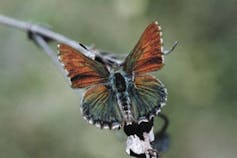 The purple copper butterfly is listed as a priority for recovery efforts.
NSW Department of Planning, Industry and Environment
Priority invertebrates include land snails, freshwater crayfish, spiders, millipedes, beetles, dragonflies, grasshoppers, butterflies and bees. Many species had very small ranges.
For example, the inelegantly named Banksia montana mealybug – a tiny insect - existed only in the foliage of a few individuals of a single plant species in Western Australia’s Stirling Range, all of which were consumed by the recent fires.
Some priority plants, such as the Monga waratah, have persisted in Australia since their evolution prior to the break-up of the Gondwanan supercontinent about 140 million years ago. More than 50% of its current range burned, much at high severity. During recovery it is vulnerable to diseases such as phytophthora root rot.
Read more:
Yes, the Australian bush is recovering from bushfires – but it may never be the same
Some priority vertebrates have tiny distributions, such as the Mt Kaputar rock skink that lives only on rocky outcrops of Mt Kaputar near Narrabri, New South Wales. Others had large distributions that were extensively burnt, such as the yellow-bellied glider.
The priority lists include iconic species such as the koala, and species largely unknown to the public, such as the stocky galaxias, a fish that lives only in an alpine stream near Cooma in NSW.
The purple copper butterfly is listed as a priority for recovery efforts.
NSW Department of Planning, Industry and Environment
Priority invertebrates include land snails, freshwater crayfish, spiders, millipedes, beetles, dragonflies, grasshoppers, butterflies and bees. Many species had very small ranges.
For example, the inelegantly named Banksia montana mealybug – a tiny insect - existed only in the foliage of a few individuals of a single plant species in Western Australia’s Stirling Range, all of which were consumed by the recent fires.
Some priority plants, such as the Monga waratah, have persisted in Australia since their evolution prior to the break-up of the Gondwanan supercontinent about 140 million years ago. More than 50% of its current range burned, much at high severity. During recovery it is vulnerable to diseases such as phytophthora root rot.
Read more:
Yes, the Australian bush is recovering from bushfires – but it may never be the same
Some priority vertebrates have tiny distributions, such as the Mt Kaputar rock skink that lives only on rocky outcrops of Mt Kaputar near Narrabri, New South Wales. Others had large distributions that were extensively burnt, such as the yellow-bellied glider.
The priority lists include iconic species such as the koala, and species largely unknown to the public, such as the stocky galaxias, a fish that lives only in an alpine stream near Cooma in NSW.
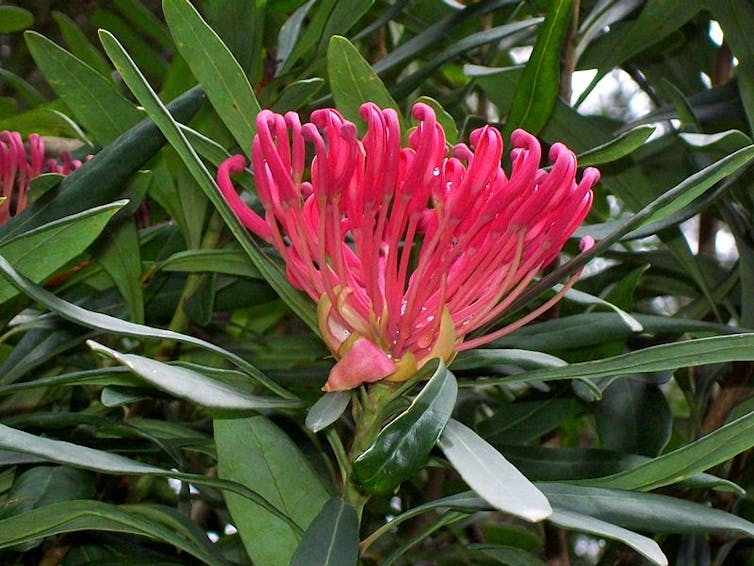 Half the Monga waratah’s range burned in the fires.
Wikimedia
What’s being done
A federal government scheme is now allocating grants to projects that aim to help these species and ecosystems recover.
Affected species need immediate and longer-term actions to help them avoid extinction and recover. Critical actions common to all fire-affected species are:
careful management of burnt areas so their recovery isn’t compromised by compounding pressures
protecting unburnt areas from further fire and other threats, so they can support population recovery
rapid surveys to identify where populations have survived. This is also the first step in ongoing monitoring to track recovery and the response to interventions.
Targeted control of feral predators, herbivores and weeds is also essential to the recovery of many priority species.
In some rare cases, plants or animals may need to be moved to areas where populations were reduced or wiped out. Captive breeding or seed collection can support this. Such restocking doesn’t just help recovery, it also spreads the risk of population loss in case of future fires.
Half the Monga waratah’s range burned in the fires.
Wikimedia
What’s being done
A federal government scheme is now allocating grants to projects that aim to help these species and ecosystems recover.
Affected species need immediate and longer-term actions to help them avoid extinction and recover. Critical actions common to all fire-affected species are:
careful management of burnt areas so their recovery isn’t compromised by compounding pressures
protecting unburnt areas from further fire and other threats, so they can support population recovery
rapid surveys to identify where populations have survived. This is also the first step in ongoing monitoring to track recovery and the response to interventions.
Targeted control of feral predators, herbivores and weeds is also essential to the recovery of many priority species.
In some rare cases, plants or animals may need to be moved to areas where populations were reduced or wiped out. Captive breeding or seed collection can support this. Such restocking doesn’t just help recovery, it also spreads the risk of population loss in case of future fires.
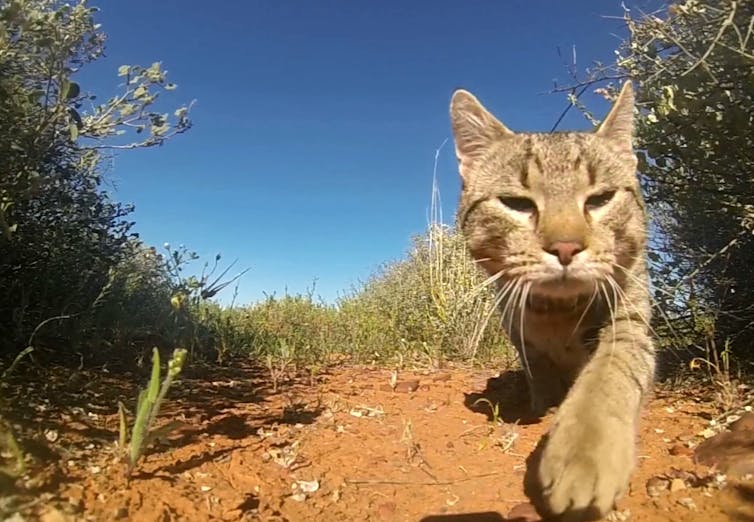 Feral animals such as cats threaten native species in their recovery.
Hugh McGregor, Threatened Species Recovery Hub
Long road back
The COVID-19 pandemic has led to some challenges in implementing recovery actions. Like all of us, state agency staff, NGOs, academics and volunteer groups must abide by public health orders, which have in some cases limited what can be done and where.
But the restrictions may also have an upside. For instance, fewer vehicles on the roads might reduce roadkill of recovering wildlife.
As states ease restrictions, more groups will be able to continue the recovery process.
Read more:
Scientists find burnt, starving koalas weeks after the bushfires
As well as action on the ground, much planning and policy response is still required. Many fire-affected species must be added to threatened species lists to ensure they’re legally protected, and so remain the focus of conservation effort.
Fire management methods must be reviewed to reduce the chance of future catastrophic fires, and to make sure the protection of biodiversity assets is considered in fire management planning and suppression.
Last bushfire season inflicted deep wounds on our biodiversity. We need to deal with that injury. We must also learn from it, so we can respond swiftly and effectively to future ecological disasters.
Many species experts and state/territory agency representatives contributed to the analyses of priority species. Staff from the Department of Agriculture, Water and the Environment (especially the Environmental Resources Information Network (Geospatial and Information Analytics Branch), the Protected Species and Communities Branch and the Threatened Species Commissioner’s Office) and Expert Panel members also contributed significantly to this work.
Feral animals such as cats threaten native species in their recovery.
Hugh McGregor, Threatened Species Recovery Hub
Long road back
The COVID-19 pandemic has led to some challenges in implementing recovery actions. Like all of us, state agency staff, NGOs, academics and volunteer groups must abide by public health orders, which have in some cases limited what can be done and where.
But the restrictions may also have an upside. For instance, fewer vehicles on the roads might reduce roadkill of recovering wildlife.
As states ease restrictions, more groups will be able to continue the recovery process.
Read more:
Scientists find burnt, starving koalas weeks after the bushfires
As well as action on the ground, much planning and policy response is still required. Many fire-affected species must be added to threatened species lists to ensure they’re legally protected, and so remain the focus of conservation effort.
Fire management methods must be reviewed to reduce the chance of future catastrophic fires, and to make sure the protection of biodiversity assets is considered in fire management planning and suppression.
Last bushfire season inflicted deep wounds on our biodiversity. We need to deal with that injury. We must also learn from it, so we can respond swiftly and effectively to future ecological disasters.
Many species experts and state/territory agency representatives contributed to the analyses of priority species. Staff from the Department of Agriculture, Water and the Environment (especially the Environmental Resources Information Network (Geospatial and Information Analytics Branch), the Protected Species and Communities Branch and the Threatened Species Commissioner’s Office) and Expert Panel members also contributed significantly to this work.
Authors: John Woinarski, Professor (conservation biology), Charles Darwin University

















