

parents of children with disability struggle to get the basics during coronavirus
- Written by: Helen Dickinson, Professor, Public Service Research, UNSW
COVID-19 has had a significant impact on all Australians, but there are very good reasons why the impact might be more keenly felt by people with disability and their carers.
Our new research on behalf of Children and Young People with Disability Australia (CYDA) provides insight into these issues, capturing the impacts at the height of the pandemic.
These findings throw the daily inequities people with disability face into sharp relief. Without urgent action, future emergencies will have similar impacts.
How have families found life in the pandemic?
As coronavirus reached crisis point in Australia, CYDA was concerned that we lacked a coherent national response to assist younger Australians with disabilities. So it launched a survey about families’ pandemic experiences.
Read more: People with a disability are more likely to die from coronavirus – but we can reduce this risk
This was designed to explore the specific impact of COVID-19, but also to help plan for future emergencies, including other pandemics, bushfires and floods.
The survey was launched in mid-March and stayed open for almost six weeks. Nearly 700 responses were received, mostly from family members of children and young people with disability.
Scared and uncertain
Our report, More than Isolated, shows families were confused about how to handle the crisis.
More than 80% of respondents said they lacked information about coronavirus and how it related to children with disability. This exacerbated their distress and uncertainty.
Households reported feeling scared and uncertain about the best ways to act to protect themselves and loved ones, and this was having an impact on the mental health of all family members.
Respondents also reported a great deal of uncertainty about schooling and school closures. As one parent said
Should we be waiting for school to close or should we keep him at home? Should we keep our other kids home from school to protect him? How serious is this?
Missing out on supplies, medication
More than 60% of respondents were unable to buy essential supplies (such as groceries, special dietary products and hygiene products). Almost 20% said they were unable to buy essential medication.
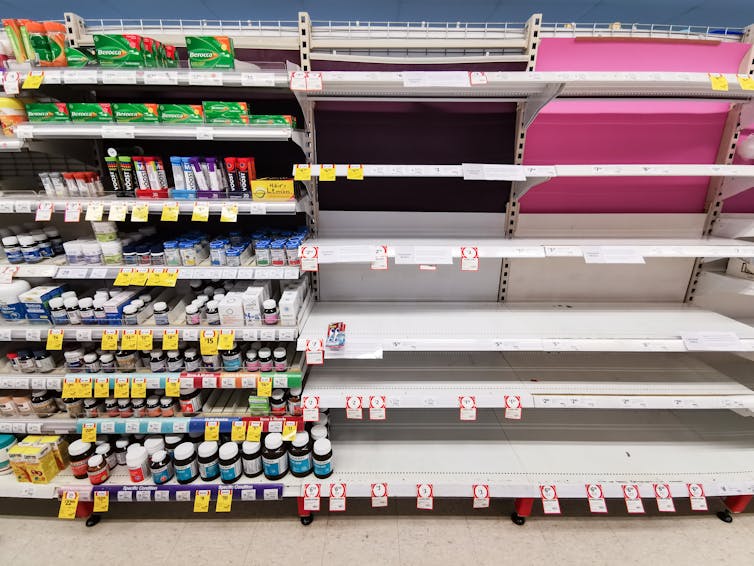 Panic buying was particularly hard on families of children with disability.
James Gourley/AAP
Panic buying was particularly hard on families of children with disability.
James Gourley/AAP
While this was an issue for many Australians, often these products were especially necessary for the children and young people with disability.
Read more: We've had a taste of disrupted food supplies – here are 5 ways we can avoid a repeat
As one parent reported:
Families with ASD [Autism Spectrum Disorder] children don’t meet criteria for special shopping times and so we have run out of essential items. In my spare time I’m running around all day looking for toilet paper and food that my child will eat. I’m exhausted.
The shortages also meant some children and young people went without food or continence supplies. Other families found themselves spending up to three times the usual budget on essential items, sometimes at the expense of paying their rent.
Less support, declining mental health
One in three respondents had to deal with the cancellation of support workers.
This was either because the family had to cancel because of concerns about people coming into the home, or the services themselves cancelled. This meant family members had increased support requirements, with some reporting they had to give up their own paid work to care for their kids.
Half of survey respondents reported a decline in mental health, either for themselves or for the child or young person with disability. This increased over the period of the survey.
As another parent reported:
I’m scared as a parent, I’m scared of failing my child, and I’m scared about the mental health impacts on me as a parent with absolutely no support.
Often the impacts were interconnected. For example, service cancellation led to parents’ reduced ability to work, which put stress on obtaining essential supplies.
Some people were unable to access pre-existing support networks, and unsure of what would happen in the days and weeks ahead. Many respondents expressed heartbreaking distress and worry.
I am struggling significantly to meet my children’s needs … I am completely isolated from any therapies, support workers and family support.
Families are struggling: what needs to change
Many of those who care for children and young people with disability are constantly beset by difficult decisions - balancing work, play, care and education to provide the best possible lives for their kids.
Many people can only manage these things when the world is operating as it normally does. But this pandemic (which was preceded by a summer of horrific bushfires) has thrown these carefully balanced routines off to such a degree that families are struggling to cope.
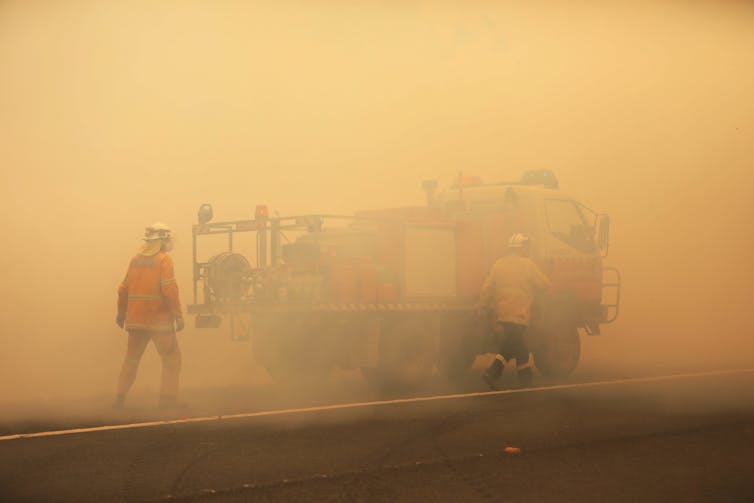 Families’ carefully balanced routines have been thrown off by recent disasters.
Sean Davey/AAP
Families’ carefully balanced routines have been thrown off by recent disasters.
Sean Davey/AAP
There are lessons that we can learn from this pandemic that can inform future emergency responses.
Our survey findings point to the importance of information that is tailored to children and young people with disability.
The fragmentation of national and state/territory responsibilities (especially around education) made for confusing messaging for these families, and this continues.
It is crucial the voices of children and young people with disability and their families are heard and responded to in emergency planning.
But improving messaging and ensuring a more coherent response will not solve many of the issues.
It is well established that people with disability face significant inequities in many facets of their lives (from health to work, education and social interaction). The only way we will prevent an impact like this again is to address the various inequities faced on a daily basis by children and young people with disability and their caregivers.
This is not a new observation, but it is also at the heart of the Convention on the Rights of Persons with Disabilities that Australia is a signatory to.
There is a richness in diversity and human experience and this needs to be valued and planned for.
During this period of the COVID-19 pandemic there was not enough recognition that some groups might require more support and intervention so that they can be viewed as equally valued members of society.
CYDA is a not-for-profit community-based organisation and receives its core funding from the Department of Social Services
Authors: Helen Dickinson, Professor, Public Service Research, UNSW


















