

Let's fix Australia's environment with any pandemic recovery aid – the Kiwis are doing it
- Written by: Lachlan G. Howell, PhD Candidate | School of Environmental and Life Sciences, University of Newcastle
The COVID-19 pandemic is causing significant economic challenges for Australia. With April figures showing more than 800,000 people unemployed and last month 1.6 million on JobSeeker payments, a key focus will be job creation.
Read more: The big stimulus spending has just begun. Here's how to get it right, quickly
Lessons should be learned from what’s happening in New Zealand, where the government is funding projects that revive the environment. Unfortunately, Australia seems to be going the other way.
New Zealand gets it
As part of New Zealand’s innovative Wellbeing Budget the government will invest NZ$50 billion in a direct COVID-19 recovery response.
Of that, NZ$1.1 billion will be spent on creating 11,000 “nature jobs” to combat unemployment and supplement pandemic-affected sectors.
This unique investment will be delivered in a number of targeted environmental programs.
These include NZ$433 million for regional environmental projects that will provide 4,000 jobs in conserving and managing waterways. This will help restore fragile ecosystems such as wetlands, rivers and catchments.
There’s NZ$315 million for weed and feral animal control, including possums, pigs, deer and wallabies. This will provide employment through partnerships between the community, Māori land managers and government departments.
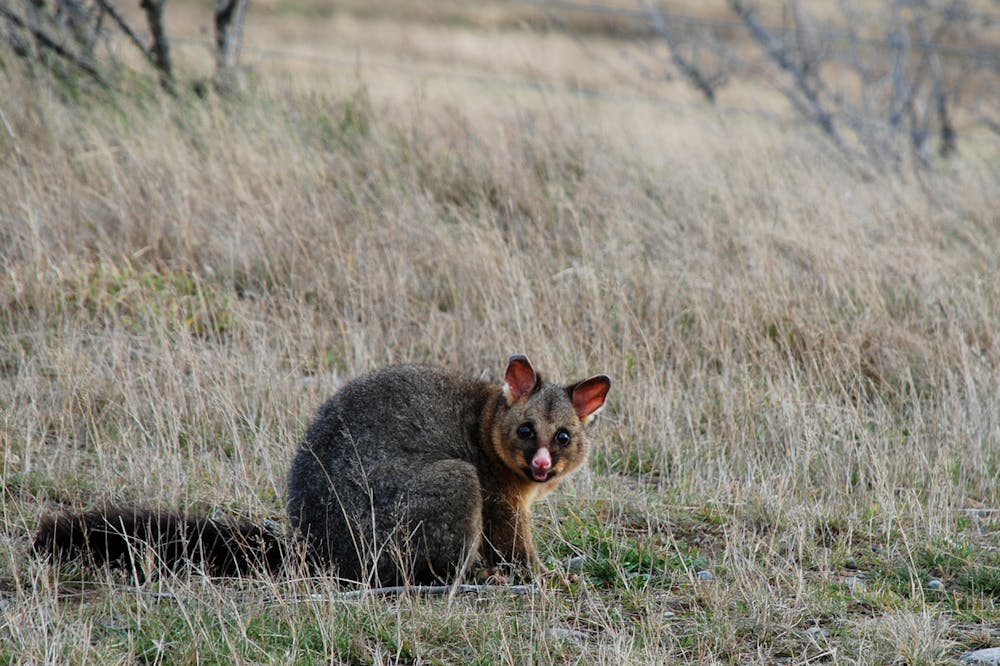 New Zealanders hate possums as they’re an invasive pest.
Flickr/Geof Wilson, CC BY-NC-ND
New Zealanders hate possums as they’re an invasive pest.
Flickr/Geof Wilson, CC BY-NC-ND
A further NZ$200 million will deliver jobs on public conservation land through the Department of Conservation for various management actions. These include predator control, restoration, regenerative planting and maintenance of tracks, huts and other assets.
Some of these investments will not only provide jobs but also conserve New Zealand’s environment. They will maintain agricultural productivity and advance existing environmental initiatives such as Predator Free New Zealand.
They will also provide households with income that will in turn help stimulate local economies.
This is a win for New Zealand’s environment and wildlife, particularly native fish species and unique birds. It’s also a win for people and the economy.
Australia’s destructive COVID-19 recovery
In contrast, the Australian federal and some state governments have resorted to environmentally destructive projects and policies to stimulate economic activity and support employment.
For example, the New South Wales government in March granted approval to extend coalmining under Sydney’s Woronora reservoir and in May approved the controversial Snowy Hydro 2.0 project.
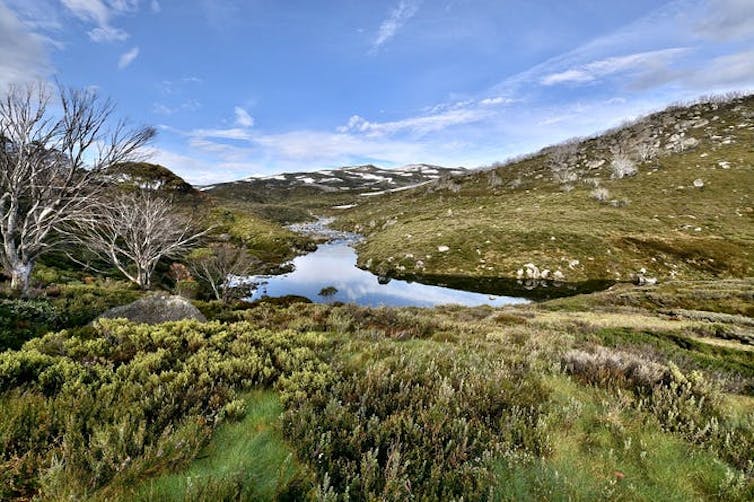 Snowy 2.0 threatens to pollute pristine Snowy Mountains rivers.
Schopier/Wikimedia
Snowy 2.0 threatens to pollute pristine Snowy Mountains rivers.
Schopier/Wikimedia
In Victoria, the government delayed key improvements to environmental protection laws and amended legislation to allow onshore gas extraction.
Federally, wider plans exist for an apparent fossil-fuel-led national recovery through gas expansion, fast-tracked by relaxing environmental regulations. This includes a proposed exemption from additional approvals under the Environment Protection and Biodiversity Conservation Act.
The relaxing of environmental legislation and protections (commonly referred to as cutting “green tape”) has been pushed by business and industry lobby groups and some quarters of the media.
Even politicians such as federal Environment Minister Sussan Ley see it as a way to promote economic recovery.
A better way to recovery
Nature groups, environmental scientists, economists and political parties such as the Greens are proposing an alternative approach.
Some state and territory departments, including in the ACT and the Northern Territory, recognise environmental management and protection as a source of high employment opportunity.
They all see investment in conservation and land management as a key feature of any economic recovery.
An opportunity for Australia
Economic stimulus through conservation and land management is not yet recognised as a way for Australia to respond to both the COVID-19 crisis and long-standing conservation needs.
Australian governments, if they invested similarly to New Zealand, could create jobs in the short term in any desired target region, based on economic and environmental need.
This flexibility would allow jobs to be created in regions with already fragile local economies, particularly those made worse by COVID-19. This includes regional areas that usually have high tourism, bushfire-affected communities, drought-affected regions, as well as Indigenous communities.
Read more: When introduced species are cute and loveable, culling them is a tricky proposition
Conservation and land management jobs could include dealing with feral pests, such as cats, foxes, rabbits, pigs, deer and horses.
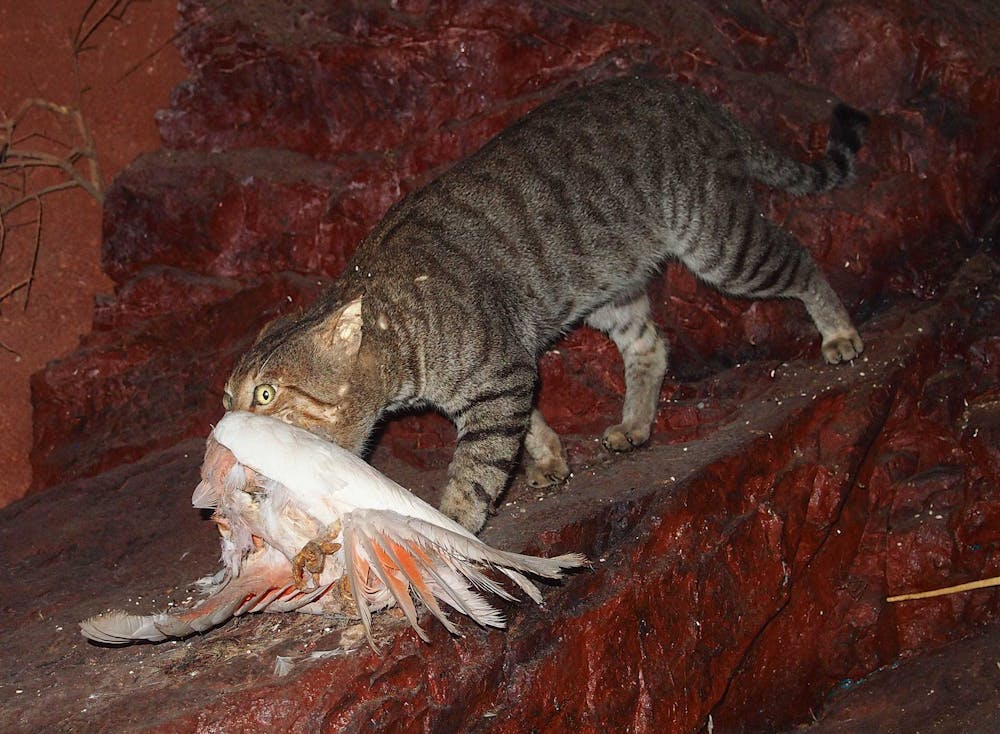 Feral cats are said to kill millions of native Australian animals every day.
Mark Marathon/AAP
Feral cats are said to kill millions of native Australian animals every day.
Mark Marathon/AAP
It could feature restoration activities such as tree planting, weed removal, hazard-reduction burning, and wildlife restoration and monitoring.
This type of employment is hands-on, labour-intensive and has low overhead costs. Investment is likely to be cost-effective, with most of it going straight to the worker.
Let’s stimulate the economy and the environment
Projects can be up and running quickly, so the economic stimulus is immediate.
The benefits of direct household stimulus are well understood. This form of spending provides localised economic benefits as money is likely to stay in the local community.
Read more: The next global health pandemic could easily erupt in your backyard
There is an opportunity to support the hard-hit university sector. It could get funds for research to design, monitor and assess the effectiveness of any interventions.
Such investment would have lasting and much-needed environmental benefits through the conservation of landscapes recently ravaged by bushfire that contain unique and declining wildlife species.
Could the much-hyped “new normal” be one where Australia’s environment and economy are not seen as incompatible?
Authors: Lachlan G. Howell, PhD Candidate | School of Environmental and Life Sciences, University of Newcastle


















