

The national cabinet's in and COAG's out. It's a fresh chance to put health issues on the agenda, but there are risks
- Written by: Lesley Russell, Adjunct Associate Professor, Menzies Centre for Health Policy, University of Sydney
The national cabinet, which was quickly set up to tackle the nation’s threats from the coronavirus pandemic, will now replace the Council of Australian Governments (COAG).
For almost 30 years, COAG has been the way Australian governments have managed matters of national significance or those that need national coordination.
For health, that covers issues including hospital funding, adult public dental health programs, Closing the Gap Refresh, and regulations governing who can work as a health practitioner.
So, how will scrapping COAG in favour of the national cabinet affect state-federal relations and national decision-making when it comes to health?
Read more: Explainer: what is the national cabinet and is it democratic?
National cabinet has been successful
The national cabinet has been extraordinarily successful at addressing the immediate coronavirus health threat. It acted swiftly and decisively to address a common threat that did not respect state and territory borders. It was guided by expert advice and evidence. It did this without the usual blame games. Financial considerations played second fiddle to public health imperatives.
Even so, there have been fractures in the national approach. This was seen most obviously in fights over border closures and school reopenings, resulting in different states going their own way.
Read more: 4 ways Australia's coronavirus response was a triumph, and 4 ways it fell short
COAG, which was founded by the Keating government in 1992 has, over time, gained a less proactive reputation. When Prime Minister Scott Morrison announced it would be scrapped, he described it as a place where “good ideas went to die”.
Others have described it as moribund and cumbersome.
However, the issues COAG has dealt with are inherently more divisive than those the national cabinet has so far faced, not least because they have been around for longer and because finances are involved. Classic examples are the GST rate and allocation to the states, and hospital funding.
How the national cabinet, which has functioned to date rather like a subcommittee of the regular federal cabinet, will operate in the future to tackle such complex and long-standing issues is unclear. We currently only have an outline.
How will the national cabinet work?
There will be subcommittees in select key areas: rural and regional, skills, energy, housing, transport and infrastructure, population and migration, and health.
Closing the Gap of Indigenous disadvantage, and reducing violence against women will continue as priorities.
Already several concerns emerge. There is no reference to social welfare, urbanisation or climate change, all of which have substantial impacts on health.
However, Morrison recognises:
…the important role of health, in terms of having a healthy workforce and a healthy community to support a strong economy.
This could mean, finally, issues like preventive health and obesity will become national priorities.
Yet the promised prominent role of the Council on Federal Financial Relations (the federal and state treasurers) in the new structure means there is a risk that issues considered by national cabinet will be judged simply on the funding required, rather than on community needs and benefits delivered.
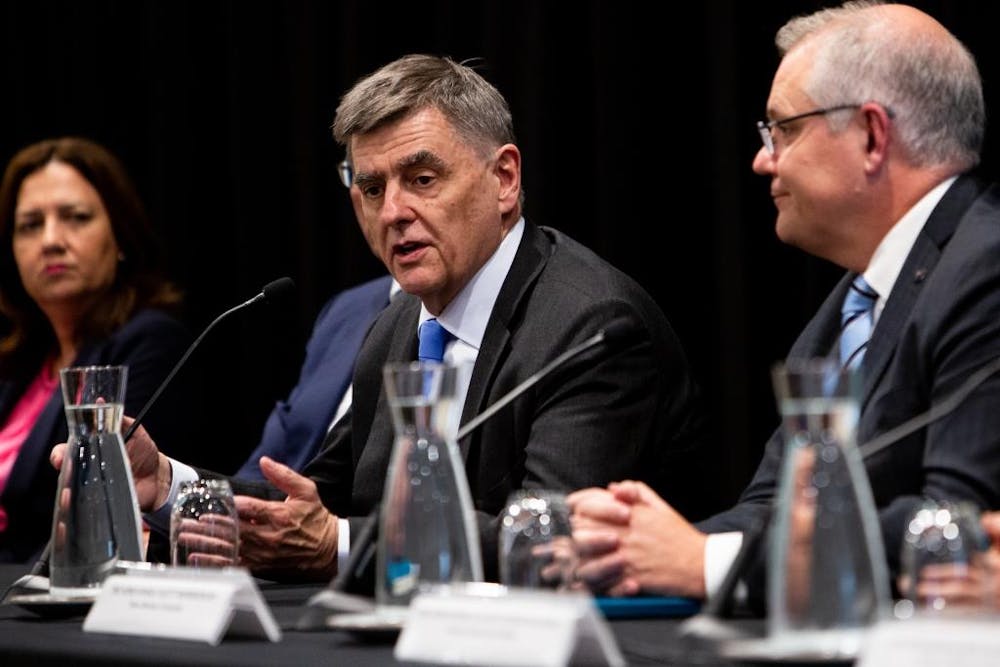 Chief Medical Officer Brendan Murphy speaks alongside Prime Minister Scott Morrison during a COAG meeting in Sydney earlier this year.
Paul Braven/AAP Image
Chief Medical Officer Brendan Murphy speaks alongside Prime Minister Scott Morrison during a COAG meeting in Sydney earlier this year.
Paul Braven/AAP Image
There’s also the issue of bureaucracy. We don’t know whether COAG’s 20 or so ministerial councils and nine ministerial regulatory councils will be shoehorned into the national cabinet, or perhaps dropped completely to streamline proceedings.
But it’s easy to see how such subcommittees and expert advisory groups will quickly accumulate again. It’s also easy to see how they could become the “parking lot for tough decisions” once more.
Read more: COAG: How to turn a 'parking lot for tough decisions' into something really useful
Then there’s the issue of transparency around decision-making. There are concerns Morrison will seek to have the same rules about confidentiality apply to the workings and documents of national cabinet as apply to the federal cabinet.
What will be on the agenda?
While Morrison says the national cabinet’s “singular agenda” is to create jobs, it is not the only urgent issue.
A new approach and new momentum offer the exciting possibility of whole-of-government approaches to the “wicked problems” that beset Australia, such as socio-economic inequality, drought and bushfires, ageing and suicide.
Even on a smaller scale, there are benefits to a broader approach to problems. Examples include: boosting the aged care workforce as part of a job stimulus package that would particularly benefit women; tackling public dental health wait times to improve productivity; improved Indigenous housing to Close the Gap in education and health; and providing Indigenous employment.
Changes are already under way
The power base that underpins the national cabinet is about to shift, with consequences for its efficient operation.
In the battle against the coronavirus pandemic, the states and territories held most of the relevant constitutional powers. That will not be the case as the focus shifts to the needs of the nation in the years ahead.
And the commonwealth will always wield power in these settings because it controls the funding.
At a time when there is an urgent need to reform programs and funding to deliver better health and health-care outcomes, the national cabinet offers possibilities, challenges and risks.
In large part, the future and value of the national cabinet in post-pandemic times will depend on the level of commitment the prime minister and his cabinet are willing to make to this new structure and to working together in good faith with Australia’s governments.
Authors: Lesley Russell, Adjunct Associate Professor, Menzies Centre for Health Policy, University of Sydney


















