

An El Niño hit this banana prawn fishery hard. Here’s what we can learn from their experience
- Written by: Eva Plaganyi, Principal Research Scientist, CSIRO
Prawns are a staple of many Australian barbecues, and we’re fortunate to have wild-caught prawns from sustainably-managed fisheries that boast best management practice.
You’ve probably heard of the tiger and white banana prawns caught in the Gulf of Carpentaria. But west of Darwin, there’s a fishery in the remote Joseph Bonaparte Gulf that focuses on a different species of prawn with red legs: redleg banana prawns.
But the combination of their complex life-cycle, extreme tides in their breeding grounds and the projected increasing frequency of extreme El Niño events creates challenges for the little crustaceans and their management.
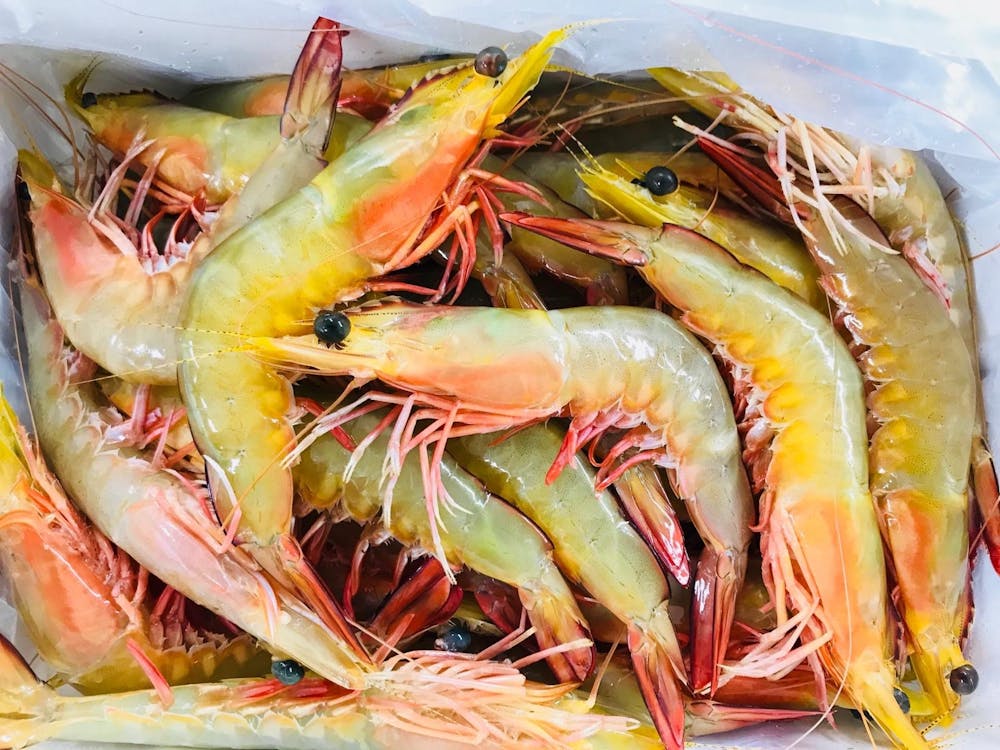 Redleg banana prawns are found to the west of Darwin.
Dwayne Klinkhamer, Author provided
Redleg banana prawns are found to the west of Darwin.
Dwayne Klinkhamer, Author provided
Our new research found an El Niño event was associated with the lowest ever catch in redlegs, and outlines what fisheries across Australia can learn from this experience.
Changes in major weather patterns can have profound ecological, social and economic consequences for food production systems. It’s vital we develop adaptation solutions.
Changing tides
The El Niño causes warming of ocean temperatures and reduced ocean upwelling in the central and eastern Pacific – in areas such as off the coast of California and Peru. These oceanographic events stretch across the ocean. Temperature and pressure differences in the water and atmosphere cause the sea level to rise in the east and fall in the western Pacific.
 In 2015-16, a fishery recorded its lowest ever catch of redleg banana prawns.
Remy Stutz and Conrad Mackail/FV Karumba Pearl, Author provided
In 2015-16, a fishery recorded its lowest ever catch of redleg banana prawns.
Remy Stutz and Conrad Mackail/FV Karumba Pearl, Author provided
The lowest part of the sea across the Pacific Ocean equatorial band wraps around the top end of Indonesia. This leads to changes in currents and tides in the Joseph Bonaparte Gulf and top end of Australia, where prawn fisheries are located.
El Niños are a natural event, but researchers have predicted they’ll occur more frequently and severely as a result of climate change. What’s more, changing weather patterns may also make these events harder to predict.
Read more: El Niño has rapidly become stronger and stranger, according to coral records
Australian farmers and fishers are all too familiar with the changes in rainfall that accompany alternating El Niño or La Niña cycles. But impacts on the marine environment of northern Australia are only recently becoming better understood.
Less known is how El Niño-driven sea level changes – which can cause changes in tides and currents – affect fisheries. This is where our research comes in.
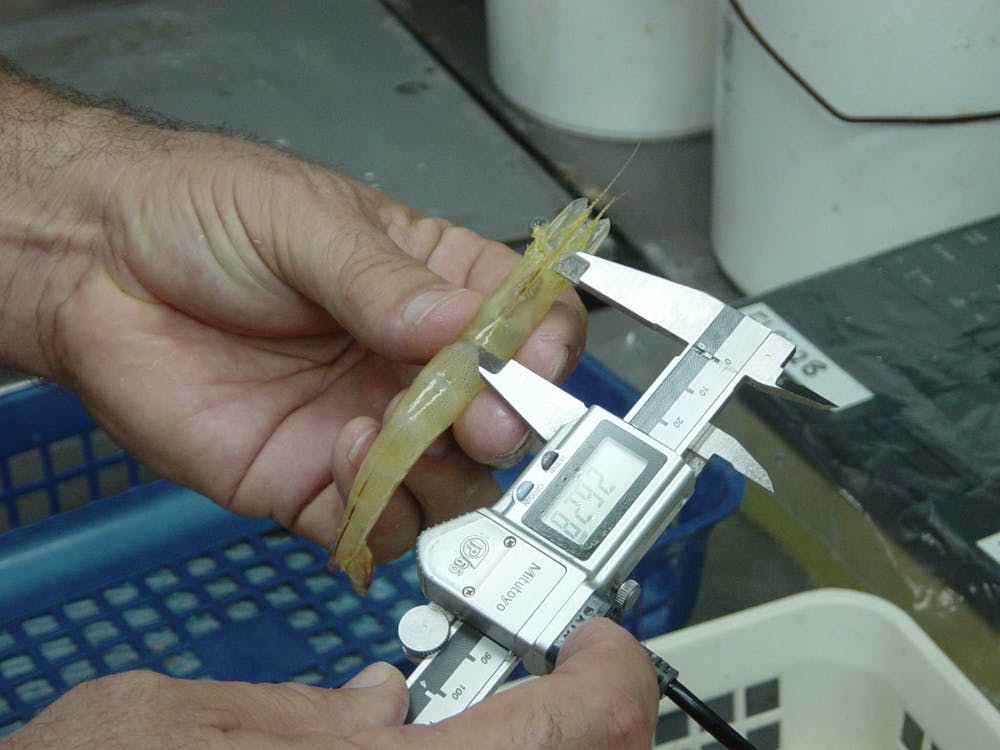 Redleg banana prawns rely on tidal highways to fast-track their movement.
CSIRO, Author provided
Redleg banana prawns rely on tidal highways to fast-track their movement.
CSIRO, Author provided
Breakdown of the redleg highway
Like many prawns, redlegs have a complex life-cycle because they depend on both marine and coastal river (estuary) habitats. They use tides, currents and river flows as their mode of travel.
The large gulf they call home has some of the strongest tides in the country, and the prawns rely on these tidal highways to fast-track their movements.
Redlegs use these water highways to move back and forth from the nursery on the coast to the deep gulf waters. Juveniles move offshore to become adults, and then larvae return to continue the life cycle.
But the strong El Niño event in 2015-16 likely caused these tidal highways to break down, and fishers reported the lowest-ever catches of redleg banana prawns.
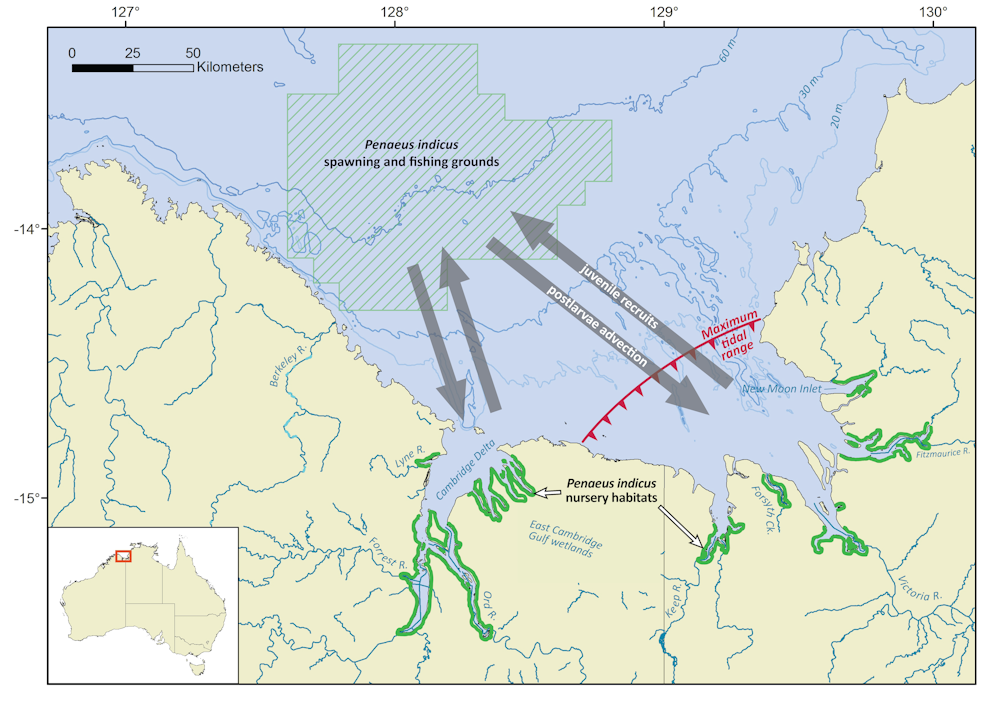 The redleg highway in the Joseph Bonaparte Gulf.
Author provided
The redleg highway in the Joseph Bonaparte Gulf.
Author provided
In such remote country, it’s no simple feat to rush north with scientific measuring equipment to test links between the fishery and tides. So we relied on observations from space using satellite measurements of changes in sea surface height (altimetry).
The images we saw for this period were astounding. The average sea level had temporarily dropped by up to 18 centimetres, compared with usual levels.
Read more: The rise and rise of the 2015 El Niño
On top of this, regional rainfall had been below average, leading to a drop in freshwater river flows that would usually play a role in connecting estuarine and marine habitats.
Climate-proofing fisheries
So how can fisheries respond? Understanding environmental drivers is important to help plan ahead and safeguard a resource, whether prawns or other fish.
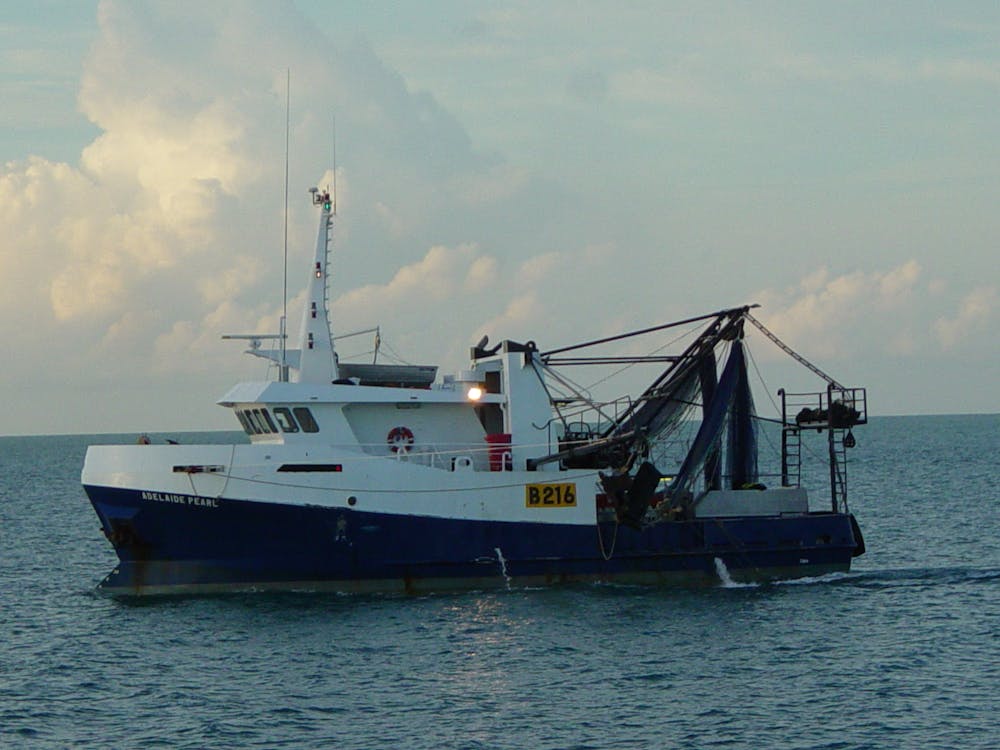 A prawn trawler. Fisheries must work with scientists to prepare for future climate disruptions.
CSIRO, Author provided
A prawn trawler. Fisheries must work with scientists to prepare for future climate disruptions.
CSIRO, Author provided
Getting a heads-up on an impending bad year is helpful for the redleg fishery. Fishers must travel long distances from Darwin, with fishing restricted to moderate neap tides – when the difference between low and high tide are not as extreme.
Fisheries can prepare for more extreme environmental drivers by modifying the rules for when and how much to fish, so they’re aligned with environmental signals. For example, in low abundance years, it may be necessary to reduce catch or fishing season to ensure prawns aren’t overfished.
It’s also a good idea for fishers to be flexible, and able to switch between species they catch. In this case, tiger prawns were booming in the Gulf of Carpentaria at the same time redleg banana prawns were scarce.
Read more: As the coronavirus interrupts global supply chains, people have an alternative – make it at home
Extreme events can negatively impact supply chains – the routes and markets fishers rely on to get their product to consumers. Planning ahead can help maintain these flows. We need only look to COVID-19 to see how economic consequences can blow out from disruptions to supply chains.
We can maintain Australia’s proud history of sustainable management. But to continue to thrive, research must translate into changes in practice at fisheries.
Authors: Eva Plaganyi, Principal Research Scientist, CSIRO


















