

Non-Indigenous Australians need to educate themselves. One way to do this is to take an Indigenous tour.
- Written by: Marnie Graham, Post-doctoral Research Fellow, Stockholm Resilience Centre and University of Johannesburg, Stockholm University
The recent Black Lives Matter protests in Australia have highlighted the pressing and continued need for non-Indigenous Australians to take responsibility for reconciliation.
This requires non-Indigenous Australians to educate themselves about Indigenous and shared histories as well as contemporary realities. And taking action to change these realities.
Read more: 'I can't breathe!' Australia must look in the mirror to see our own deaths in custody
At the moment, Australians reading the news or watching the protests might be asking: how can we contribute to this change?
Through our research and teaching, we have learned that spending time with Indigenous people, learning about culture and history and connecting to Country, is an important first step.
And one accessible way to do this is through an Indigenous tour.
What is an Indigenous tour?
Indigenous tourism covers activities such as art exhibitions, artistic and cultural performances, festivals and tours.
Read more: How Indigenous tourism can help bring about reconciliation in Australia
Our research focuses specifically on Indigenous tours, because visitors are able to ask questions and interact with Indigenous people. We have found that many Australians would like to make personal connections with Indigenous peoples, cultures, histories and languages, but don’t know how - who to talk to, how to connect, what actions to take.
Indigenous tour operators are dedicated to making these connections and sharing their knowledge with visitors. Yet many people don’t realise that Indigenous-owned-and-run tour operators are located all over Australia.
Many different types of tours
The types of Indigenous tours available in Australia are diverse, and cover a huge range of experiences. They include, for example, day tours of two or three hours, involving walking together on Country, learning about history, culture, stories and Indigenous relationships to Country.
There are also culinary tours, where visitors learn about Indigenous foods and cooking, cultural cruises aboard Indigenous-owned vessels and activity-oriented tours where visitors can hike, canoe, quad-bike, or paddle board with Indigenous guides.
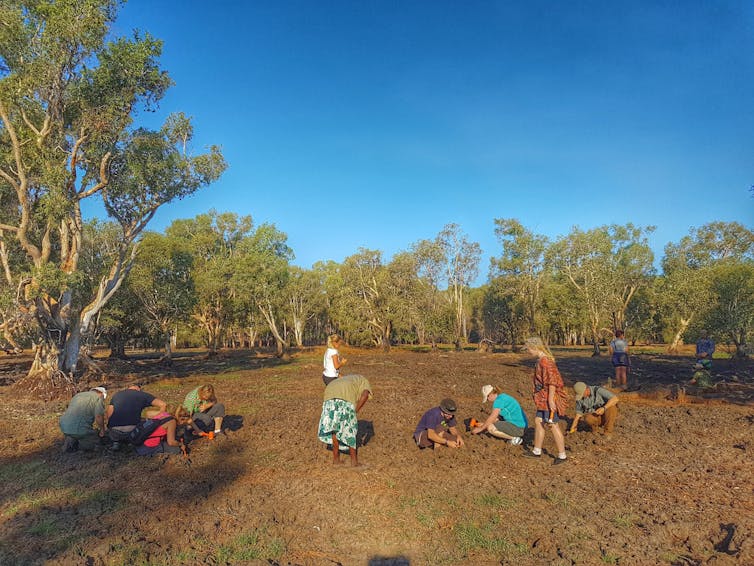 Tours can involve education about history, food or wildlife.
Toni Mason/AAP
Tours can involve education about history, food or wildlife.
Toni Mason/AAP
Other tours are based around learning about Indigenous uses and values attached to flora and fauna, many of which are held on national parks.
Some operators also run longer camps on Country, dedicated to men, women, families or student groups.
What is common to all these experiences is that Indigenous tour operators share with visitors stories of Country, culture, history and connection.
What might visitors expect from the experience?
The Indigenous tour operators we connect with through our work and research conduct their tours with immense openness and generosity. They share aspects of their lives and certain stories with visitors. Tim Selwyn runs tours on the NSW Central Coast. He explains he does this job, “because I have to”.
It’s my responsibility as a human to speak truth, to help educate, to share. I do what I do to create a safe space where everyone is welcome, so we can talk and we can listen. At the moment the government is not listening, they haven’t done so for 250 years. They’re still imposing their structures. We need to listen and talk together … People need to know truth and history, to make an educated decision about our past. We need to look at the past to go forward, because we’re still stuck.
Tourists must treat these tours with respect and sensitivity, because being invited to share these experiences and knowledge is a huge privilege. It is a tourist’s responsibility to listen and learn.
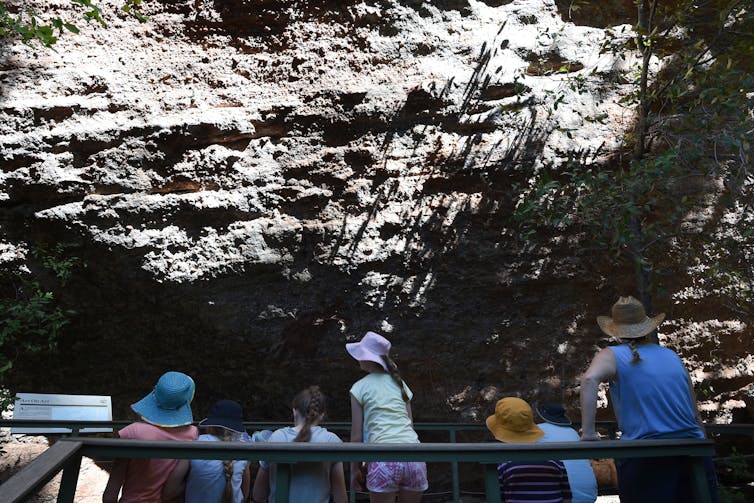 Participants on Indigenous tours say the experience has changed them.
Dean Lewis/ AAP
Participants on Indigenous tours say the experience has changed them.
Dean Lewis/ AAP
Our research indicates that when visitors do take that first step by going on an Indigenous tour - then they begin to see that their words, actions and learning can make a difference.
We conduct interviews with tour participants to understand what they learn and experience. This is one example of what a non-Indigenous Australian visitor experienced after a day-tour:
I think it really changed me, as a person, because it was the first time that I actually interacted with an Aboriginal person. I loved it. I think it was just the reality of the fact that there was a community living here before the colonial powers came into Australia … I think the whole thing brought history to life for me, and its implications as well. Not just negatively, I mean there’s that aspect but also, just like I felt welcomed in this country.
How can I access a tour?
Our research is based on work with operators in and around Sydney.
But there are many Indigenous tour options all around Australia. You can find them by visiting WelcomeToCountry.com, a not-for-profit website dedicated to putting you directly in touch with Indigenous tourism initiatives. Professor Marcia Langton has also written a hard copy travel guide.
You can follow state-based Indigenous tourism operator councils on social media. And the federal government’s Tourism Australia website Australia.com has options for Indigenous tourism experiences.
What else do I need to know?
In our experience, many independent Indigenous tour operators are also open to providing cultural education sessions in early childhood centres, schools, universities, government organisations, and businesses. As well as for family or friendship groups.
So, start the process, make the connection.
Through listening, and starting to learn and connect, the difficult conversations can occur, and we can begin to make the changes that Australia needs to see.
Authors: Marnie Graham, Post-doctoral Research Fellow, Stockholm Resilience Centre and University of Johannesburg, Stockholm University

















