

Coronavirus or just a common cold? What to do when your child gets sick this winter
- Written by Nicholas Wood, Associate Professor, Discipline of Childhood and Adolescent Health, University of Sydney
It’s Sunday night, around 8pm, when your ten-year-old tells you she has a sore throat. She doesn’t have any other symptoms, and feels OK. You tell her “let’s see how you feel in the morning” and she happily goes off to sleep.
But you’re left wondering what you’ll do if her throat is still sore the next day — or if she’s developed other symptoms by then. Should you get her swabbed for COVID-19?
Like most Australians, you haven’t recently travelled overseas or been in contact with anyone with COVID-19. And like most kids, your children often get coughs and colds during winter.
Read more: Worried about your child getting coronavirus? Here's what you need to know
COVID-19 symptoms in kids resemble other respiratory infections
Generally, in their first 12 years, children can experience up to four to eight respiratory tract infections, or “colds”, per year. This number is highest among the youngest children.
One-quarter of all GP visits in children under five in Australia are for respiratory tract infections.
A recent review showed COVID-19 symptoms in children were typical of most acute respiratory infections and included fever, cough, sore throat, sneezing, muscle aches and fatigue.
In general, COVID-19 in children is less severe than in adults.
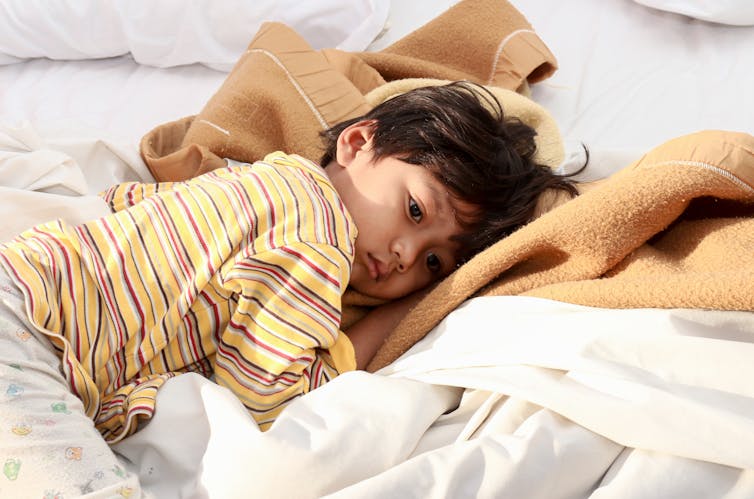 In children, the symptoms of COVID-19 might appear like the symptoms of any cold or flu.
Shutterstock
In children, the symptoms of COVID-19 might appear like the symptoms of any cold or flu.
Shutterstock
So how do I know if I should get my child tested?
If your child is unwell you can check their symptoms using healthdirect’s coronavirus symptom checker.
It will ask you questions based on what we know to be common symptoms of COVID-19, including whether you or the person you’re caring for have:
a fever of 37.5℃ or more; or
symptoms suggesting fever (such as night sweats or chills); or
an acute respiratory infection (for example, cough, shortness of breath, sore throat); or
loss of smell or taste.
Read more: Coronavirus and Kawasaki disease in children: it's an intriguing but unproven link
It’s possible these could also be symptoms of a different respiratory infection. But if your child is displaying any of these symptoms, the current federal government guidelines recommend they stay at home and get tested.
You can also ask your GP if you’re not sure whether your child needs a test.
How likely is it my child will test positive to COVID-19?
Although Victoria is currently experiencing a spike, Australia has largely “flattened the curve”. In the past month there have been less than 40 new cases nationally each day.
Around the country, since the pandemic began, we’ve performed more than two million tests and identified 7,521 cases.
This means fewer than 0.5% of tests have been positive. And only a small proportion of confirmed cases have been in children.
So in our current situation it’s much more likely your child’s fever or runny nose is caused by one of the common respiratory viruses, such as rhinovirus, that we see each winter.
How sustainable is all this testing?
We’re now performing more tests each day than we were at the height of the pandemic in late March.
Australia’s high level of testing has undoubtedly played a significant role in our successful response to the COVID-19 pandemic.
But we now must ask ourselves whether, with potentially diminishing returns, it’s sustainable to keep testing every child with a cold for the foreseeable future.
Let’s remember there are 4.7 million children in Australia under 15 and each of them, particularly the younger ones, are likely to get multiple respiratory infections each year.
Read more: 'Stupid coronavirus!' In uncertain times, we can help children through mindfulness and play
One of the risks of a continued emphasis on COVID-19 testing is that when a child returns a negative result, the parent thinks “all good, my child doesn’t have coronavirus, they can go back to school”.
This risks spreading non-COVID-19 viruses to others, who then develop respiratory symptoms and need to be tested. Many of these viruses spread easily among children, especially where they’re in close contact, such as in childcare centres.
This may lead to an upward spiral of respiratory infections, particularly during winter when colds and the flu are traditional foes.
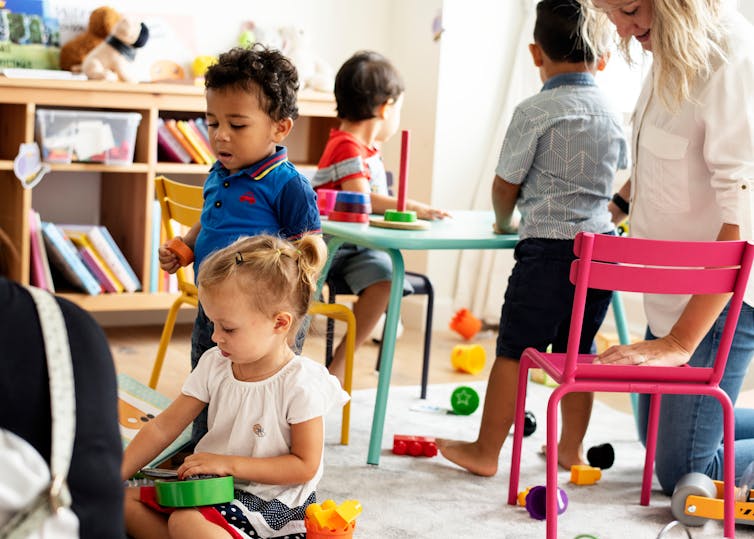 Viral infections can spread easily among children.
Shutterstock
Viral infections can spread easily among children.
Shutterstock
Keep sick kids at home
While testing is important, physical distancing and hygiene measures have been instrumental in flattening the curve.
And as a bonus, these measures may have led to decreased incidence of other viral infections in the community.
In our hospital in Sydney, we’ve seen fewer hospitalisations for respiratory syncytial virus this year, a common cause of infant hospitalisations.
Nationally, in the first five months of 2020 there were 20,569 influenza notifications, compared to more than 74,000 at the same point last year.
Read more: Kids are more vulnerable to the flu – here's what to look out for this winter
Although restrictions are easing, Australians should continue to focus on physical distancing and hygiene throughout winter.
We need to see this pandemic as an opportunity to shift to a new normal: that is, staying at home when you’re sick, and keeping your child at home if they’re unwell (until their symptoms resolve).
We know it’s not always practical, but hopefully this “new normal” will see more flexibility from employers in these circumstances.
Finally, yes, follow public health advice around getting tested for COVID-19. But let’s not view this as the only thing that matters.
Authors: Nicholas Wood, Associate Professor, Discipline of Childhood and Adolescent Health, University of Sydney

















