

The market is not our master — only state-led business cooperation will drive real economic recovery
- Written by: Jonathan Baker, Lecturer in Business Strategy, Auckland University of Technology
Like the coronavirus itself, joblessness can act as a pestilence on a society.
People who would have otherwise gone to their local restaurant, hairdresser, café or bar, taken a holiday in Queenstown or Taupo, or chosen to buy New Zealand lamb or beef in the supermarket, will stop spending.
In turn, the owners and employees of those businesses also stop spending. And so it goes on.
In the end, the fallout of mass joblessness will erode the social cohesion that has got New Zealand through the past few months.
Some of this is inevitable, of course. Despite the massive public resources pumped into keeping the economy afloat, some industries – most notably tourism and aviation – are facing severe drops in revenue that will drive joblessness and business closures.
But it has been discouraging to see leaders in other industries trying to prepare their firms for a major recession driven by unemployment by creating yet more unemployment.
Markets are not all-powerful
When this is happening in sectors comparatively unaffected by the COVID-19 crisis it’s clear we urgently need fresh thinking and fast.
Traditional business strategy for many decades has stressed the need to adapt to the external environment. Businesses must be willing to change to meet the demands of the market or respond to external shocks.
But, contrary to received wisdom, markets are not just the product of external forces. Nor are businesses simply at the mercy of what markets dictate.
Our research explores what is called “market-shaping”. Viewed as systems, markets include more than just buyers and sellers, but other actors such as regulators, supporting industries, adjacent markets, and even informal stakeholders like pressure groups.
Market systems are actively created through the actions, assumptions, exchanges and rules within them. You might say a market is in a constant state of “becoming” – it is never static or fixed.
In practice this means managers do not always have to default to adapting to the external environment. Instead, a business – or any other market actor for that matter – can work to adapt the market to its own needs.
Sometimes cooperation trumps competition
An example from the wine industry is instructive. In the early 2000s, the New Zealand Screwcap Wine Seal Initiative convinced one of the world’s most staid, traditional markets to accept that a screw cap could seal a premium wine.
The campaign was driven by the massive financial losses winemakers were suffering due to poor-quality Portuguese corks. It involved changing the closely-held beliefs and practices of critics, restaurateurs, sommeliers, supermarket buyers, winemakers and, most importantly, vast numbers of consumers – in multiple global markets.
Similarly, Swiss-based NGO The Global Fund has been extremely effective at market-shaping by driving production and distribution of basic medicines to the developing world. They’ve done this by encouraging cooperation and collaboration between pharmaceutical manufacturers, funders, distributors and local communities.
Geneva-based private-public partnership GAVI has successfully done much the same with vaccines for children in developing countries.
Market-shaping still preserves the beauty of markets as mechanisms that enable the generation of wealth like no other, and which reward entrepreneurship and innovation. And as long as they are shaped to deliver positive outcomes, markets can avoid the blunt instrument of over-regulation.
By extension, market-shaping is best achieved by multiple actors coming together and collaborating to achieve a shared goal. Much as multi-lateral international cooperation will defeat COVID-19 more effectively than countries going it alone, economic recovery will happen faster with collective action.
And, as those innovative New Zealand winemakers showed, a shared crisis is a great motivator for collaboration.
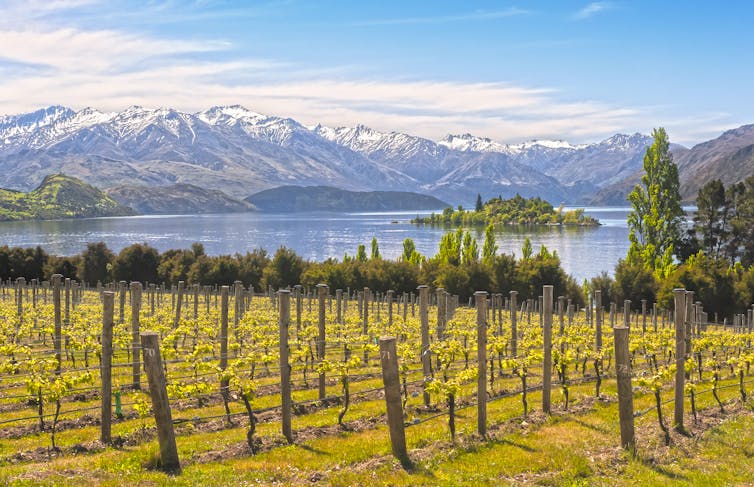 Market shaping in action: by cooperating, New Zealand’s wine industry changed the way the world viewed screw caps on bottles.
www.shutterstock.com
Market shaping in action: by cooperating, New Zealand’s wine industry changed the way the world viewed screw caps on bottles.
www.shutterstock.com
Governments must take the lead
For this to happen there will need to be bold leadership and a willingness to do things differently.
First, we need a shared platform for coordinating the development of a collaborative market-shaping strategy. It will probably be temporary and would be best developed by the state, extending the excellent work already being undertaken by treasuries in New Zealand and Australia.
After all, governments are one of the most powerful market-shapers in the economy.
Second, this platform would coordinate and encourage shared strategy development on a national scale. This will require diverse stakeholder groups to emerge from their various silos.
Read more: 'Shovel-ready' projects ignore important aspects of community resilience
It will involve business leaders coming together with their competitors, supporting industries and supply-chain partners, regulators, shareholder representatives, unions, industry associations, and those calling for a genuine reset of economies around the world.
The plan will focus on minimising economic recession through maximising both employment and sustainable practice.
And third, implementation of the plan will involve a coordinated private sector response coupled with targeted public investment that goes well beyond so-called shovel-ready projects.
Yes, the idea of competitors and their stakeholders coming together to agree on a shared path forward goes against every senior manager’s competitive instincts. And no, it will not be a silver bullet for businesses with immediate solvency concerns.
But it might just give the team of five million a shot at collectively beating the recession in the same way it beat the virus.
Authors: Jonathan Baker, Lecturer in Business Strategy, Auckland University of Technology


















