

Melbourne's second lockdown will take a toll on mental health. We need to look out for the vulnerable
- Written by: Louise Stone, General practitioner; Clinical Associate Professor, ANU Medical School, Australian National University
Metropolitan Melbourne and Mitchell Shire are beginning another six weeks of lockdown due to a spike in COVID-19 cases.
While this second round of lockdown may bring the case numbers under control, its effects on Victorians’ mental health could be significant.
Australians are already experiencing mental health fallout from COVID-19. A prolonged pandemic, and a second lockdown, might only make things worse.
COVID-19 and our mental health
Our mental health is affected by changes in our social circumstances, and no event in recent history has wrought havoc with our daily lives quite like COVID-19.
Parents of newborns have had reduced access to social support.
Many people have had to grieve alone after the death of a loved one.
People experiencing homelessness have received temporary housing, but may have difficulty readjusting to life without support again.
Nursing home residents have endured months of isolation.
Job losses and the economic consequences will mean the emergence of mental health problems in people who had previously enjoyed a life of privilege.
Read more: Social distancing can make you lonely. Here's how to stay connected when you're in lockdown
While we don’t yet know the full extent of the mental health fallout from COVID-19, we are seeing an increase in mental disorders like depression and anxiety.
As Melbournians return to lockdown, the impact of loneliness, fear, anxiety and hopelessness is likely to increase further.
It could be harder the second time
A review of the literature around quarantine shows the mental health effects worsen with longer quarantine duration, infection fears, frustration, boredom, inadequate supplies, inadequate information, financial loss, and stigma.
The reality is we don’t know what the mental health effects of a second lockdown will be. But this second lockdown in Melbourne has all the features of a difficult quarantine situation, including enforced isolation from friends and relatives.
Another six weeks will likely bring frustration, anger and a sense of hopelessness, compounding the mental health effects we’ve felt up to this point.
Plus, any “novelty” we might have felt the first time has likely worn off.
This second lockdown also shows us COVID-19 is likely to be with us for a long time. Our hope for a quick resolution and return to normal is fading.
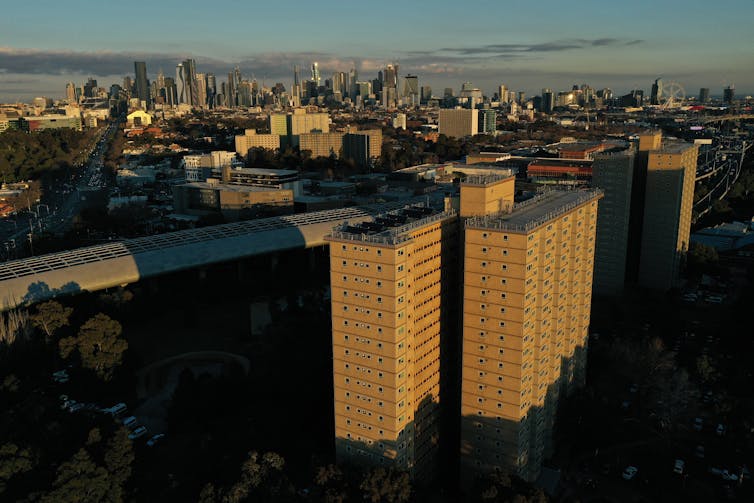 Not everyone across Melbourne will fare equally when it comes to the mental health effects of a second lockdown.
James Ross/AAP
Not everyone across Melbourne will fare equally when it comes to the mental health effects of a second lockdown.
James Ross/AAP
It won’t be the same for everyone
The effects of hardship, trauma and loss associated with lockdown and the pandemic more broadly are unlikely to be spread evenly across the population.
People who are socioeconomically disadvantaged, people who are unemployed, Aboriginal and Torres Strait islander people and those from culturally and linguistically diverse backgrounds already have poorer mental health and poorer access to services.
This week’s “hard lockdown” in the North Melbourne tower blocks is a stark reminder of the disproportionate effect this pandemic is having on vulnerable groups.
And unlike natural disasters that bring communities together, epidemics often foster suspicion and division. Sadly, scapegoating is emerging and we’re seeing multicultural groups targeted.
The longer the pandemic endures, the greater the division between those who have resources to access care and those who don’t is likely to become.
For young people, the sense of hopelessness and worry about the future is escalating.
Professor Susan Rossell from Swinburne University has been tracking the mental health of 18-25-year-olds over the past three months, and has noted a serious spike in mental illness. The mental health impacts of COVID-19 also seem to be more severe for women, and those with existing mental illness.
In the past month, this spike was particularly noticeable in Victoria, presumably due to increasing numbers of new cases.
 Young people seem to be struggling during the pandemic.
Shutterstock
Young people seem to be struggling during the pandemic.
Shutterstock
Mental health will change over time
In many ways, the trajectory of emotional responses to COVID-19 echoes the trajectory of chronic illness.
As a GP, I see people transition from their first episode of illness, where they hope everything will return to normal, to a more chronic course, where they gradually realise they need to adapt to a new and changing idea of what normal will become.
Read more: Coronavirus is stressful. Here are some ways to cope with the anxiety
This second wave in Victoria shows us we can’t just wait for things to return to normal. The implications COVID-19 has on our lives — and the associated mental health effects — will be ongoing.
Somewhat like a patient with chronic illness, we need to adapt to the idea that change is the “new normal”. This uncertainty makes life profoundly difficult for people beginning to plan for their future, like young people, and people who have few resources to weather change.
More than ever, we need to offer medical and psychosocial care to the vulnerable people in our community if we’re to prevent mental illness becoming more damaging than the virus itself.
On the other hand, there’s always hope the new normal will become more equal, more sustainable and more humane.
If this article has raised issues for you, or if you’re concerned about someone you know, call Lifeline on 13 11 14.
Authors: Louise Stone, General practitioner; Clinical Associate Professor, ANU Medical School, Australian National University


















