

Students in Melbourne will go back to remote schooling. Here's what we learnt last time and how to make it better
- Written by: Wee Tiong Seah, Associate Professor in Mathematics Education, University of Melbourne
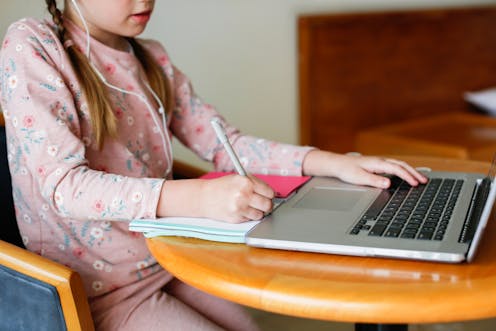
On Sunday, Victorian Premier Daniel Andrews announced government school students in prep to Year 10 in metropolitan Melbourne and the Mitchell Shire will learn from home for term three. The remote learning period will run from July 20 until at least August 19, and will follow five pupil-free days scheduled for this week.
Students in Years 11 and 12, as well as those in Year 10 attending schools for VCE or VCAL classes, and students with special needs, will resume face-to-face learning today.
Many independent schools had already decided, before the premier’s announcement, they will resume remote learning this week.
We conducted a national survey from April 27 until May 25 of more than 1,200 teachers’ experiences during Australia’s first wave of remote learning. Based on teachers’ responses, we know a sustainable return to remote learning must ensure schools and the government address the concerns around the social and emotional impacts on students, accessibility, and increasing workloads for teachers.
Social development and emotional well-being
Around the same number of teachers said the remote learning period had a positive (33%), negative (36%) or neither positive nor negative (31%), impact on students’ educational progress. But most of them expressed concerns about the impact on students’ social development and emotional well-being.
More than half (58%) of all teachers were concerned about students’ social development. Meanwhile, 68% of primary school and 79% of secondary school teachers felt remote learning was having a negative impact on students’ emotional well-being.
These results were fairly consistent across state capitals, regional and rural areas, as well as across government (73.6%), Catholic (76.5%) and independent (78.2%) schools.
One teacher said
it is the social-emotional well-being of our young people, particularly those at risk in their homes, that is my biggest concern.
Schools play a critical role in supporting student well-being. Feelings of isolation can have serious negative impacts such as increased stress, anxiety and disengagement. It is important there are strategies for maintaining a strong teacher presence online.
Teachers said the level of support students received for remote learning varied depending on the students’ home environment. Some vulnerable students can completely disengage from the school system and we have seen this increased vulnerability during remote learning.
Some students didn’t attend live lessons, disguised attendance by only logging in but without video or audio, or did not submit work. Use of learning analytics to assist in tracking student access would be beneficial during remote learning.
In some cases, remote learning issues disrupted the capacity for teachers to provide additional support, despite repeated attempts to communicate with students and their families.
Schools play a critical role in supporting engagement and maintaining essential connections, routines and supports during a pandemic, and during recovery.
During the lockdown, schools and the government must take urgent measures to address student well-being. Teachers need support to identify and help students with high needs. They need professional learning programs to help them navigate this territory.
Not everyone is equal
In 2019, 87% of Australians could access the internet at home. But only 68% of Australian children aged 5 to 14 living in disadvantaged communities had internet access at home, compared to 91% of students living in advantaged communities.
In our survey, 49.45% of teachers reported all of their students had access to devices, while 43.28% indicated most of their students had access.
Fewer primary teachers (37.46%) than secondary teachers (56.25%) indicated all their students had access to devices.
Some students had to share devices with other family members, a few used their phones and some didn’t have any access to technology at all. For those who had access to devices, there were other challenges, such as the availability and reliability of apps and programs, with parents and teachers trying to troubleshoot IT problems.
Read more: Schools are moving online, but not all children start out digitally equal
A teacher said one of the challenges was “the large amount of disadvantaged families that [the] school serves [where] most don’t have access to three meals a day”.
Increasing the number of loan devices to students is essential during the upcoming remote learning period, as are engaging and interactive lessons. But it’s also important to plan for accessible tasks that aren’t internet-dependent, for those who don’t have ready access – such as school packs or the possibility of attending school.
During the first wave of remote learning, some telecommunications companies provided relief by waiving internet charges or extending data access limits. The government can play a more active role by working with internet providers to ensure further access to this kind of support is available.
Reasonable work expectations
In our survey, 68% of primary teachers and 75% of secondary teachers reported working more hours than usual during the lockdown period. Nearly 50% worked more than six hours extra a week and 19% worked between 11-15 hours extra per week.
Teachers reported increased stress levels, isolation, excessive screen time and exhaustion.
One teacher said there were
unrealistic expectations of teachers — using multiple platforms concurrently with very little training. The time to prepare per class is limited yet we are supposed to provide technologically advanced methods of delivery.
As a priority, setting realistic expectations for teachers, students and parents will ensure the workload is reasonable and manageable.
Remote teaching is not equivalent to classroom teaching and the same content will not be covered in the same amount of time online. Good teaching and curriculum design will soon address any gaps in learning once students are back in the classroom. But the social and emotional impacts could have a more negative impact in the longer term.
Authors: Wee Tiong Seah, Associate Professor in Mathematics Education, University of Melbourne


















