

We could have more coronavirus outbreaks in tower blocks. Here's how lockdown should work
- Written by: Thea van de Mortel, Professor, Nursing and Deputy Head (Learn & Teaching), School of Nursing and Midwifery, Griffith University
The recent lockdown of nine social housing towers in Melbourne’s north to contain the spread of COVID-19 led to widespread concerns for residents’ welfare.
Among the concerns was that implementation of these lockdowns was less than perfect in terms of infection control.
In housing commission towers, many people live in close quarters and share facilities, making them a high-risk setting for outbreaks of infectious disease.
So it’s likely we’ll see more outbreaks in tower blocks, or even similar settings like hotels and apartment buildings, during the pandemic.
Read more: Nine Melbourne tower blocks put into 'hard lockdown' – what does it mean, and will it work?
As of Sunday, there had reportedly been 237 COVID-19 cases across the affected towers. One tower remains in lockdown.
We don’t know whether any of these were sustained as a result of poor infection control practices during the lockdown period. But there are things we can do to keep residents as safe as possible in the event of further outbreaks in commission towers or similar settings.
The chain of infection
In the science of disease prevention and control, we often talk about something called the “chain of infection”. Stopping outbreaks taking hold is about disrupting this chain.
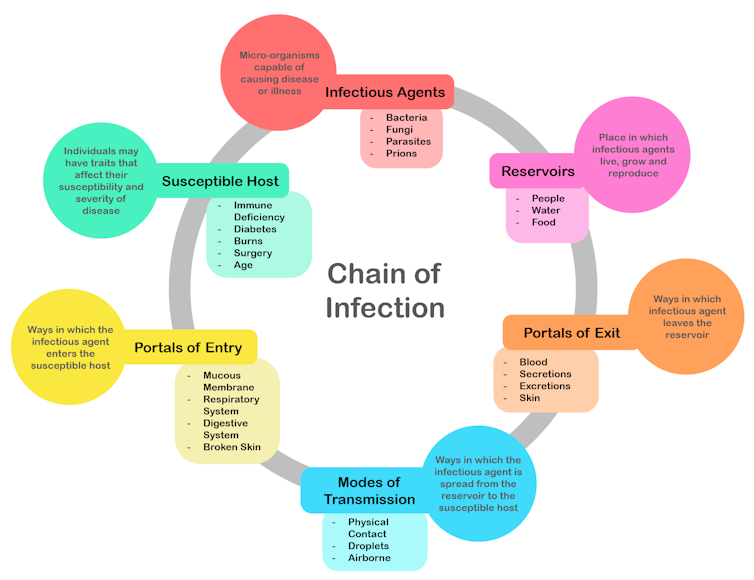 Understanding the chain of infection helps us design strategies to break the links.
Wikimedia Commons, CC BY
Understanding the chain of infection helps us design strategies to break the links.
Wikimedia Commons, CC BY
For COVID-19, the known reservoirs (sources) are infected people and contaminated objects.
The main modes of transmission are droplets spread by coughing, sneezing, and even talking. These droplets travel around 1 metre and might be inhaled by a person in close proximity, or settle rapidly to the ground.
Infection may occur via the transfer of the virus from contaminated objects or surfaces to your food or face.
Another potential route of transmission which continues to generate debate is the airborne route. This is where smaller droplets, called aerosols, travel further and stay in the air longer.
In the case of SARS-CoV-1 (SARS), airborne transmission was considered the most likely explanation for viral spread through the Amoy Gardens towers, an apartment complex in Hong Kong.
Contributing factors were poorly maintained plumbing — allowing airflow between floors — and bathroom fans that spread the virus through ventilation shafts.
Emerging evidence suggests airborne transmission may also be possible in the case of SARS-CoV-2 (the coronavirus that causes COVID-19).
Read more: Is the airborne route a major source of coronavirus transmission?
Using this knowledge to break the chain
Because COVID-19 is relatively new, there’s no research specifically on prevention of transmission of this virus in residential towers. But we can base recommendations on what we know about similar previous outbreaks such as SARS, and by following general infection control principles.
To prevent droplet spread in a locked down residential building:
keep at least 1.5 metres away from others
allow only essential personnel in the building
residents should keep to their own apartment
people servicing the building can wear gloves and masks, but it’s important they be trained in their proper use
infected/symptomatic residents should wear a mask (and be aware of how to handle these correctly so as not to increase the risk of infection)
avoid shared spaces, for example shared laundries; limit numbers in lifts/stairwells at any given time
if movement is required, adopt staggered, rostered times to move through the building
if the structure allows it, utilise separate entry and exit points and one-way pathways through the building
practise good respiratory etiquette (such as coughing into your elbow). This can reduce the number of people each infected person passes the virus to.
Read more: Which face mask should I wear?
To reduce spread via contaminated objects:
everyone who lives in or is visiting the building should frequently wash or sanitise their hands. Sanitiser should be available at entry and exit points and shared areas
avoid touching your face and your food unless your hands have been freshly cleaned
regular cleaning of shared spaces is important, including lift buttons, handrails, and door handles
rubbish bins should be kept in separate areas to other supplies to avoid cross-contamination.
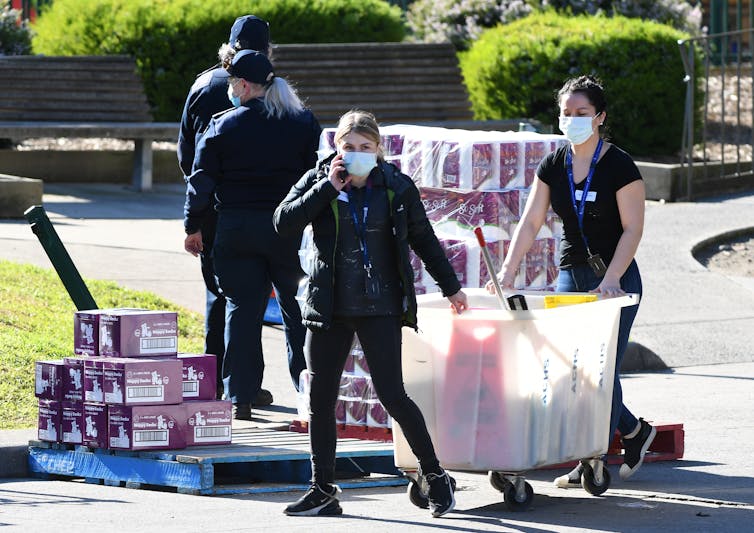 It’s important anyone servicing a locked down building follow infection control procedures.
James Ross/AAP
It’s important anyone servicing a locked down building follow infection control procedures.
James Ross/AAP
Additional measures to reduce airborne spread include:
plumbing and ventilation systems should be maintained to ensure they’re operating effectively, particularly as buildings age
HEPA filters in air conditioners may help to filter out the virus.
Other outbreaks highlight the importance of effective infection control
In the Amoy Gardens outbreak, a visit by one infected person to the apartment complex led to more than 300 cases in the block, and subsequent cases outside the block.
Similarly, Ruby Princess passengers were responsible for about 10% of COVID-19 cases in Australia at the time the ship left Australian waters in April. Cruise ships have a comparatively high density of people in confined and shared spaces as do residential tower blocks.
Finally, in Melbourne’s quarantine hotel bungle, we’ve seen what can happen when infection control measures are not implemented properly.
Read more: Melbourne's lockdown came too late. It's time to consider moving infected people outside the home
Prior planning is vital
Until we have a vaccine, outbreaks in other tower blocks are likely.
While “hard lockdowns” come with problems and challenges, quarantine can prevent the further transmission of infection across the wider community and makes sense from a public health perspective.
The first thing to do is develop a clear plan with procedures for residents and support workers in advance so it can be implemented at short notice. Public health units can develop these plans but governments are ultimately responsible for directing this.
Residents must be clearly informed (in multiple languages) about the plan and what they need to do. Support workers must be trained on strategies to reduce infection transmission.
Authors: Thea van de Mortel, Professor, Nursing and Deputy Head (Learn & Teaching), School of Nursing and Midwifery, Griffith University


















