

books can be triggering, but difficult texts teach us resilience, too
- Written by: Kate Douglas, Professor, Flinders University
We teach English at university. Our weekly engagements include navigating unnerving plot twists, falling in and out of love with iconic characters, and evaluating the complexities of language and genre.
Reading challenges how we think. Each week, in English classes, we explore some of the most significant issues and representations affecting various historical periods and cultures.
In the first semester, our reading list included classic works of literature that deal with themes including mental illness and psychological as well as physical isolation: Charlotte Perkins-Gilman’s The Yellow Wallpaper, Virginia Woolf’s Mrs Dalloway, and Sylvia Plath’s The Bell Jar.
Then COVID-19 happened.
News reports began circulating on what professors were reading for refuge during the pandemic. An article in the New Yorker pondered why “anxious readers” might be soothed by Mrs Dalloway. This is a text that, in the past, has seen students request trigger warnings for its of “examination of suicidal tendencies” which “may trigger painful memories for students suffering from self-harm”.
Read more: When literature takes you by surprise: or, the case against trigger warnings
Our teaching suddenly moved online, which created an even more unsettling set of conditions. We were teaching literary texts representing various kinds of trauma to students coping with a range of new (or exacerbated) issues due to sudden loss of employment, social disconnection, anxiety and fear.
Would reading these difficult texts prove to be a solace for our students, a timely example of the social role of literary storytelling, or a trauma all of its own?
What are difficult texts?
Great stories move and they challenge. They draw attention to diverse social and cultural issues and to the transformative potential of empathy. But they can also be difficult and there are a range of reasons why.
The challenge might be intellectual. Or the text confronting on a psychological or emotional level.
A lot of literature is perceived as perpetuating racist stereotypes. Until quite recently, a good deal of canonical literature excluded the perspectives of women. This is something Woolf has written extensively about and that we can see at work in Mrs Dalloway. Part of her novel’s radicalism is its transgressive (for its era) narrowness of scope: a day in the life of a woman.
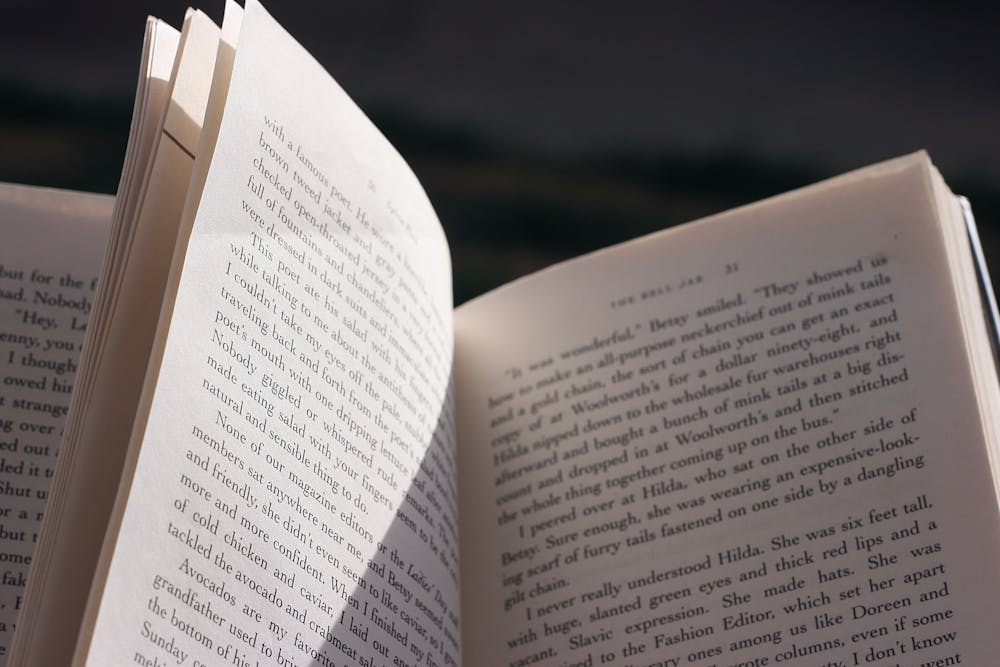 Sylvia Plath’s The Bell Jar explores mental illness, and could be triggering for some readers.
Flickr/kristina, CC BY-ND
Sylvia Plath’s The Bell Jar explores mental illness, and could be triggering for some readers.
Flickr/kristina, CC BY-ND
And of course, there are themes in literary texts that are in themselves inherently challenging or traumatic: war, racial violence, and misogyny are staples in Shakespeare’s plays.
In identifying difficult literature, the goal posts shift: what was confronting to past generations may not remain true for current readers. So too, what was acceptable to readers of a certain era may no longer be acceptable in the 21st century.
Universities have seen an escalation of interest in content and trigger warnings. Viewpoints have run at both ends of the extreme. Content warnings are either coddling the minds of the “snowflake generation”; or one step away from censorship. Others consider warnings as essential in protecting students from psychological harm.
As literature scholar Michelle Smith notes, it seems widely accepted a lecturer should give a warning before showing a graphic visual scene. However, the argument trigger warnings should accompany written literature that represents difficult or challenging subject matter has been met with more scepticism and opposition.
This places a great deal of responsibility on teachers to decide where to draw the line.
Teachers face the ambitious balance of wanting to protect our students from representations that might be too difficult and trigger unwanted emotional responses, alongside a desire to expose students to complex representations, and histories — for instance of inequality, discrimination, racism and sexism.
Read more: If you can read this headline, you can read a novel. Here's how to ignore your phone and just do it
We use the term “trauma texts” to explore how new literary subjects and voices have emerged in the 21st century. Trauma texts reveal literature’s potential for direct and active political and cultural engagement. When we take these texts into the classroom, we ask students to accept difficulty into their lives (if they can), and to witness complex lives and histories in nuanced, critically engaged ways.
Teaching in the time of COVID has re-energised these ongoing debates. For instance, there is an opportunity to recognise (with renewed vigour) how a reader’s individual experience shapes how they approach a particular literary text. We have developed new understandings of how literary texts operate in moments of great cultural or social upheaval.
 Virginia Woolf’s Mrs Dalloway is a radical text for its times.
Flickr/Wolf Gang, CC BY-SA
Virginia Woolf’s Mrs Dalloway is a radical text for its times.
Flickr/Wolf Gang, CC BY-SA
Iso-lit reading during COVID
In our research and practice we have found many positive outcomes when we teach difficult texts in university English. Our students appreciate the texts we teach address recognisable real-world problems.
These books offer opportunities for readers to show empathy, witness injustice and reflect on the ethics of representation. They offer skills (critical reading and thinking, debate, negotiation) that are transferable to diverse work contexts. They come to understand the value of literature (broadly conceived), and the wide cultural and political influence it may have.
Research has shown reading difficult texts with students requires care, and an awareness of how to approach content and trigger warnings. As life narrative theorist Leigh Gilmore reminds us, when we bring trauma texts into the literary classroom, we should teach as if someone in the room has experienced trauma.
The classroom needs to be a safe space.
In teaching difficult texts, it is a reasonable expectation we provide information (in advance) to students regarding any difficult content. We need to open a dialogue between student and teacher and this needs to be maintained throughout the semester so we can offer ongoing support.
Read more: What my students taught me about reading: old books hold new insights for the digital generation
As well as empowering our students, this approach provides us with an opportunity to reflect, dynamically, on why we want to teach these texts.
In previous research we have argued that in English, we want to encourage students to confront new ideas and to be challenged by what they read. This is integral to the university experience. We are asking students to be generous readers who have the capacity to look inward and outward.
Now, more than ever we need tools to read and respond to human experiences of crisis and pain. Reading difficult literature is one way by which the eternal and ongoing responsibility of humanism can be fulfilled.
Authors: Kate Douglas, Professor, Flinders University


















