

Unused buildings will make good housing in the world of COVID-19
- Written by: Norman Day, Lecturer in Architecture, Practice and Design, Swinburne University of Technology
We are entering an era of profound change in how we work, learn, socialise and live with COVID-19. Many people will adjust to this new world order and work remotely at home if they don’t have to attend an office or other workplace. This, in turn, will create an opportunity to adapt unused buildings, which were needed for the previous economy, for the new ways of living and working. Buildings could be transformed or redeployed through adaptive reuse for much-needed housing.
We already have the technology and the capacity to work and live remotely from an office or institution, if we choose to. For some people, working-from-home models have become the norm during the enforced COVID-19 isolation periods of 2020. Many of them are likely to choose alternative work patterns as an ongoing model in preference to daily commuting to the traditional central office in busy cities.
Read more: If more of us work from home after coronavirus we'll need to rethink city planning
If we approach figures like those of earlier recessions, employment will fall even more dramatically than it has already. Reduced trade will slow the economy for many years. The burgeoning numbers of unemployed and low-income citizens will find it difficult to find affordable homes.
The people who suffer most during this period, the “new poor”, will struggle to pay for even basic housing, let alone homes that provide space for occupants to work and live at home. Public and subsidised housing will have to fill the gap.
Silver linings to the COVID cloud
Some positives are appearing from this new world order.
Some professions will find themselves comfortably working away from the traditional workplace. They will be able to manage work and family more easily.
Read more: We're at a fork in the road: do we choose neighbourhoods to live, work and play in?
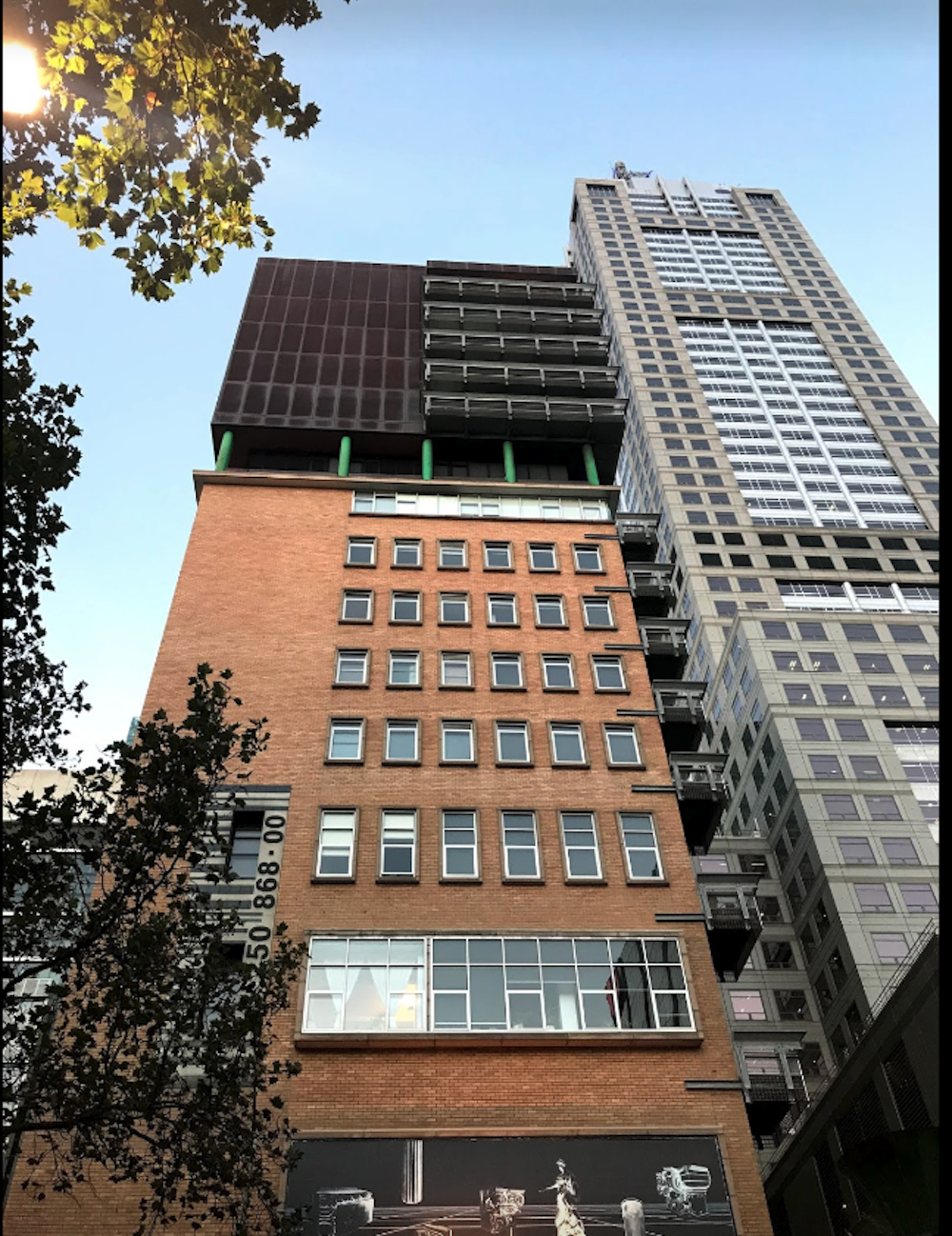 The building that formerly housed a telephone exchange and post office at 118 Russell Street, Melbourne, has been converted into apartments.
Author provided
The building that formerly housed a telephone exchange and post office at 118 Russell Street, Melbourne, has been converted into apartments.
Author provided
As well as offices becoming redundant, delivery services like Amazon, Deliveroo and Uber Eats might replace many traditional retail outlets, including shops, cafes, restaurants and bars. Many buildings housing such businesses might not reopen.
Buildings that are no longer fit for purpose, or not required in a new detached working environment, could be repurposed as housing. Empty office blocks, shops and stores and unused teaching facilities could all be recycled for social and community low-cost rental housing.
Of course we will need to retain many resources, such as distribution warehouses, places of worship, hospitals, childcare centre, kindergartens and primary schools, laboratories, workshops, manufacturing factories, prisons, bakeries, farmers markets, personal health and hygiene salons – for hair, massage, wellness and mental health. Other places such as transport hubs, sporting facilities, theatres, tourist accommodation, cafes, bars and restaurants will be maintained too.
But underused office buildings will not be needed as offices. They can become part of the new model for blended home-and-work operations. Families who have experimented with shared responsibilities during COVID-19 lockdowns may continue this routine as a new “normal” and select newly adapted old buildings for accommodation.
Read more: We create 20m tons of construction industry waste each year. Here's how to stop it going to landfill
Commercial buildings can be easily converted
One advantage of reusing a commercial building is the relative openness of its plan. New living areas can be planned and fitted into the office open space, using simple lightweight partition walls.
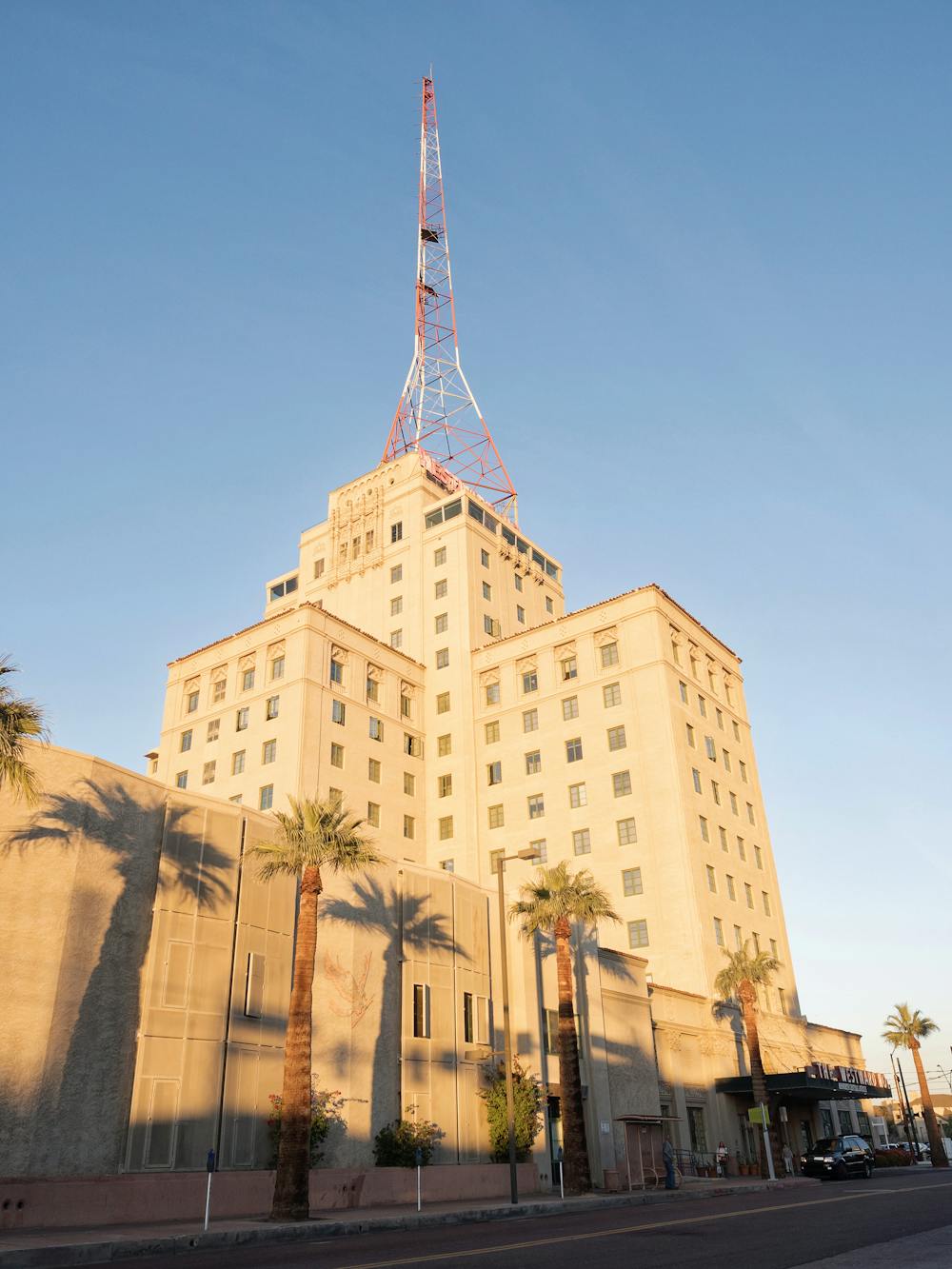 The Westward Ho building in Phoenix, Arizona, was a hotel for more than 50 years before being converted into a subsidised housing complex with up to 320 residents.
Shutterstock
The Westward Ho building in Phoenix, Arizona, was a hotel for more than 50 years before being converted into a subsidised housing complex with up to 320 residents.
Shutterstock
Usually large open office spaces surround a service core. The core contains lifts, plumbing, ducts and risers, fire stairs, bathrooms and equipment.
Wet areas such as kitchens, bathrooms and laundries would be located against the core. Here they can be connected easily to the building services and systems.
Commercial buildings are usually solid constructions. They are built to last, so their recycled concrete, steel and glass suits reclamation.
Read more: Unbuilding cities as high-rises reach their use-by date
These buildings are generally spacious, with a floor-to-ceiling height of about three metres (not the miserable norm of cheap apartments, which is less than 2.5 metres).
It is even possible for some old office building floors to have part of their outside walls removed and refitted inside the floor slabs, which creates open-space balconies and gardens.
 This former office building in Cologne, Germany, is being converted into apartment housing.
Shutterstock
This former office building in Cologne, Germany, is being converted into apartment housing.
Shutterstock
The environment would benefit too
As a byproduct of repurposing old buildings, we’d benefit the environment. Re-use conserves natural resources and minimises the need for new materials. That’s because these adapted buildings are effectively already half built.
Building construction, maintenance and use produce about a quarter of Australia’s emissions. Maybe the world could largely meet its Paris Agreement emission-reduction targets before 2030 by making better use of existing buildings as well as increasing energy efficiency and renewable energy’s market share.
Read more: Making every building count in meeting Australia's emission targets
COVID-19 might eventually be eliminated, but the impacts will roll on for many years. A long-term benefit of this disaster could be a focus on no longer needing to duplicate so much space to live and work in. The result would be reducing consumption of building materials as the world tightens its environmental belt.
Authors: Norman Day, Lecturer in Architecture, Practice and Design, Swinburne University of Technology
Read more https://theconversation.com/unused-buildings-will-make-good-housing-in-the-world-of-covid-19-142897


















