

3 education questions the Victorian government should answer at the COVID-19 inquiry
- Written by: Julie Sonnemann, Acting Program Director, Grattan Institute
Today, Victorian Education Minister James Merlino will front the state parliamentary inquiry into the government’s response to the COVID-19 pandemic. He should answer these three questions on the handling of schools.
Q 1. How will the government help disadvantaged students catch up?
Victorian children have now been in remote schooling for about 17 weeks or almost two terms — virtually half of their 2020 school year. Many will have fallen behind in their learning, but the most vulnerable students will have been hit hardest.
Our analysis shows the equity gap between advantaged and disadvantaged students grows at triple the rate during remote schooling. Even in the best case scenario — where remote schooling was delivered well — disadvantaged students are likely to have lost at least two months of learning over the period. In schools where remote schooling was of average quality, disadvantaged students are likely to have gone backwards.
The government should be providing extra resources to help vulnerable children catch up fast. This can be done through small-group tutoring and targeted literacy and numeracy programs. The Grattan Institute analysis recommended an investment in these two areas of A$1.2 billion nationally — including over A$350 million in Victoria – at the end of term two. With more remote schooling in term three, the need is now even bigger.
For small-group tuition programs, disadvantaged students would receive regular short sessions in reading and maths, three or four times a week over 12 weeks. Tuition is expensive, but it can increase student learning by an additional five months over one or two terms of schooling.
Young university graduates and student teachers should be hired as tutors where possible. They make good tutors, and will also be hit harder by the recession than older Australians, which will make them more likely to spend the extra income quickly, stimulating the economy at the same time.
The UK government has already announced £1 billion (A$1.8 billion) of extra support for disadvantaged students, with investments in a new national tutoring scheme. Our governments should spend big, and quickly.
Q 2. What extra money will the government provide to improve students’ mental health?
Many students, especially those with pre-existing mental-health issues, will have found social isolation hard during remote schooling. And many children have had to deal with family hardships due to loss of income, as well as the added stress of remote learning.
The interim inquiry report into the government’s response to COVID-19 highlights that around 25% of secondary schools now have a mental health practitioner on staff, but many are still concerned about inconsistency in accessing support across schools.
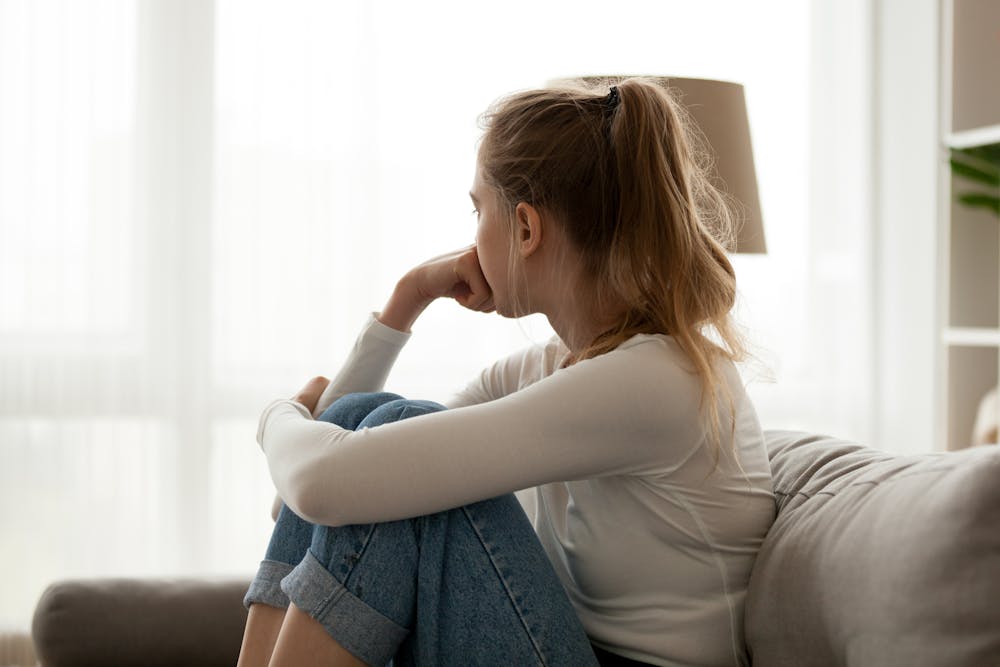 Mental health issues have increased among young people during the pandemic.
Shutterstock
Mental health issues have increased among young people during the pandemic.
Shutterstock
Given the increase in demand from young people for mental-health services, the minister should clarify what the average wait times are for students referred, along with plans to ensure they are reasonable in the near future.
Importantly, the minister should demonstrate how the government will support primary school students, not just secondary students. Early mental-health support for children is key to preventing ongoing problems down the track, and primary school is notoriously overlooked in this area.
Read more: To safeguard children's mental health during COVID-19, parents must look after their own
More broadly, the minister should demonstrate plans for teachers to have adequate training in how to identify and refer students who may be struggling. This is also highlighted as an area of need in the interim report.
In addition, all students will need extra support to readjust from the period of social isolation. Evidence shows what the teacher does in the classroom, in their routines and everyday teaching, is key to helping students build social and emotional skills.
It’s a sophisticated art, and students can be harmed if teachers don’t do this properly. For example, asking students to talk about the challenges they faced during home learning can be damaging if they suffered negative experiences or trauma. Teachers need to be well trained in these areas.
Q 3. How will the government better support students if there is a third or fourth wave?
We’ve all been caught off guard by the pandemic. But what lessons has the government learnt about remote learning? What will be done better if there is a “next time”?
Asking this question is not a swipe at the minister or anyone else. The Victorian department and teachers have gone above and beyond to support learning from home. But we must be better prepared next time.
Australia can learn from high-performing countries that were better prepared, even before the first wave hit. As discussed in our June report Recovery Book, Singapore had a fully online curriculum ready to go. And Hong Kong had many more digital resources aligned to the curriculum that could be easily shared. Our systems can, and must, improve.
It will not be good enough for the minister to suggest we don’t yet know enough to make changes. It is OK to have made mistakes, but it is not OK if we’re not learning from them.
Authors: Julie Sonnemann, Acting Program Director, Grattan Institute


















