

4 reasons why a gas-led economic recovery is a terrible, naïve idea
- Written by: Samantha Hepburn, Director of the Centre for Energy and Natural Resources Law, Deakin Law School, Deakin University
Australia’s leading scientists today sent an open letter to Chief Scientist Alan Finkel, speaking out against his support for natural gas.
Finkel has said natural gas plays a critical role in Australia’s transition to clean energy. But, as the scientists write:
that approach is not consistent with a safe climate nor, more specifically, with the Paris Agreement. There is no role for an expansion of the gas industry.
And yet, momentum in the support for gas investment is building. Leaked draft recommendations from the government’s top business advisers support a gas-led economic recovery from the COVID-19 pandemic. They call for a A$6 billion investment in gas development in Australia.
This is a terrible idea. Spending billions on gas infrastructure and development under the guise of a COVID-19 economic recovery strategy — with no attempt to address pricing or anti-competitive behaviour — is ill-considered and injudicious.
It will not herald Australia’s economic recovery. Rather, it’s likely to hinder it.
The proposals ignore obvious concerns
The draft recommendations — from the National COVID-19 Coordination Commission — include lifting the moratorium on fracking and coal seam gas in New South Wales and remaining restrictions in Victoria, and reducing red and “green tape”.
 In a speech in February to the National Press Club, Alan Finkel said gas was vital in Australia’s transition to clean energy.
AAP Image/Mick Tsikas
In a speech in February to the National Press Club, Alan Finkel said gas was vital in Australia’s transition to clean energy.
AAP Image/Mick Tsikas
It also recommends providing low-cost capital to existing small and medium market participants, underwriting costs at priority supply hubs, and investing in strategic pipeline development.
But the proposals have failed to address a range of fundamental concerns.
gas is an emissions-intensive fuel
demand for fossil fuels are in terminal decline across the world and investing in new infrastructure today is likely to generate stranded assets in the not-too-distant future
renewable technology and storage capacity have rapidly accelerated, so gas is no longer a necessary transition resource, contrary to Finkel’s claims
domestic gas pricing in the east coast market is unregulated.
Let’s explore each point.
The effect on climate change
Accelerating gas production will increase greenhouse gas emissions. Approximately half of Australian gas reserves need to remain in the ground if global warming is to stay under 2℃ by 2030.
Natural gas primarily consists of methane, and the role of methane in global warming cannot be overstated. It’s estimated that over 20 years, methane traps 86 times as much heat in the atmosphere as carbon dioxide.
Read more: A contentious NSW gas project is weeks away from approval. Here are 3 reasons it should be rejected
And fast-tracking controversial projects, such as the Narrabri Gas Project in northern NSW, will add an estimated 500 million tonnes of additional greenhouse gases into the atmosphere.
Accelerating such unconventional gas projects also threatens to exacerbate damage to forests, wildlife habitat, water quality and water levels because of land clearing, chemical contamination and fracking.
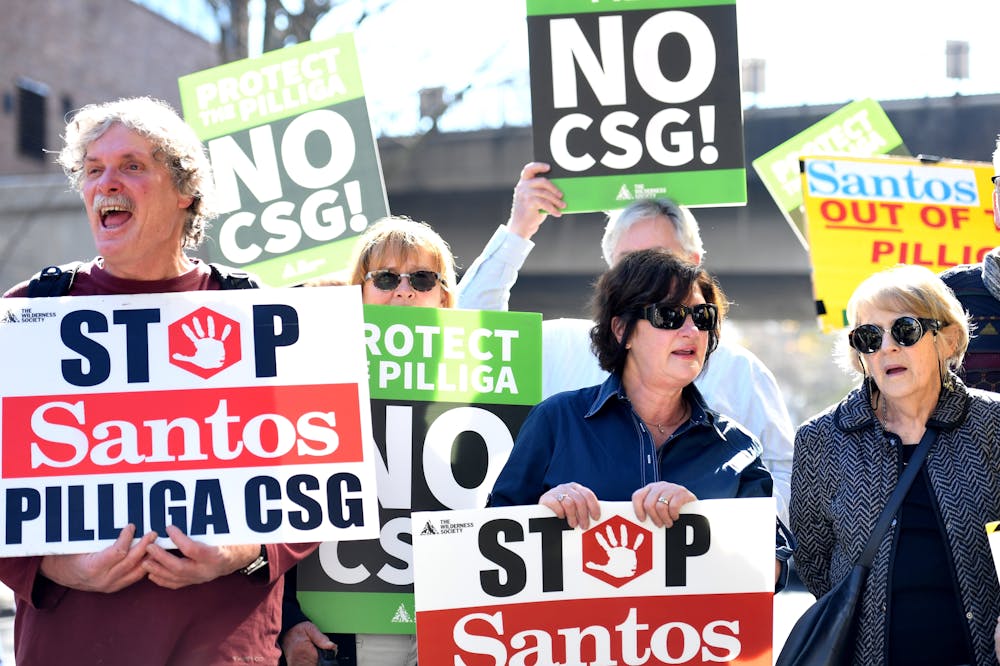 A protest in 2017 against Santos’ plans for a major coal seam gas field near Narrabri. This gas project will pump enormous amounts of greenhouse gases into the atmosphere.
AAP Image/Paul Miller
A protest in 2017 against Santos’ plans for a major coal seam gas field near Narrabri. This gas project will pump enormous amounts of greenhouse gases into the atmosphere.
AAP Image/Paul Miller
These potential threats are enormous concerns for our agricultural sector. Insurance Australia Group, one of the largest insurance companies in Australia, has indicated it will no longer provide public liability insurance for farmers if coal seam gas equipment is on their land.
Fossil fuels in decline
Investing in gas makes absolutely no sense when renewable energy and storage solutions are expanding at such a rapid pace.
It will only result in stranded assets. Stranded assets are investments that don’t generate a viable economic return. The financial risks associated with stranded fossil fuel assets are prompting many large institutions to join the growing divestment movement.
Read more: Why it doesn't make economic sense to ignore climate change in our recovery from the pandemic
Solar, wind and hydropower are rolling out at unprecedented speed. Globally, renewable power capacity is set to expand by 50% between 2019 and 2024, led by solar PV.
Solar PV alone accounts for almost 60% of the expected growth, with onshore wind representing one-quarter. This is followed by offshore wind capacity, which is forecast to triple by 2024.
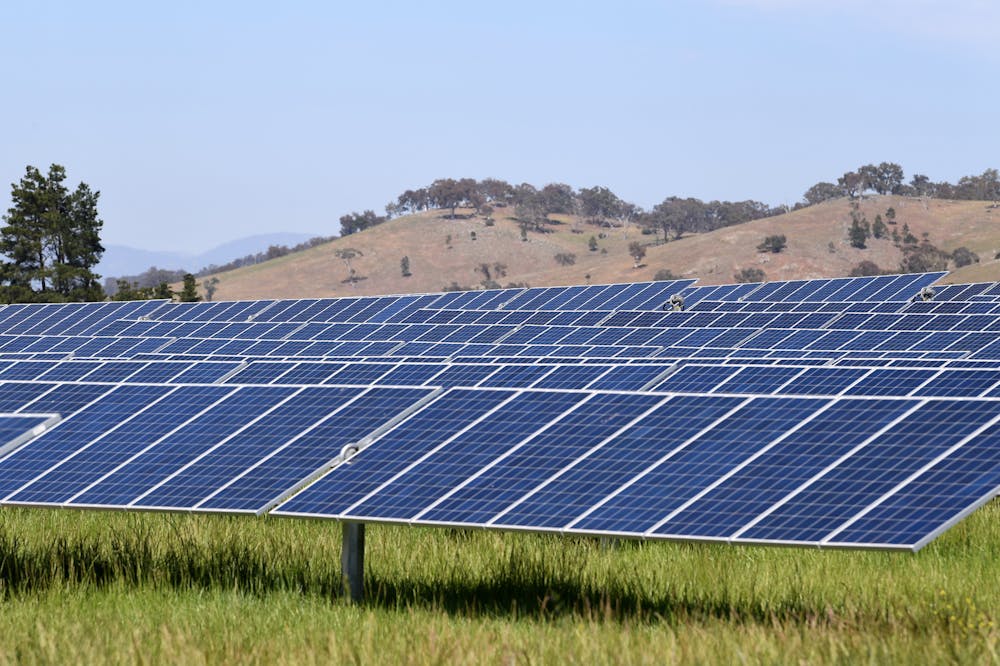 Solar PV accounts for almost 60% of the growth in renewables.
AAP Image/Lukas Coch
Solar PV accounts for almost 60% of the growth in renewables.
AAP Image/Lukas Coch
Domestic pricing is far too expensive
Domestic gas in Australia’s east coast market is ridiculously expensive. The east coast gas market in Australia is like a cartel, and consumers and industry have experienced enormous price hikes over the last decade. This means there is not even a cost incentive for investing in gas.
Indeed, the price shock from rising gas prices has forced major manufacturing and chemical plants to close.
The domestic price of gas has trebled over the last decade, even though the international price of gas has plummeted by up to 40% during the pandemic.
Read more: Australia has plenty of gas, but our bills are ridiculous. The market is broken
As Australian Competition and Consumer Commission chair Rod Simms declared in the interim gas report released last week, these price issues are “extremely concerning” and raise “serious questions about the level of competition among producers”.
To date, the federal government has done very little in response, despite the implementation of the Australian Domestic Gas Security Mechanism in 2017.
This mechanism gives the minister the power to restrict LNG exports when there’s insufficient domestic supply. The idea is that shoring up supply would stabilise domestic pricing.
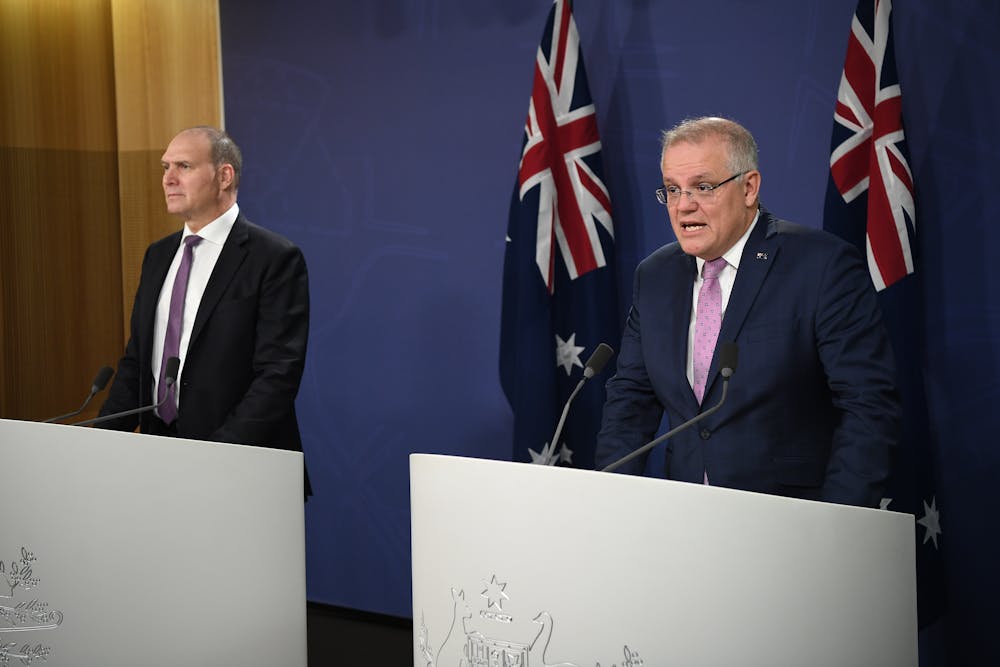 Former chief executive of Fortescue Metals Nev Power heads the government’s COVID-19 commission.
AAP Image/Joel Carrett
Former chief executive of Fortescue Metals Nev Power heads the government’s COVID-19 commission.
AAP Image/Joel Carrett
But the minister has never exercised the power. The draft proposals put forward by the National COVID-19 Coordination Commission do not address these concerns.
A gas-led disaster
There is no doubt gas producers are suffering. COVID-19 has resulted in US$11 billion of Chevron gas and LNG assets being put up for sale.
And the reduction in energy demand caused by COVID-19 has produced record low oil prices. Low oil prices can stifle investment in new sources of supply, reducing the ability and incentive of producers to explore for and develop gas.
It’s clear the National COVID-19 Coordination Commission’s recommendations are oriented towards helping gas producers. But investing in gas production and development won’t help Australia as a whole recover from the pandemic.
The age of peak fossil fuel is over. Accelerating renewable energy production, which coheres with climate targets and a decarbonising global economy, is the only way forward.
A COVID-19 economic strategy that fails to appreciate this not only naïve, it’s contrary to the interests of broader Australia.
Authors: Samantha Hepburn, Director of the Centre for Energy and Natural Resources Law, Deakin Law School, Deakin University


















