

How misogyny, narcissism and a desperate need for power make men abuse women online
- Written by: Bianca Fileborn, Lecturer in Criminology, UNSW
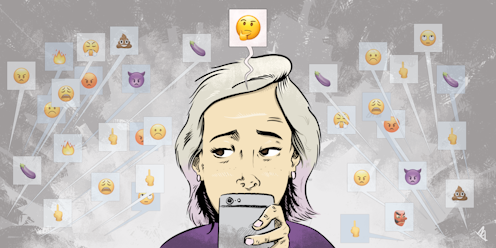
“Another morning, another bit of casual misogyny & abuse”, ABC journalist Leigh Sales lamented last week after receiving a tweet accusing her of “virtually” performing sexual acts on her 7.30 guests. Sales’s comments draw our attention back to the abuse routinely encountered by women, people of colour and LGBTQ people on social media. Indeed, such online encounters appear to be so routine for journalists such as Sales that they are a mundane occurrence.
Of course, the abuse of women and minority groups in high-profile positions is, sadly, not new.
In 2016, The Guardian analysed abusive comments posted on its articles. Of the “top ten” most abused journalists, eight were women. The other two were black men. Of the top ten least abused, all were men.
Women in the public sphere have also drawn on the hashtag #mencallmethings to highlight the abuse they receive from men for daring to contribute to public discourse or to occupy positions of power. This type of misogynist abuse is so tediously predictable that one researcher has even developed a “rapeglish” tool that automatically generates strings of abuse.
Read more: #MeToo must also tackle online abuse
Experiencing sexual harassment and abuse online is hardly limited to journalists and public figures. Australian research has demonstrated that such experiences are routine for women and LGBTQ people. It also shows that cisgender, heterosexual men do experience abuse online. However, women and LGBTQ groups experience more sexualised abuse, with men much more likely to be the perpetrators of this abuse (but, of course, #notallmen).
In contrast, men experience online abuse from both men and women, the abuse is less likely to be sexual in content and has a less severe impact upon them.
While the occurrence of sexist harassment online is well documented, we less often consider what might be driving this behaviour.
Is the answer online?
The nature of online spaces is often held up as a causal factor in online sexism and misogyny. We see this through the claim that the anonymity online spaces afford allows this behaviour to occur. These men wouldn’t say these things to women in real life without the protection of anonymity.
While the internet certainly facilitates aspects of this behaviour, it doesn’t directly cause it. Anonymity might make it easier to engage in and get away with these actions.
Online cultures can work to support and reinforce sexist abuse – with perpetrators seeking out online communities that normalise and condone this behaviour. It’s often further reinforced by the lack of consequences from online platforms.
However, this doesn’t tell us why these perpetrators are targeting women and other marginalised groups. Likewise, these cultures of support also exist offline. While peer support is certainly important in explaining why sexual violence occurs, it is not unique to online spaces.
The claim that these men wouldn’t make such comments to women’s faces is also problematic. As my own research on street harassment shows, some men do make these types of abusive comments to women in person.
Gender, power and violence
There is little research that has asked perpetrators to account for why they engage in this behaviour. Journalist Ginger Gorman came to the conclusion in her investigatory work that trolls (those who perpetrate abuse online) are “narcissists”.
For some, trolling acts as an apparent source of “fun” or entertainment, though it is also much more than this. A recent study on the related practice of “revenge porn” or image-based sexual abuse found that perpetrators engaged in this behaviour to express power and control over an ex-partner. They used the non-consensual posting of images to reaffirm their sense of masculinity.
We can look to the research on violence against women and other forms of abuse more broadly to point to some likely causal explanations. Researchers have comprehensively demonstrated the ways in which sexist online abuse forms part of the continuum of sexual violence. As with all forms of sexual violence, we can understand the actions of perpetrators as situated within a mix of individual, social, cultural and structural causes.
Adherence to strict or rigid gender norms – that is, our ideas about what it means to be a “man” or a “woman” – is one such factor associated with perpetration of various forms of gender-based violence. Certainly, it is plausible that these norms underpin online abuse. Women in high-profile positions, such as Sales, could be seen as “stepping out of line” by challenging traditional gender norms.
This suggests that men’s online abuse of women is fundamentally about power and reasserting the dominance of a particular type of masculinity. As cyberhate researcher Dr Emma Jane explains, online abuse occurs:
Because men continue to hold a disproportionate share of the political, economic, and social power, some using various forms of violence to keep women in their place.
Online abuse occurs because of, as well as actively reinforcing and perpetuating, disparate gender (and other) power relations. It can be used in an attempt to silence and exclude women from public (online) discussion, and in an attempt to “reclaim” online spaces from women who have the temerity to engage in these spaces.
Online abuse may appear to be ostensibly different from rape or sexual assault. However, the same norms and power structures underpin these acts. It is to these we need to look in understanding and, ultimately, challenging and changing the actions of these men.
Authors: Bianca Fileborn, Lecturer in Criminology, UNSW


















