

Is it time for Australia to implement kids-only COVID-19 briefings?
- Written by: Susan Whatman, Senior Lecturer in HPE and Sports Pedagogy, Griffith University
There are many ways children absorb public health messaging about COVID-19. They may receive information from social media platforms like TikTok, via direct text messages, or through daily briefings from state chief medical officers and politicians on television.
The messages to stay safe during the pandemic are essential, but there are a couple of things we need make sure of when communicating advice to children.
First, they must be educated as well as informed. For example, children may be told to wash their hands without being educated about how it helps their personal safety. Knowing the how and why of health behaviours develops children’s health literacy and increases their likelihood of adopting the behaviour.
Second, children need the opportunity to ask questions and have them answered by experts in ways they can understand.
This is where formal COVID briefings for children could help.
Teachers can’t do it all
COVID-19 messaging in classrooms has focused on making sure staff and students are safe by adjusting teaching to account for social distancing requirements.
A recent survey in New South Wales found teachers are feeling pressure to meet daily sanitising requirements with limited supplies. They are overwhelmed with the responsibility to keep children safe and don’t necessarily have the time and energy to help them understand more about the pandemic.
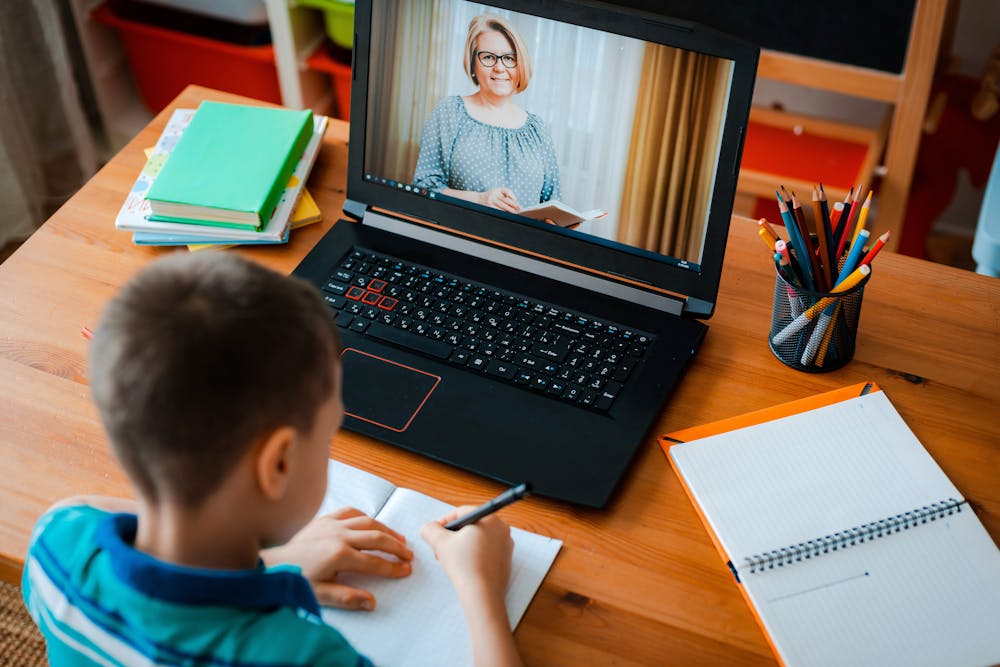 Children-specific briefings might take some of the pressure of teachers who are already overworked adapting to new ways of learning.
Shutterstock
Children-specific briefings might take some of the pressure of teachers who are already overworked adapting to new ways of learning.
Shutterstock
Even teachers who are delivering lessons remotely during lockdown are adapting to the time demands of teaching via technology. So they don’t have the opportunity to explore children’s hopes, fears and thirst for knowledge about coronavirus.
Other countries have done it
Norway’s Prime Minister Erna Solberg hosted a press conference for children in March, together with the minister of children and families and the education minister.
Children were invited to send their questions in advance to the local media, who passed the questions along to the prime minister to answer.
Read more: Children might play a bigger role in COVID transmission than first thought. Schools must prepare
New Zealand’s Prime Minister Jacinda Ardern also hosted a live-streamed press conference especially for children.
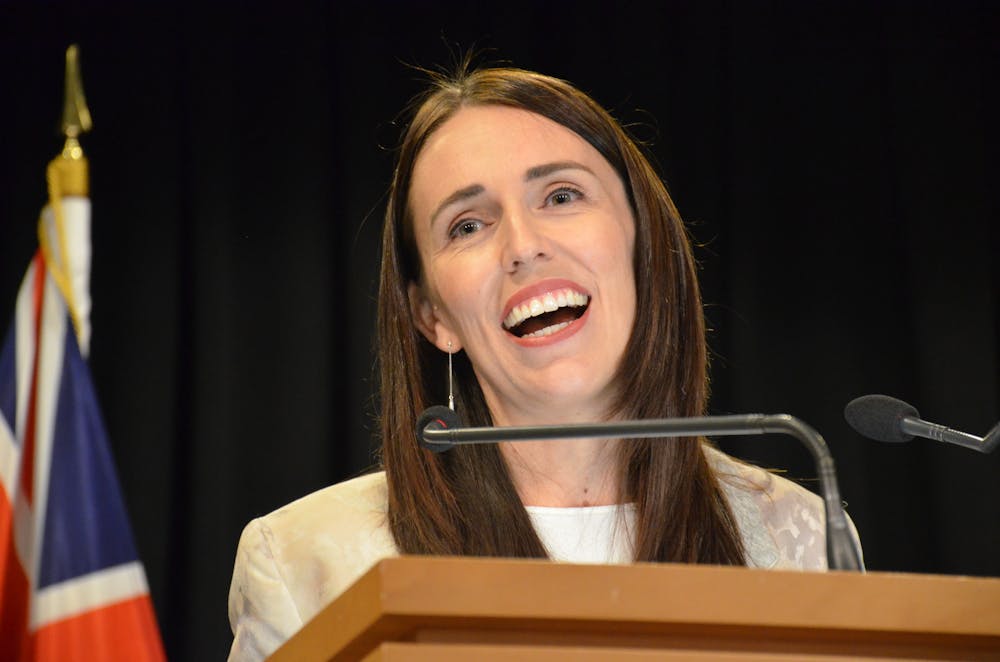 At New Zealand’s children’s-presser Prime Minisiter, Jacinda Ardern, was accompanied by a microbiologist as well as a children’s science communicator known as Nanogirl.
BORIS JANCIC/ AAP
At New Zealand’s children’s-presser Prime Minisiter, Jacinda Ardern, was accompanied by a microbiologist as well as a children’s science communicator known as Nanogirl.
BORIS JANCIC/ AAP
And Finnish Prime Minister Sanna Marin brought along her minister for education and minister for science and culture to a similar press conference in April, where children 7-12 years old were invited to submit video questions.
Which approach was best?
All three conferences respected children’s right to be heard and honoured their right to political participation in having a say over the COVID education they received.
But there was a key difference between the Scandinavian conferences and New Zealand’s. In place of politicians, accompanying Ardern were Siouxsie Wiles, a microbiologist, and Michelle Dickinson, a children’s science communicator also known as “Nanogirl”.
One of Dickinson’s videos, which she posted on Twitter, explains, using age-appropriate language and models, how soap destroys the virus. It’s been viewed more than 34,500 times.
Politicians have a responsibility to explain how the government is addressing public needs relevant to their portfolio, but there is no certainty a particular minister is an expert in that field. This is why an expert panel should be offered to children to answer the unpredictable and varied questions they might ask.
How should a kids-only briefing be run in Australia?
In deciding how to run such a conference in Australia, we can learn from the questions asked by the children at these previous events.
The Norwegian conference prioritised mental health, distributing advice from the World Health Organisation (WHO) to “support each other” and offer “compassion and kindness”.
The New Zealand conference took a more educative approach to explain how things happen, such as how soap destroys the fat layer of the virus. This resonates with many of the key ideas of the Australian Health and Physical Education curriculum, such as taking a strengths-based approach (seeing young people as having resources to solve problems), developing health literacy, and focusing on educative outcomes, rather than just focussing on changing a child’s behaviour.
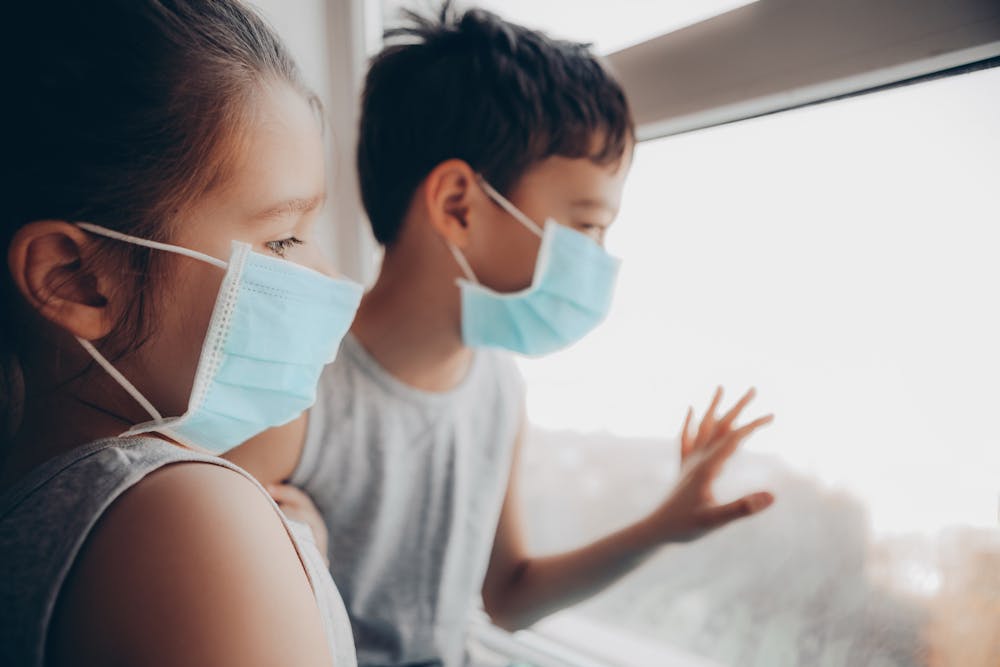 Having an expert explain to children the psychology behind the uncertainty, anxiety and helplessess of living under COVID restrictions could be beneficial.
Shutterstock
Having an expert explain to children the psychology behind the uncertainty, anxiety and helplessess of living under COVID restrictions could be beneficial.
Shutterstock
The Finnish conference was dominated by questions like “when can we go back to school?”, “is the situation in Finland good? (compared to other countries)” and “why can’t I hold my birthday party?”
The role of the experts could be to help children gain a better understanding of the psychology behind the uncertainty, anxiety and helplessness they may be feeling from living under COVID restrictions.
Kids should hear from experts
It is entirely appropriate that our prime minister should lead an Australian panel of experts from a variety of disciplines to answer questions from children. A COVID briefing for children would help the government take children’s views seriously and switch the narrative from one-way, informed compliance to a two-way educated conversation.
Read more: 'Stupid coronavirus!' In uncertain times, we can help children through mindfulness and play
Children deserve to have access to expert knowledge in order to make informed decisions about their own health behaviours and their role in the wider community in these COVID-19 times.
Health education is comprised of many sub-disciplines, requiring general classroom teachers to acquire new and diverse knowledge sets at a time when rapidly changing teaching demands have pushed them to the brink of exhaustion.
A televised COVID briefing with a multidisciplinary panel of experts would not only satisfy children’s right to access quality knowledge, but also create an enduring, age-appropriate resource to help schools, teachers and the wider community into the future.
Authors: Susan Whatman, Senior Lecturer in HPE and Sports Pedagogy, Griffith University


















