

tertiary experience no longer required
- Written by: Adam Lucas, Senior Lecturer, Science and Technology Studies, University of Wollongong
Australian universities are in dire straits. The sudden loss of international student fees due to the COVID-19 pandemic and recent court rulings of wage theft by some of our top universities have exposed the depth of these problems.
The workforce is highly casualised. There is a sharp divide between senior management and academic and professional staff. On top of decades of declining federal funding, the sector faces up to 30,000 job losses.
Yet more than 40% of Australia’s vice-chancellors earn more than a million dollars a year. How did we get here?
Read more: Vice-chancellors' salaries are just a symptom of what's wrong with universities
University councils have been corporatised
Ongoing research by the Better University Governance Research Action Group at the University of Wollongong indicates that the kinds of expertise universities draw upon to govern themselves have become increasingly narrow and unaccountable.
University governing bodies in Australia are known as university councils. Over the past 15 years or so, federal and state legislation has reconstituted these councils to favour members with no tertiary experience.
Reinforcing this trend, the federal government has just appointed a CEO with no experience in tertiary education to head the Tertiary Education Quality and Standards Agency (TEQSA).
It is commonly assumed vice-chancellors run Australia’s 43 universities. However, decision-making power ultimately rests with university councils. These councils appoint vice-chancellors, decide their salaries and adjudicate on their performance.
Governments engineered the change
Significant changes to university legislation over the past few decades have concentrated power in the hands of vice-chancellors. They have thereby gained much greater control over the operations and composition of university councils.
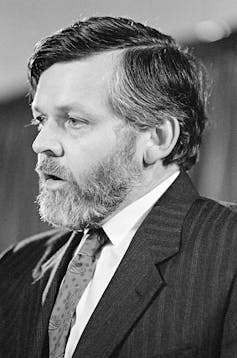 John Dawkins believed internal members of university councils had too much say.
National Archives of Australia
John Dawkins believed internal members of university councils had too much say.
National Archives of Australia
This shift in focus can be traced back to the 1989 “Dawkins reforms”. These changes institutionalised managerialism while privileging a narrow range of expertise for university management and executives.
The then federal education minister, John Dawkins, thought if the majority of all university councils were external appointments, that would best serve the interests of universities. Internal members supposedly had too much to say in the running of their universities. However, it was left to state and territory governments to determine the makeup of the councils.
Read more: Book review: The Dawkins Revolution, 25 Years On
 Under Brendan Nelson, university councils became more like corporate boards.
Alan Porritt/AAP
Under Brendan Nelson, university councils became more like corporate boards.
Alan Porritt/AAP
The “Nelson reforms” of 2004 changed all that. As federal education minister, Brendan Nelson sought to refashion university councils in the image of corporate boards. Since then, the kind of experience required of council members has been greatly altered. Council members without tertiary experience now vastly outnumber those with it, and vice-chancellors have been empowered to determine many of the appointments.
While state and territory legislation differs in detail, since the mid-2000s the general trend has been consistent throughout the country.
In Victoria, university councils typically consist of 13 to 15 members. The vast majority have financial or management experience. Most include only two members elected by staff and students.
In New South Wales, university councils typically consist of 15 to 18 members. The number of staff and student representatives ranges from three to six. Here again, financial and management experience is given majority representation.
UOW: a case study
A prime example of the effect of these legislative changes can be seen in the roles and functions of the University of Wollongong (UoW) Council as stated in the UOW Act. It demonstrates that the council is mainly concerned with finance (approving and overseeing investments, borrowings and loans). It’s less focused on core activities such as the conferring of degrees and courses.
 Changes in the membership and priorities of the University of Wollongong Council reflect changes in its governing legislation.
jejim/Shutterstock
Changes in the membership and priorities of the University of Wollongong Council reflect changes in its governing legislation.
jejim/Shutterstock
The single biggest group of UOW Council members have no professional tertiary experience. Two-thirds have a background and/or currently work in corporate finance.
Along with the vice-chancellor, whom they appoint like a CEO, this is what the majority of governing authorities at Australian universities now look like. Elected staff and students account for less than one-third of council members (normally one academic staff, one professional staff and two student representatives).
Soon after coming to power in 2011, the NSW Coalition government significantly changed the acts of all universities in the state. These changes have resulted in the problems we are identifying here.
Transparency and accountability lost
The 2012 amendments to the UOW Act, for instance, granted the UOW Council unprecedented autonomy to make financial, staffing and coursework decisions. The legislation provides for little or no external accountability or transparency to staff, students or the wider community.
For example, the Performance and Remuneration Committee (which determines the VC’s salary and performance) consists only of the chancellor, the deputy chancellor and two of the council’s external members. The council is responsible for managing its own performance, including any potential conflicts of interest for external members.
Council minutes are not publicly available. This prevents external scrutiny of council deliberations.
 The minutes of university council deliberations are not open to external scrutiny.
Shutterstock
The minutes of university council deliberations are not open to external scrutiny.
Shutterstock
Staff must apply for permission to observe meetings. If approved, they are forbidden from later discussing any confidential matters raised (primarily finance-related) with anyone outside council.
As a result, it is not possible for the university community (or taxpayers) to determine the rationale for decisions involving many millions of dollars. University councils can insulate themselves from the concerns of academic and professional staff. Financial interests are then privileged over and above the university’s core responsibilities and functions of teaching, research and the maintenance of an informed and engaged citizenry.
The legislation governing university councils validates the appointment of members who lack knowledge of the tertiary sector and have little to say about academic activities. Councils whose members have little or no experience in the core functions of universities as public service organisations determine university governance.
Is it surprising, then, that building programs, casualisation and executive salaries are given higher priority than the concerns of staff and the tens of thousands of students for whom they are responsible?
We must therefore ask: is the “no tertiary experience required” approach the best we can do for Australia’s universities?
Authors: Adam Lucas, Senior Lecturer, Science and Technology Studies, University of Wollongong
Read more https://theconversation.com/governing-universities-tertiary-experience-no-longer-required-145439


















