

How to tackle sexual harassment and abuse in the New Zealand Defence Force
- Written by: Cassandra Mudgway, Senior Lecturer in Law, Auckland University of Technology
It’s been two years since the New Zealand Defence Force set up Operation Respect to stamp out sexual harassment and abuse in its ranks. It came after reports exposed a culture of “persistent sexism” in the NZDF.
But a recent independent review of the program, commissioned by the Ministry of Defence, revealed a “code of silence” continues, with an overall lack of trust that complaints will be taken seriously.
Despite some positive changes, such as the Sexual Assault Response Team, the review found these initiatives lacked resources and suffered from high staff turnover.
From July 2016 to November 2018, there were 126 disclosures of sexual violence. Given the “code of silence”, these numbers are likely to be just the tip of the iceberg.
The review made 44 recommendations, which included introducing independent oversight by the auditor-general, an external complaints channel and a more comprehensive data management system to assess progress.
Why sexual harassment and abuse persist in NZDF
Sexual harassment and sexual abuse in the NZDF take place within a wider societal context of systemic violence against women. But the military as an institution has its own unique environment of risk factors.
Read more: Operation Burnham: the New Zealand military's self-inflicted wounds will not heal by themselves
Even though promotions of women in the armed forces have increased, the NZDF remains overwhelmingly male. Women make up less than 25% of the NZDF. This creates an inherently gendered context.
Additionally, the gender stereotype of the strong warrior, characterised by male aggression, hyper-heterosexuality, excessive consumption of alcohol and dominance over the feminine, can foster sexual violence.
In this environment, sometimes conceptualised as “toxic masculinity”, women are more likely to be dehumanised, hyper-sexualised and the subject of male aggression.
Where superiors perpetuate this culture, the result is a “boys will be boys” attitude. This context also makes it harder for male victims to make complaints because to do so would be considered weak and betraying their unit.
The NZDF is not alone
The Canadian Armed Forces introduced new policies in 2015 (largely mirrored in NZDF’s Operation Respect), but there has been little change in the prevalence of sexual assault.
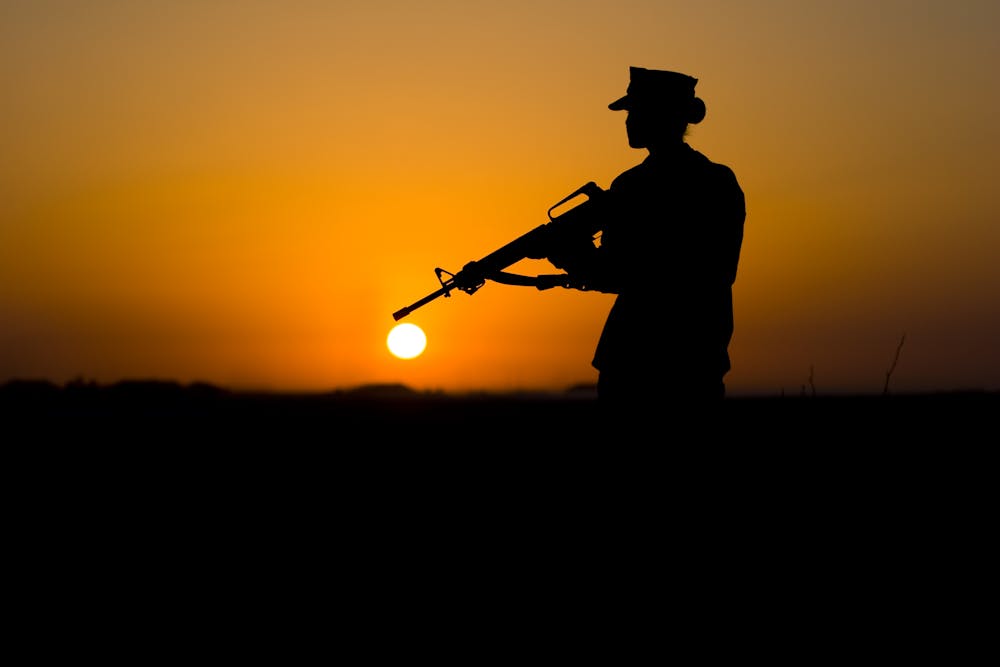 Women face sexual abuse in several defence forces around the world.
Shutterstock/Cory Smith
Women face sexual abuse in several defence forces around the world.
Shutterstock/Cory Smith
A 2018 report from Canada’s national statistics agency, Statistics Canada, said there had been about 900 victims of sexual assault over a 12-month period, the majority of them women.
A survey in 2016 found 27% of women in the Canadian Armed Forces suffered sexual assault during their career, more often than not at the hands of their superiors.
From 2014 to 2018, the Australian Defence Force received 912 complaints of sexual misconduct. In just one example, an Australian Army captain raped a male colleague with a beer bottle at a function. His lawyer called the incident “tomfoolery gone wrong”.
In the United Kingdom, The Sun newspaper reported that the armed forces received 550 individual complaints of sexual assault from 2015-2020. Conviction rates for rape are said to be six times lower in military courts than in civilian courts.
After 20 years of education and campaigns to eliminate sexual assault, an inquiry report last year said more needs to be done to “stop instances of inappropriate behaviour” in the UK defence force.
Similarly, in the United States, the military has been at the centre of sexual abuse scandals since the early 1990s. The US Defence Department said 7,825 allegations of sexual assault were reported in 2018. There remains a reluctance to report due to fear of retaliation or re-traumatisation.
The context is also male-dominated: women make up less than 25% of the US military, less than 20% of the armed forces in Canada and Australia, and less than 15% in the UK.
How to end sexual harassment and abuse in the NZDF
What we learn from looking across Western armed forces is that often sophisticated policies exist and that top brass talk a lot about “zero tolerance”. Yet victims of sexual harassment and sexual abuse do not trust the systems that are in place.
These systems are not always followed through or are not taken seriously. Victims are not taken seriously.
In addition to the New Zealand review’s recommendations, there are three general points to be made.
First, the accountability of perpetrators must be timely and visible. This requires greater transparency and communication from NZDF about numbers of complaints and results of cases. Greater visibility will help lead to greater trust in the system.
Second, leaders throughout the hierarchy, not just top brass, must be consistent in their messaging to create the cultural change needed. These are the people who victims will have the most interaction with.
Third, Operation Respect must be adequately resourced – in terms of both money and people. With a strong and well-funded team, Operation Respect could become proactive, rather than reactive.
The NZDF now has an opportunity to take the lead in driving the cultural change necessary to tackle sexual harassment and sexual abuse, and break away from the dire global trends.
Authors: Cassandra Mudgway, Senior Lecturer in Law, Auckland University of Technology


















