

COVID-19 isn't the only infectious disease scientists are trying to find a vaccine for. Here are 3 others
- Written by: Danielle Stanisic, Associate Research Leader, Institute for Glycomics, Griffith University
More than 28 million people around the world have now contracted COVID-19, and more than 900,000 people have died.
Research groups across the globe are rightly racing to find a vaccine to protect against SARS-CoV-2, the virus that causes COVID-19.
While it’s not surprising all eyes are on this vaccine race, COVID-19 isn’t the only disease for which scientists are currently trying to find a vaccine.
Let’s look at three others.
The big three
We regard malaria, tuberculosis and HIV/AIDS as the “big three” infectious diseases. Together they’re responsible for about 2.7 million deaths a year around the world. They disproportionately affect low- and middle-income countries.
Deaths from these three diseases could almost double over the next year as a result of disruptions to health care in the face of COVID-19.
This is a clear example of the indirect effects of an uncontrollable infectious disease. It also reminds us of the importance of vaccine research for the many other infectious parasites, viruses and bacteria that can cause disease and death.
Read more: Creating a COVID-19 vaccine is only the first step. It'll take years to manufacture and distribute
Malaria: the parasite
Malaria is a parasitic disease transmitted through the bite of an infected mosquito. Common symptoms are flu-like: fever, headache, muscle aches and fatigue. If not treated promptly, malaria can lead to severe disease and death.
In 2018, nearly half of the world’s population was at risk from malaria. There were roughly 228 million cases and 405,000 deaths from the disease, mainly in children under five in sub-Saharan Africa.
Anti-malarial drugs are routinely used to treat and prevent malaria infection. But Plasmodium falciparum, the deadliest of the malaria parasites that can infect humans, has developed resistance against all drugs currently used to treat and prevent malaria. So we urgently need an effective vaccine.
Development of a malaria vaccine is complicated by the diverse forms, or life-cycle stages, of the parasite in the human host. The immune responses required to kill the parasite differ between these different stages. So malaria vaccine candidates typically target just one parasite stage.
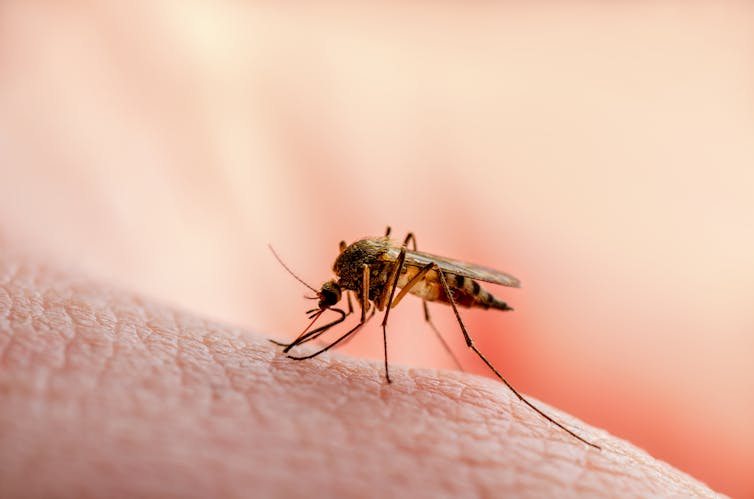 Malaria is a mosquito-borne disease.
Shutterstock
Malaria is a mosquito-borne disease.
Shutterstock
British multinational pharmaceutical company GSK has licensed the world’s first malaria vaccine, Mosquirix. It targets the stage the parasite is at when the mosquito injects it.
Although it’s the only malaria vaccine candidate to successfully complete phase 3 trials, Mosquirix has only moderate effectiveness (less than 40%) which drops off rapidly after the final dose. So we need a more effective vaccine capable of inducing long-lasting immunity.
There are 20 other malaria vaccine candidates in advanced pre-clinical or clinical evaluation.
At the forefront of these is Sanaria’s whole sporozoite vaccine (PfSPZ), which also targets the parasite stage injected by the mosquito. It’s currently being evaluated for effectiveness in Africa.
Read more: From STIs to malaria, here are six disease trends we should heed during the pandemic
Tuberculosis: the bacterium
Globally, tuberculosis is the leading cause of death by a single infectious agent. It’s caused by a bacterium that spreads from person to person through the air and mainly affects the lungs.
Tuberculosis was responsible for 1.5 million deaths in 2018. About one-quarter of the world’s population has latent tuberculosis, which has no symptoms and is not infectious. But 5-15% of these people will go onto develop active, infectious disease.
Generally, tuberculosis can be effectively treated with antimicrobial drugs. But the emergence of multi-drug resistant tuberculosis is a major cause of death and a serious public health concern.
We do have one licensed vaccine for tuberculosis. The BCG vaccine was first used in 1921 and is usually administered to infants in countries with high tuberculosis prevalence. But the degree and duration of protection this vaccine offers is not enough to control the disease.
Scientists are working to develop prophylactic vaccines (to prevent infection from the outset) and post-exposure vaccines (to prevent disease progression in people with latent tuberculosis).
At least 14 tuberculosis vaccine candidates are in clinical trials, with promising results giving hope we might be able to get the disease under better control in years to come.
HIV/AIDS: the virus
Since the discovery of human immunodeficiency virus (HIV) in the 1980s, the disease has caused 33 million deaths — roughly 770,000 in 2019. Some 38 million people have HIV/AIDS worldwide.
There’s currently no cure or protective vaccine. While antiviral therapeutics can effectively control HIV, around 20% (7.6 million) of HIV-infected patients don’t have access to them.
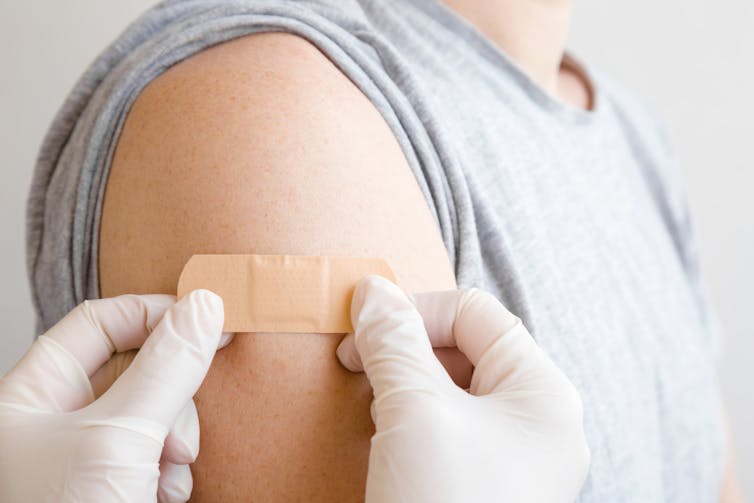 There’s no vaccine yet for HIV/AIDS.
Shutterstock
There’s no vaccine yet for HIV/AIDS.
Shutterstock
Researchers are aiming to develop a protective vaccine against HIV. A major focus is developing broadly neutralising antibodies (antibodies that can attack different HIV strains) in HIV-infected patients.
Notably, researchers identifying and developing COVID-19 therapeutics have used significant expertise from HIV vaccine development.
For example, defining the structural details of SAR-CoV-2’s spike protein as a target for a COVID-19 vaccine, and identifying broadly neutralising antibodies from convalescent plasma as a potential treatment, are similar to strategies scientists working on HIV have used.
Read more: Could BCG, a 100-year-old vaccine for tuberculosis, protect against coronavirus?
Time and commitment
Beyond COVID-19 and the big three, there are many more conditions for which scientists are working to develop vaccines.
The current pandemic highlights the need for governments, NGOs and philanthropists to support this work — and scientific research more broadly.
Research on one type of disease can often accelerate the development of treatments for others. We’re seeing this in the quest for a COVID-19 vaccine.
Ultimately, COVID-19 has raised public awareness of the type of scientific challenges researchers encounter every day. There’s neither a silver bullet nor a shortcut in the development of a safe and effective vaccine.
Authors: Danielle Stanisic, Associate Research Leader, Institute for Glycomics, Griffith University



















