

NASA's planet-hunting spacecraft TESS is now on its mission to search for new worlds
- Written by: Jonti Horner, Professor (Astrophysics), University of Southern Queensland
The latest of NASA‘s incredible planet-hunting space telescopes was launched today from Cape Canaveral Air Force Station in Florida.
Known as the Transiting Exoplanet Survey Satellite (or TESS to its friends), this exciting new mission promises to provide the next great leap forward in our understanding of our place in the universe.
Over the next two years, TESS is likely to find thousands of new exoplanets – planets orbiting distant stars – and will help to reveal the degree to which our Solar system is unique in the cosmos.
Read more: Google's artificial intelligence finds two new exoplanets missed by human eyes
In doing so, it will build on the fascinating results of the past few decades, cementing our place in the “Exoplanet Era”.
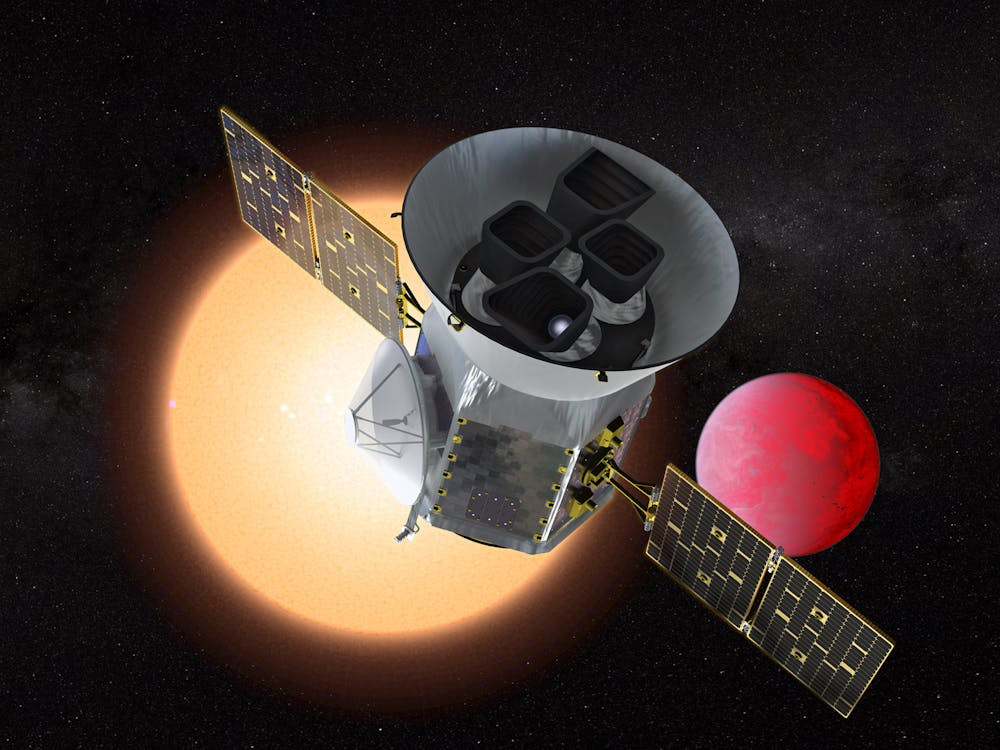 Illustration of NASA’s Transiting Exoplanet Survey Satellite (TESS) in front of a lava planet orbiting its host star.
NASA's Goddard Space Flight Center
Illustration of NASA’s Transiting Exoplanet Survey Satellite (TESS) in front of a lava planet orbiting its host star.
NASA's Goddard Space Flight Center
The Kepler revolution
At the end of 2008, the year before NASA’s earlier planet-hunting telescope Kepler launched, about 300 exoplanets had been discovered. Today, the number is an order of magnitude larger: more than 3,700.
Kepler discovered more than 2,300 exoplanets, with a further 2,200 or so “candidate” planets still awaiting followup. This incredible haul is the result of the spacecraft staring, unblinking, at the night sky, watching for the tiny flickers that reveal planets passing between us and their host stars.
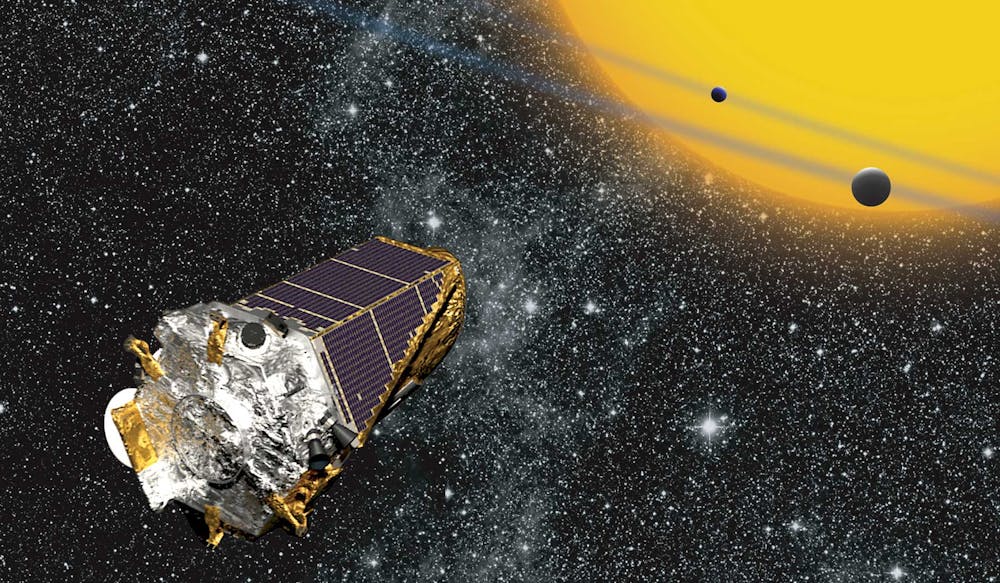 An illustration of NASA’s Kepler spacecraft that carried out the first great census of the Exoplanet Era.
NASA Ames/ W Stenzel
An illustration of NASA’s Kepler spacecraft that carried out the first great census of the Exoplanet Era.
NASA Ames/ W Stenzel
In essence, Kepler carried out the first great census of the Exoplanet Era. It taught us that planets are ubiquitous – a standard and natural byproduct of the formation of stars.
But the vast majority of the stars around which Kepler found planets were very faint and very distant. This makes it a great challenge for observers on the ground to follow up on those discoveries and learn more about the planets the spacecraft revealed.
Along comes TESS
Whereas Kepler focused for four years on just one small patch of the northern sky, TESS will target stars across almost the whole night sky. In doing so, it will survey some of the brightest stars in the sky – making the task of following up on its myriad discoveries far easier.
TESS consists of four cameras, configured to give it an observation sector that covers an area slightly larger than a 90° arc on the sky.
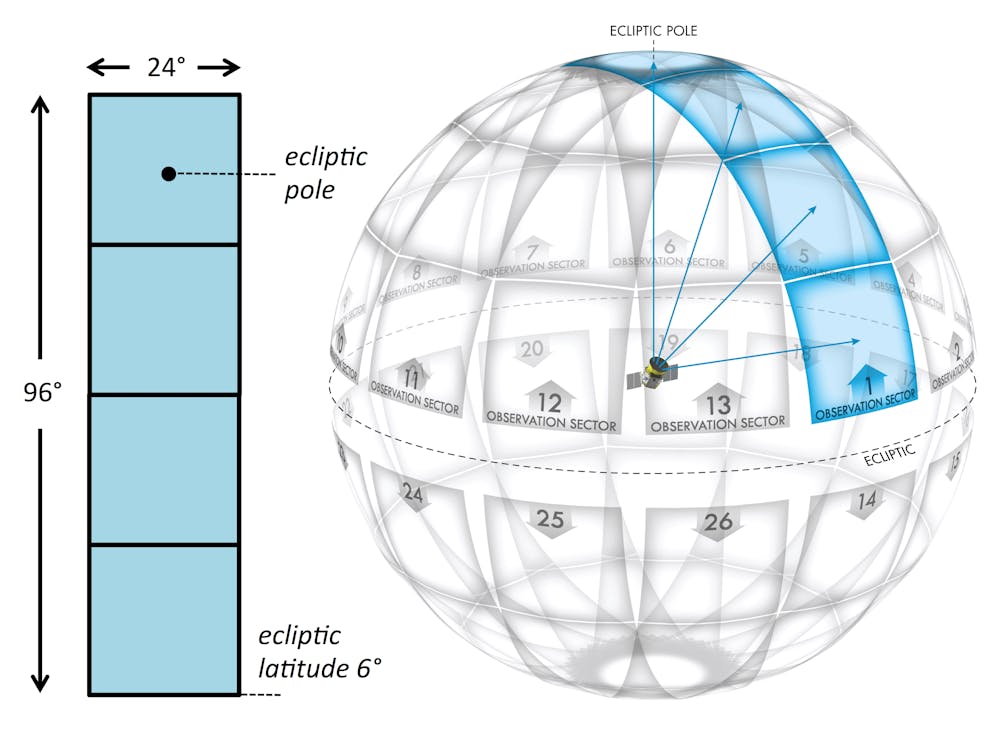 Image showing how TESS’ four cameras will be used to survey the night sky, sector by sector.
NASA
Image showing how TESS’ four cameras will be used to survey the night sky, sector by sector.
NASA
TESS will watch that observation sector continually for just over 27 days, never blinking. The spacecraft will then pivot around, swinging to target its next sector.
In this manner, over the course of a year, the spacecraft will target almost the entirety of one hemisphere of the sky. After that, it will flip over, and spend the next year watching the other hemisphere.
TESS will cover much more than Kepler in its hunt for exoplanets.For the first year TESS will be gazing to the south, scouring skies that are best seen from the southern hemisphere, finding planets orbiting the very stars you see when you step outside and look up at the night sky, right here in Australia.
Many stars, many planets?
TESS’s main mission will involve it observing a total of 200,000 stars, measuring their brightness every single minute that they fall within its field of view. To do this, it will process images before sending them back to Earth, extracting just the data on those stars to send back to the Earth.
TESS will also provide full-frame images (a picture of the spacecraft’s full field of view) every half an hour, yielding a trove of tens of millions of objects observed.
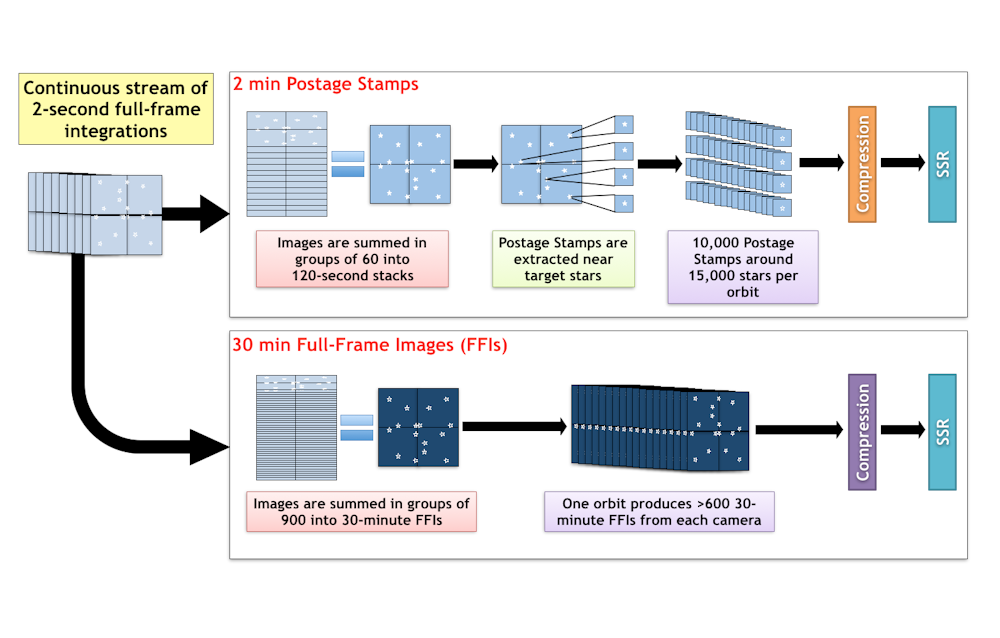 TESS will process data on board the spacecraft, to make the amount sent back to Earth manageable.
NASA
TESS will process data on board the spacecraft, to make the amount sent back to Earth manageable.
NASA
Put all that together, and the expected planet yield should be enormous. Based on the statistics of planet discoveries to date, it is likely that TESS will find at least a couple of thousand potential planets around its main target stars, while those in the full-frame images might yield tens of thousands of additional candidates.
These numbers are incredible, and TESS will revolutionise our understanding of our place in the universe. But such amazing results bring with them a unique problem – and one that we, in Australia, are ideally placed to help solve.
Too many planets, too little time
The reason that only half of the Kepler mission’s candidate planets have been confirmed is that doing so requires extensive follow-up work from the ground.
Astronomers have to rule out other effects that could cause the behaviour seen in the potential planet’s host star before we can be certain that we’re really seeing evidence of a new planet.
Most of the stars observed by Kepler are simply too faint for that kind of work to be carried out from the ground – except, perhaps, with the largest telescopes on the planet. Getting time on those telescopes is challenging – all of the world’s other astronomers covet that time too, for their own projects.
Quite simply, it is a case of too many planets, too little time.
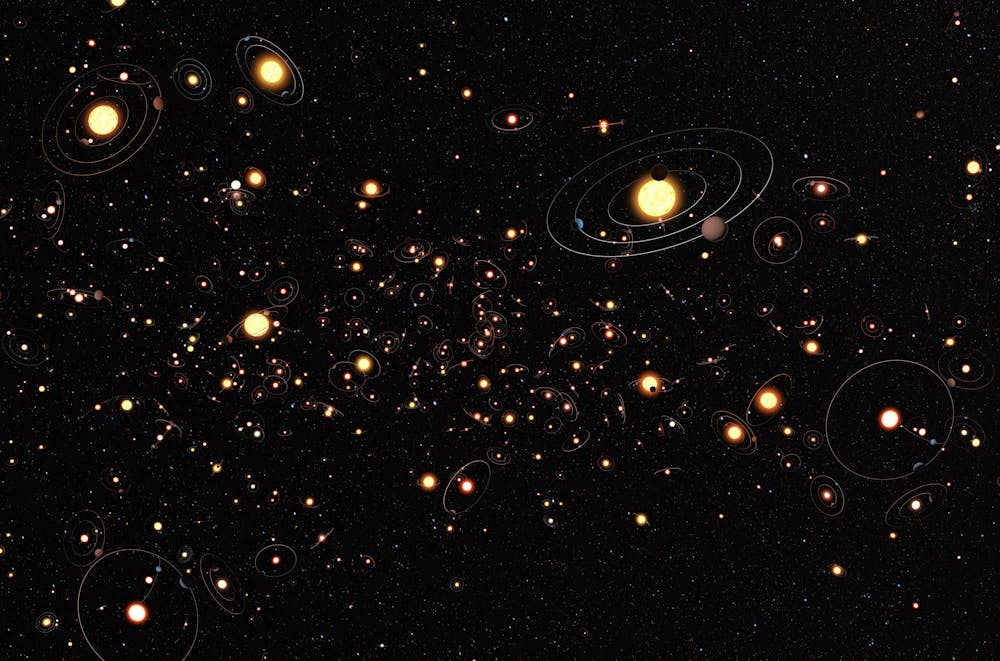 Too many potential exoplanets, too little time.
NASA, ESA, and M. Kornmesser (ESO)
Too many potential exoplanets, too little time.
NASA, ESA, and M. Kornmesser (ESO)
The problem is only going to get worse with TESS. When the first few planets were found, in the late 20th century, the discoveries came in a trickle. Those discoveries were easy for scientists to drink in and follow up, and all was good.
With Kepler, the discovery rate went through the roof. From a trickle, it was like someone had turned on a tap – a continual stream of new potential planets to study.
If Kepler was a tap, then TESS will be a fire hose, and there are simply too few telescopes available for us to use to study all of the planets TESS finds at once.
That is where the Australian connection comes to the fore – in the form of a dedicated new facility being built on the Darling Downs, in southeast Queensland.
The Australian connection - MINERVA-Australis
At the University of Southern Queensland, we are constructing MINERVA-Australis – a collection of six telescopes dedicated to nothing but the search for and characterisation of planets around other stars.
When TESS turns on the fire hose, finding thousands of planets in the southern sky, we stand ready. Every clear night, we will be observing those stars that TESS suggests could host planets, doing our utmost to confirm whether those planets really exist.
Read more: We've found an exo-planet with an extraordinarily eccentric orbit
Once we confirm TESS’s new discoveries, we will be able to use our facility to study the newly found worlds in more detail. By observing the planet’s transits, we can measure its physical size, by seeing how much of the light from its host the planet blocks.
In addition, we will be examining the light we receive from the star, measuring the telltale wobbles caused by the planet as it orbits its host. With those measurements, we will be able to calculate the planet’s mass.
Put the mass and the size together, and we can really begin to work out the planet’s true nature. Is it rocky (like the Earth), or gaseous, like Jupiter and Saturn?
Over the coming years, TESS will push the Exoplanet Era through its next great revolution – finding thousands or tens of thousands of new exoplanets. Here in southeast Queensland, we will be at the forefront of that journey of discovery, helping to reveal the true nature of those alien worlds.
I don’t know about you, but I can’t wait to see what we’ll learn next!
Authors: Jonti Horner, Professor (Astrophysics), University of Southern Queensland


















