

Is lockdown worth the pain? No, it's a sledgehammer and we have better options
- Written by: Julian Savulescu, Visiting Professor in Biomedical Ethics, Murdoch Children's Research Institute; Distinguished Visiting Professor in Law, University of Melbourne; Uehiro Chair in Practical Ethics, University of Oxford
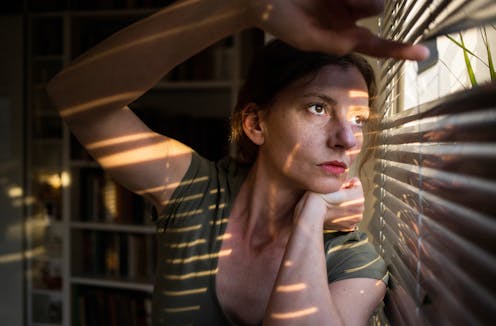
Melbourne’s lockdown has been described as one of the harshest in the world. And jurisdictions outside Australia have taken other measures to limit the spread of COVID-19 once case numbers have eased.
So, in the absence of a reliable COVID-19 treatment or licensed vaccine, is lockdown still worth it?
To answer this, we not only need scientific evidence, we need ethics to decide which factors should weigh most heavily in our decision-making.
Some of these factors are not so obvious.
How should we measure the impact of COVID-19?
Clearly, when measuring the impact of COVID-19, cases and deaths are relevant. But a case is not necessarily “bad”. Although estimates vary, about 40-45% of cases are asymptomatic. And it’s not death (in itself) that matters.
Death is bad because it denies us life we could have had. But if you die one second earlier than you could have died, this is not particularly bad. What matters, ethically, is not death per se, but years of life lost.
Even this is not what ultimately matters. If you could live an extra 20 years in a coma, you would hardly call this a win. What matters is years of good (enough) life lost.
Read more: 'Died from' or 'died with' COVID-19? We need a transparent approach to counting coronavirus deaths
How much should we pay to save a life?
In an ideal world, how much it costs to save a life would be irrelevant. But we operate with limited resources.
So, the concept of “Quality Adjusted Life Years” or QALY lets us put a price on life, or at least to how much we will spend on trying to save one. This is a year of life, adjusted for its quality. A year in perfect quality of life is 1, coma is close to zero.
What’s a QALY?This idea is understandably controversial, not least because it assigns a lower value to a year spent living with a disability.
Nevertheless, how much quality of life we save is relevant. Before the pandemic, Australia’s public health spending was typically no more than A$50,000 per QALY.
At the end of March, US-based economists estimated large-scale COVID-19 measures such as lockdowns cost between US$75,000 and US$650,000 per QALY (about A$102,000 to A$888,000).
Former Australian prime minister Tony Abbott has said the cost per QALY Australia has spent so far during the pandemic exceeds our usual standards:
Even if mandatory shutdown in Australia really was all that avoided the initially predicted 150,000 deaths, that still works out at about $2 million per life saved. And if the average age of those who would have died is 80, even with roughly 10 years of expected life left, that’s still $200,000 per quality life year or substantially beyond what governments are usually prepared to pay for life-saving drugs.
But evaluating the cost of lockdown is not so simple. We also have to weigh the potential cost of not having a lockdown.
One goal of lockdown is to protect health systems from being stretched beyond breaking point. If COVID-19 escalates out of control, we would lose many more lives, with vast suffering and grave risks to social stability. The cost in life years and financial losses would be staggering.
Read more: Open letter from 265 Australian economists: don't sacrifice health for 'the economy'
Initial data also appears to refute the idea public health and economic health are fundamentally at odds. A well-controlled virus may keep more money coming in, in the medium term. If lockdown is the only way to achieve control, it may be warranted economically as well as in terms of health.
But if there are other effective health measures that are less economically damaging, they would be preferable.
So how do we account for the cost per QALY of lockdown? This is an uncomfortable and difficult issue. But it needs to be addressed.
The flipside of lockdown
While lockdown may limit our exposure to COVID-19, it can be bad for our health.
In lockdown, we’re less likely to access health care for seemingly less urgent issues. Cancer detection rates are currently well below expected, potentially leading to a rise in preventable deaths.
There have also been concerns about increases in suicide, alcohol abuse, other mental health issues, and domestic violence.
We may not know the mental and social toll of lockdown for some time. But we should attempt to include these effects in our assessment. Poor mental health outcomes can shorten lives, or reduce their quality significantly. Poor social outcomes can impact for generations.
Read more: COVID lockdowns have human costs as well as benefits. It's time to consider both
What alternatives achieve the same goal for a lower cost?
We should not merely compare lockdown to doing nothing, but weigh it against other strategies. Here we can learn from other countries and how other policies might replace lockdown once numbers are manageable.
Although South Korea’s vigorous track-and-trace program raised privacy concerns, it targeted social distancing to keep deaths to around 370 so far.
Iceland, Vietnam, Singapore and Taiwan used methods such as mass testing, contact tracing, and strictly enforced self-isolation. In Singapore, breaches were punished with up to six months’ jail.
Read more: Another day, another hotel quarantine fail. So what can Australia learn from other countries?
True, there have been some costly mistakes. Singapore, for example, allowed returning citizens to quarantine with other family members who were not themselves isolated, prompting a partial lockdown. Nevertheless, these countries appear to have been able to regain control.
Even if the number of life years saved by these alternative strategies and lockdown is the same, these alternative strategies, when implemented well, are preferable. That’s because they impose fewer costs: economically, socially, and in lost freedom.
Which value do you value?
The use of QALYs as an outcome measure faces staunch criticism. Often, there is an irresolvable conflict between maximising QALYs and giving every person an equal chance at living their longest, best quality life.
Imagine a doctor is faced with the choice of giving their last ICU bed to a person who is 30, in complete health, with two children and job, or an 85-year-old with advanced dementia, who does not recognise herself or her family.
A QALY-maximisation approach says admit the 30-year-old; if you favour equality, toss a coin. The COVID pandemic forces us to get off the fence on whether all lives are equally valuable, or equally worth saving.
Then there’s fairness or justice (or what philosophers call “desert”). Young people have had less good life than older people, and have more ahead of them. They are at little risk of dying. Yet during the pandemic, they have had to make significant sacrifices in the quality of their lives, whether that’s through job losses, lost opportunities or curtailment of movement. If we value “desert”, we value the idea young people deserve to be favoured.
This takes us to the value of liberty. Lockdown, curfew and restriction of freedom of movement, association and protest are arguably among the most severe restrictions possible. So we should be restricting people’s liberty as least as possible, using this strategy sparingly, locally, and for a specific purpose.
So, where does this take us?
To answer whether lockdown is worth the cost, we need to agree on how we should evaluate outcomes (cases, lives, life years lost, QALYs) and what other ethical principles matter (equality, liberty, desert).
The right strategy will vary. A short, sharp, early lockdown might stamp out the virus and allow life for everyone to continue as normal and preserve the economy. Longer lockdown may be necessary when the health system is threatened; this might prevent huge loss of life across all diseases. A lockdown to give time to establish other more nuanced systems to be put in place effectively also has value.
But lockdown is a sledgehammer of a solution. For most countries now, other strategies are likely to be of more value to the community.
Authors: Julian Savulescu, Visiting Professor in Biomedical Ethics, Murdoch Children's Research Institute; Distinguished Visiting Professor in Law, University of Melbourne; Uehiro Chair in Practical Ethics, University of Oxford


















