Greyhound pups must be tracked from birth to death, so we know how many are slaughtered
- Written by Alexandra McEwan, Lecturer: Law, CQUniversity Australia
It’s been more than four years since New South Wales greyhound racing was rocked by a special inquiry that found overwhelming evidence of systemic animal cruelty, including mass killings. Overbreeding and euthanasia of healthy dogs is still one of the industry’s biggest challenges.
A key issue to emerge from the 2016 inquiry was the euthanasia of healthy greyhounds. It found evidence that, over 12 years, between 48,891 and 68,448 dogs were killed because they were considered “too slow to pay their way or were unsuitable for racing”.
The NSW Greyhound Racing Act was established in 2017 in response to the inquiry. The act is now under review. One question being examined is whether the industry needs an “unnecessary euthanasia” target.
I believe such a target is necessary. But it would require tracking greyhounds over their entire lives, to ensure none slip through the cracks. Such a scheme will come with a financial cost, but is the only way to assure the public the greyhound racing industry has truly reformed.
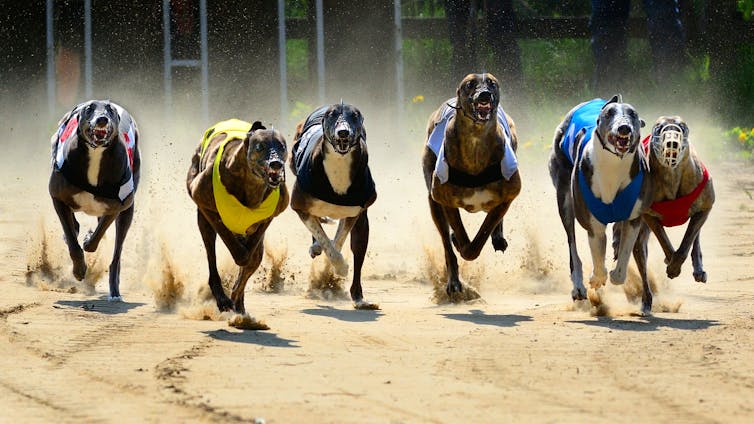 Greyhounds born to the racing industry should be tracked.
Shutterstock
Greyhounds born to the racing industry should be tracked.
Shutterstock
Better accountability
Ten years ago, I argued for better accountability for all dogs bred for the greyhound racing industry – including tracking dogs over their lifespan.
In 2017, a panel considering industry reform recommended such an initiative. It also called for a target date for achieving zero unnecessary euthanasia, saying this should be considered in two years, informed by more robust data. The NSW government accepted the recommendation.
Read more: What other industries can learn from the failures of greyhound racing
I believe zero unnecessary euthanasia, in the context of this industry, ought to mean all pups born for the industry are rehomed, die of natural causes, or are euthanased following an injury – where that injury occurred on a race track where greyhound welfare is paramount in the design.
Research by the University of Technology, Sydney, has demonstrated severe injuries are lower where the number of dogs is limited to six starters and when the racing track is straight. These measures would reduce rates of dogs killed due to race injuries, and more dogs would eventually become available for rehoming.
Counting every puppy
Greyhounds are registered when they start racing - usually at around 16 months of age.
For more accurate data, all pups ought to be given an identification number at birth. This number would stay with them throughout their racing career and into retirement.
The Greyhound Welfare and Integrity Commission (GWIC) is an independent industry regulator established in 2017. According to GWIC figures for the year to June 2019, there were:
- 3,747 greyhound puppy births
- 1,435 greyhounds retirements
- 832 greyhound deaths.
The difference in the number of greyhounds leaving the industry and those entering (as puppies) was 1,480 greyhounds. This suggests those who were not retired, or did not die, remain unaccounted for.
In a statement to The Conversation, the GWIC said it could not be assumed the 1,480 pups were surplus to the industry that year. The commission said it recently tracked a group of pups born between July and September 2018 and found the majority were either still with their original owner or breeder, or in the custody of a trainer. It said 13% had been sold for racing – either in NSW or to other states.
But without lifelong tracking, we cannot know for sure the fate of these pups, and whether any have been unnecessarily killed.
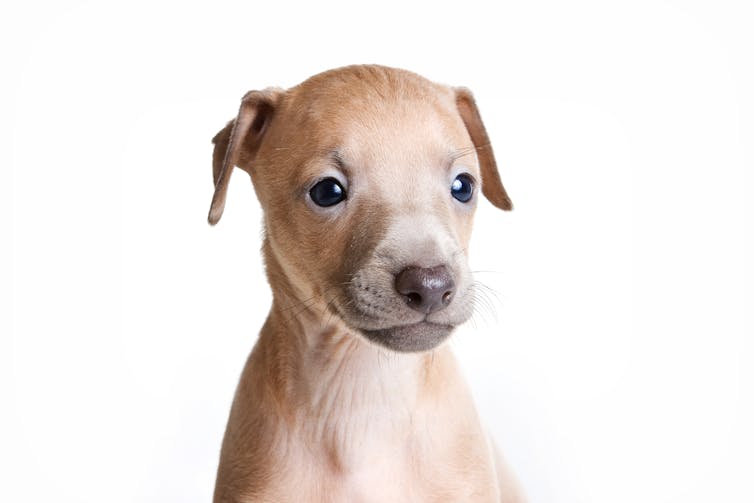 The fate of many greyhound racing pups is unknown.
Shutterstock
The fate of many greyhound racing pups is unknown.
Shutterstock
What happens after retirement?
A dog may be retired because it is not suitable for racing, is injured, or reaches the end of its racing life. Currently in NSW, greyhounds are retired via the Greyhound Adoption Program or alternative greyhound rehoming organisations.
In the year to June 2019, NSW’s Greyhound Adoption Program reported rehoming 729 greyhounds. While this is encouraging, it’s not clear how many greyhounds entered the program. The Conversation has sought comment from Greyhound Racing NSW, which runs the program, on the total number of dogs in the program.
In addition to rehoming programs, industry participants can also rehome dogs to people outside the greyhound industry. The animals must then be registered as companion animals. The GWIC must be empowered to undertake follow up inspections to ensure these dogs are safe.
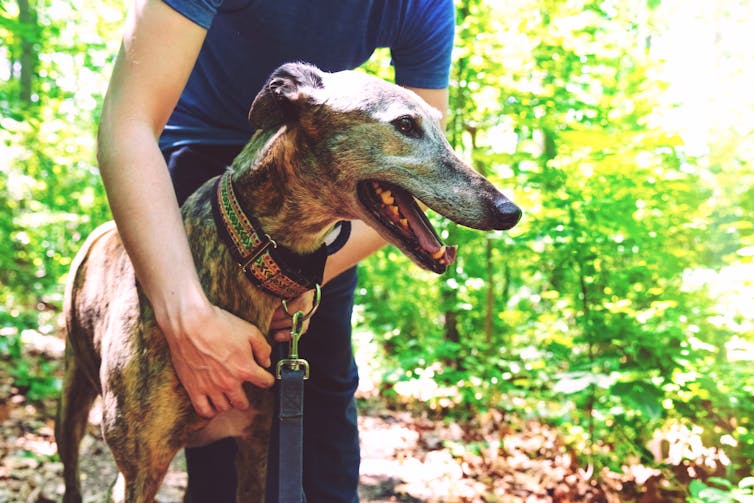 In some cases, racing greyhounds can be rehomed.
Shutterstock
In some cases, racing greyhounds can be rehomed.
Shutterstock
Winning back the public
For greyhound lifecycle data to be accurate, the animals must be tracked via a birth identification number, which stays with them for life.
GWIC reports indicate it is working on these tracking issues. A lifespan tracking approach will cost money. The NSW government must ensure the regulator is adequately funded to implement and enforce such a scheme.
After the special inquiry, the greyhound racing industry said it was “willing to change” to meet strict animal welfare standards and regulatory guidelines. According to GWIC figures, the industry has made progress on lowering breeding rates, which obviously helps.
Ultimately, the greyhound industry’s future hangs on the question of unnecessary euthanasia – and targets for this must be based on accurate data. Only then will the industry convince the public that it’s committed to being cruelty-free.
Read more: New South Wales overturns greyhound ban: a win for the industry, but a massive loss for the dogs
Authors: Alexandra McEwan, Lecturer: Law, CQUniversity Australia