

Will COVID lockdowns hurt your child's social development? 3 different theories suggest they'll probably be OK
- Written by: Laurien Beane, Course Coordinator, Queensland Undergraduate Early Childhood, Australian Catholic University
Social distancing during COVID-19 has seen a radical upheaval to the way we work and socialise.
But what are the implications for young children? Many children have been uprooted from their places of education and care, and may struggle to understand why their routine has been disrupted.
If you’re a parent, particularly in Victoria, you may be wondering whether this period — a significant amount of time relative to the life of a young child — might affect your child’s social development.
The good news is, with less of the day-to-day rush, many young children have probably benefited from extra socialisation at home with their families.
Looking through a theoretical lens
We can explore the ways COVID-19 might affect children’s social development by considering three theories in psychology.
1. Supporting the individual child (attachment theory)
It’s important for young children to develop strong and secure “attachments” with parents and caregivers. These emotional and physical bonds support children’s social development.
Psychologists have shown very young children who develop strong and secure attachments become more independent, have more successful social relationships, perform better at school, and experience less anxiety compared with children who didn’t have strong and secure attachments.
Where the extra time children have spent with parents and caregivers during COVID-19 has been in a supportive environment, this may help the development of these attachments.
Read more: Don’t worry, your child’s early learning doesn’t stop just because they’re not in childcare
2. Supporting the child in the family (family systems theory)
Beyond parents and caregivers, it’s important for children to develop secure attachments within the whole family.
For young children, research shows these connections with family members can lead to improved social development, while fostering the child’s ability to develop their own identity as part of a family unit.
Young children might have spent more time with siblings and other family members during lockdown, possibly developing deeper connections with them.
3. Supporting the child in the community (sociocultural theory)
Sociocultural theory considers social interaction to underpin the ways children learn, allowing them to make meaning from the world around them.
While learning can and does take place between children and adults, there’s lots of research showing all children benefit from socialising with peers of the same age.
Evidence also indicates children learn to respond to social situations in social environments. This could be in early learning settings, on the playground, or with their families.
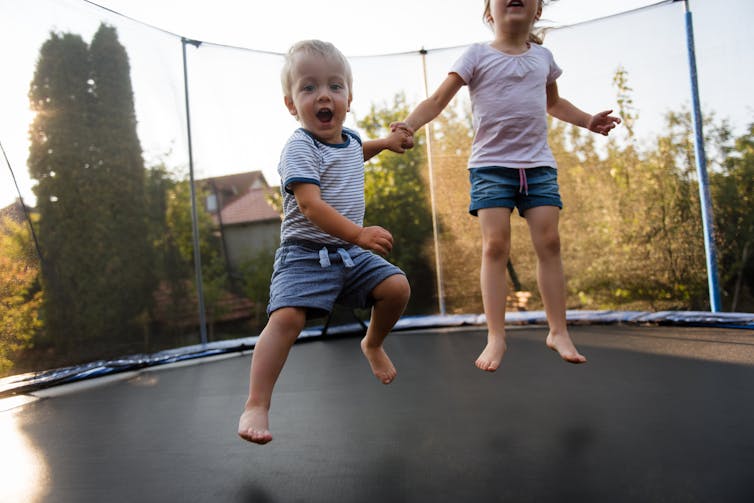 Young children may have developed stronger connections with siblings and other family members during lockdown.
Shutterstock
Young children may have developed stronger connections with siblings and other family members during lockdown.
Shutterstock
COVID-19 has curtailed many interactions children would regularly have in early learning and social contexts. But at the same time, it’s created opportunities for other meaningful interactions such as at home with family.
Day-to-day life with family, or socially distanced interactions within the community, still provide great opportunities for social development.
We can’t know for sure what toll this pandemic will take on children’s social development.
But it’s important to remember children are always learning wherever they may be, and whoever they may be with. So try to focus on the benefits you’ve gained spending time with your child at home.
Read more: How parents can help their young children develop healthy social skills
It won’t be the same for everyone
COVID-19 has brought tough times for many Australian families. We know added financial pressures can adversely affect family life, and may be compounded during lockdown by a lack of external support.
The Australian Early Development Census consistently identifies lower socioeconomic status as one of the risk factors for poorer “social competence” — a child’s ability to get along with and relate to others.
This doesn’t mean all children in families experiencing socioeconomic hardship during COVID-19 will necessarily face challenges in their social development. It’s more complex that that. However, some might.
Other risk factors for social competence may have also been heightened during the pandemic. These include family conflict, anxiety or illness (of the child or the parent), and trauma, such as exposure to stressful events, grief, or loss.
Children who already live in vulnerable situations may have become even more vulnerable during this time.
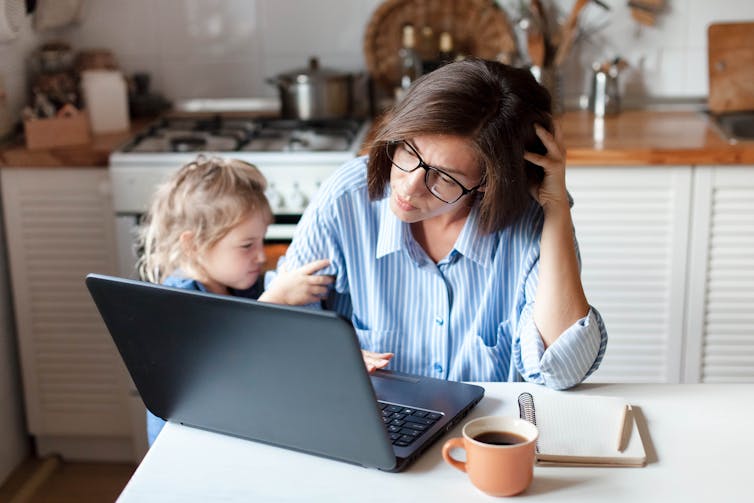 More time with family won’t always be a positive.
Shutterstock
More time with family won’t always be a positive.
Shutterstock
Getting back to ‘normal’
Alongside risk factors, a range of protective factors may reduce the impacts of adversity on a child.
We should think about providing young children with extra support, helping them regulate their emotions, fostering warm relationships, promoting resilience and encouraging problem solving, and facilitating social contact within the COVID-19 social distancing norms, such as video chats.
Read more: Are the kids alright? Social isolation can take a toll, but play can help
As children begin the transition back to early childhood education and care, some “clinginess” is natural.
Having a distressed child at drop-off time can be confronting. But trust in their capacity to regulate their emotions when you leave, and their ability to rediscover relationships with their educators, carers and friends. They should soon readjust.
To support smooth transitions back into early childhood education and care, talk positively with your child about the people they’re going to see, such as teachers and their friends, and encourage them to ask any questions they may have.
If you’re worried about how the lockdown has affected your child, you can always speak to your child’s educator, the centre director, or your GP about connecting with services designed to support you and your child.
Authors: Laurien Beane, Course Coordinator, Queensland Undergraduate Early Childhood, Australian Catholic University


















