

Dear Australia, your sympathy helps, but you can't quite understand Melbourne's lockdown experience
- Written by: Kate Brady, Research Fellow - Community Resilience, University of Melbourne
The joy Melburnians feel about coming out of lockdown is palpable, but another thread is also emerging: if you don’t live in Melbourne and haven’t experienced what we’ve experienced, you can’t actually understand what we’ve been through.
COVID has affected all Australians, but these last few months have been different for us.
Research on collective trauma and community recovery after disaster and upheaval tells us this is common in groups that have faced terrible or challenging experiences together.
If you’re in Melbourne, there are many ways to help yourself and those near you as we emerge from this gruelling period. If you’re outside Melbourne, you can and should support your Melbourne mates — but there are a few things to avoid.
Was Melbourne lockdown really a case of collective trauma?
Collective trauma events are not just disasters; they also have community-wide effects, and challenge people’s understanding of the way the world works.
Collective trauma events are typically thought of as tragedies such as the Lindt Cafe siege in 2014, the Christchurch Mosque shootings in 2019 or the events at Dream World in 2016. But I’d argue the strain of the last months in Melbourne has been experienced as a type of collective trauma event.
This view is informed by my research into disaster recovery, my work as a senior practitioner at Australian Red Cross, workplace seminars I have conducted during the pandemic, and my own experience living in Melbourne through this.
Collective trauma can have direct and indirect impacts. In the pandemic, direct impacts might be bereavement, the effect on your health, employment, education and access to services. Indirect impacts can be much harder to get your head around. They include changes to your worldview, your relationships, and how you see yourself.
For example in pre-pandemic times you may have been in a very equal relationship where domestic duties were evenly shared — but in lockdown, maybe one partner shouldered a bigger burden of childcare and housework, or was under more pressure at work. These stressors can throw the relationship out of whack and have a long term impact.
People who lived alone during lockdown may have watched their relationships change and might wonder if things can go back to how they were.
Read more: Collective trauma is real, and could hamper Australian communities' bushfire recovery
In the first wave, there was a sense of “if we just batten down the hatches and get on with it, we will get through this.”
In the second wave, people in Victoria were confronted with a realisation that much in life is outside our control and recovery may not be linear. Instead of thinking “we just need to get through this part and then we’ll get back to how things were”, there was an unsettling day-to-day challenge of thinking, “What if this keeps happening? What if we can’t stop it? What if this changes the way I thought the world worked?”
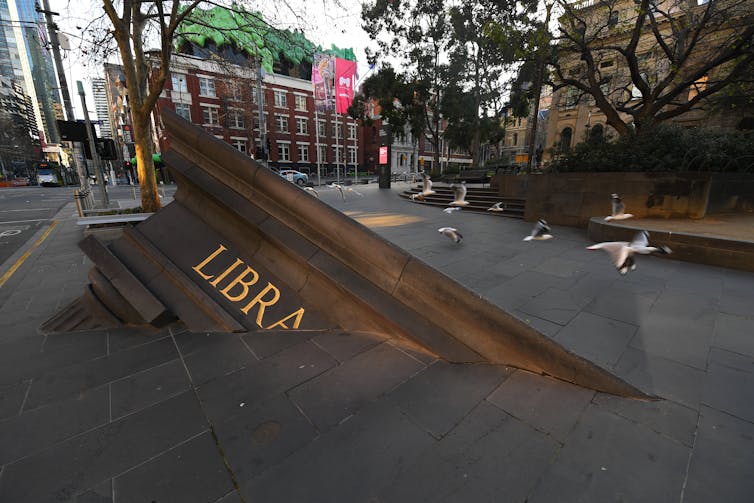 Melbourne went back into coronavirus lockdown on July 9, and has only emerged this week. Residents have watched the rest of the country enjoy months of relative freedom.
James Ross/AAP
Melbourne went back into coronavirus lockdown on July 9, and has only emerged this week. Residents have watched the rest of the country enjoy months of relative freedom.
James Ross/AAP
So you had this disconnect where people outside Victoria kept saying “You’ll get through this! Once you’re on the other side things will be normal!” but, for many of us, those well-meaning cheers of encouragement didn’t line up with our actual experience.
Of course, people in other parts of the country who have been shaken in similar ways, and the restrictions Melburnians have experienced recently are faced by some people all the time. But in Melbourne, the relentlessness has been difficult to escape.
Getting support from others who lived it
We know from research that if a community has been through a challenging experience together — whether that’s bushfire, flood or some local horrific event — getting support from others who experienced it is crucial.
In my work with the Red Cross, we try to encourage people to connect with others after disasters. Just coming together to talk about what happened gives people the opportunity to feel a sense of hope, to normalise their experience and to be able to talk in a “shorthand” with others who will understand, because they went through it too. It’s a relief.
But all the things we’d normally suggest in the early stages of disaster are systemically dismantled by COVID. People have tried to stay connected online but it’s not the same. It’s tiring. It’s been harder to draw on normal points of support, which is crucial to recovery.
If you’re in Melbourne, recognise that we’ve all been through something huge and exhausting. Everyone is going to be in a different place. Try and be as patient and kind as you can with yourself and the people around you.
Dos and don'ts for people outside Melbourne
The research on collective trauma tells us if you haven’t been through the event, you’ll never quite understand. That doesn’t mean people outside Melbourne haven’t had their own experience, or can’t help.
Think about any upsetting personal experience you’ve had, such as miscarriage, divorce or the death of a parent. When someone who hasn’t experienced that specific trauma says “I know how you feel”, you might have felt misunderstood and even resentful or rageful.
You might think, “Not only do I need to explain myself and my feelings to this person — which in itself is exhausting and upsetting — I also have to find the energy to explain why what they said was wrong, even though I know they meant well”.
So over the next few weeks and months, don’t say “I know exactly how you feel” to your Melbourne friends and family. Unless you actually have been through the same thing in another setting, you don’t know how they feel. This experience was very specific.
Instead, ask “What has this been like for you?” and listen to what the person is saying. Say, “That sounds difficult. Tell me why, because I haven’t been in that situation”.
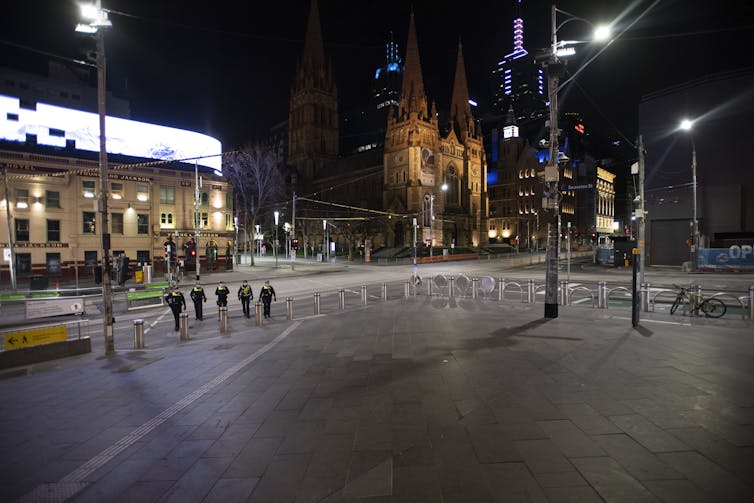 All of metropolitan Melbourne was placed under nightly curfew for nearly two months.
Erik Anderson/AAP
All of metropolitan Melbourne was placed under nightly curfew for nearly two months.
Erik Anderson/AAP
Staying open and empathetic
Research in this field talks a lot about the five mass trauma intervention principles, which are about promoting:
1) a sense of safety
2) a sense of calm
3) a sense of self-efficacy and community efficacy (belief in one’s community or one’s own ability to do something well)
4) connectedness
5) hope.
The lovely thing about these principles is they can be applied in many situations, whether that’s holding a press conference, consoling a friend or socialising with colleagues.
Good leaders promote these five things in times of crisis.
When we talk to each other as friends, try to keep those five principles in mind. Be open and empathetic in your listening.
Don’t be scared to talk to each other about how you’re feeling, and don’t be scared to ask your Melbourne friends about what happened.
But recognise that if you haven’t been through it, a good place to start could be “I can’t imagine what that was like. How can I help?”
Authors: Kate Brady, Research Fellow - Community Resilience, University of Melbourne


















