

Fear of going out? Here's how Melburnians can manage anxiety when returning to 'normal'
- Written by Jill Newby, Associate Professor and MRFF Career Development Fellow, UNSW
Many Melburnians are joyous at the prospect of a return to socialising, as the city regains some old freedoms this week following significantly eased coronavirus restrictions.
Social media is teeming with images of people looking ecstatic about the end of lockdown.
But in stark contrast to these images, some people might feel nervous about socialising or going out again — especially those who were anxious before the pandemic. If you feel like your social skills are a bit rusty, you might feel more comfortable at home. And the fear of another lockdown might also make you want to avoid going out altogether.
And on top of these, there’s a raft of new and often complicated rules to understand, which can be overwhelming and draining. Then there’s the stress and pressure of making plans and having busy schedules again.
However, it’s important to remember there are ways to cope.
Read more: Today marks the official end of the second wave in Victoria, as old freedoms return
Fear of going out
It’s helpful to remember you’re in an unusual situation with no perfect map of how to cope, or a “right” or “wrong” way to get through it. For most people, the anxiety will naturally ease over time. It’s normal to feel anxious, nervous, apprehensive, and even overwhelmed, and equally normal to find yourself feeling excited or joyous. It’s also OK to take your time and slowly ease back into how things were before the lockdown started.
It’s OK to say no to some events or situations if you don’t feel comfortable with them at first.
However, if you’re shy or nervous in social situations, avoiding social situations completely can make it worse. The more we avoid, the scarier socialising becomes, and the less chance we have to discover we often cope better than we expect.
To build your confidence, it can be helpful to take it step by step, using the principles of exposure therapy. Begin by socialising with people you feel more comfortable with, and then gradually building up to larger crowds, such as in shops, pubs or other large venues.
It’s also useful to be conscious of negative thoughts that make you feel more anxious, and learn techniques to challenge and change these thoughts into more realistic or helpful ones that help you feel more confident. Cognitive behavioural therapy teaches you practical techniques to manage anxious thoughts, and is available online.
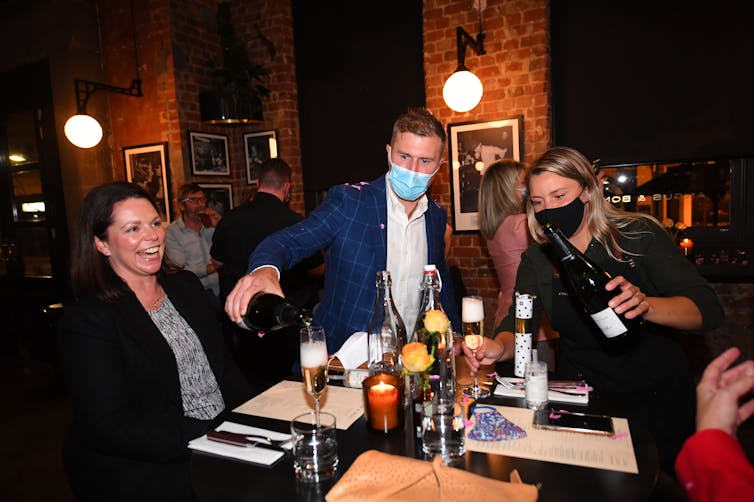 Even though some people are eager to get back to socialising, not everyone is. And that’s OK.
James Ross/AAP
Even though some people are eager to get back to socialising, not everyone is. And that’s OK.
James Ross/AAP
Coronaphobia
Melbourne has conquered its second wave of COVID-19 and is now seeing very low new daily case numbers, with a 14-day rolling average of just 2.4.
Although the risk of contracting COVID-19 is now much lower, it’s normal to still feel some anxiety about contracting it, or worry about unwittingly spreading the virus to your loved ones. The invisible nature of the virus, and the fact it can be spread by people without symptoms, is what’s had public health authorities and epidemiologists so concerned. And with a lot of exposure to public health messaging to stay safe and protect yourself and the community, it’s easy to have internalised these messages so much that the outside world feels dangerous.
Our research at the Black Dog Institute with 5,070 Australian adults showed that while many feared contracting COVID-19, it was also common to worry about loved ones getting it.
It’s normal to feel a bit worried about COVID-19, as you return to restaurants, pubs, cafes and workplaces. But there are some signs to look out for that your worries might be getting out of hand, and that it’s time to seek some help.
If you find it hard to stop worrying, the worries are persistent or intense, you constantly check yourself for symptoms, you actively avoid certain situations, you’ve become overly obsessive about decontaminating surfaces or your clothes, or if anxiety interferes with your life, you might find it helpful to chat to a psychologist. The best place to start is to talk to your GP to get a referral to a psychologist, or you can complete a brief online assessment to get evidence-based treatment recommendations, such as the Black Dog Institute’s Online Clinic.
There are also ways you can manage these anxieties, including by reducing the time you spend reading media reports about the virus, avoiding googling about the virus, and learning ways to help you feel safe, but also work towards returning to normal at a pace you feel comfortable with.
Read more: 7 ways to manage your #coronaphobia
Feeling overwhelmed
Managing fear of another lockdown, anxiety about socialising, and fear of COVID-19 are all happening on top of rules like remembering to bring your mask with you and wear it. And no doubt many business owners and staff will be stressed about maintaining hygiene and ensuring their venues are COVID-safe.
There are undoubtedly good reasons for these rules. But processing, internalising, and remembering the various rules can be draining, and put more cognitive load on people who may already feel tired, uncertain, stressed and overwhelmed.
It can help to learn techniques to break down what feels overwhelming into smaller, more manageable steps, and to write things down (like the rules!) so you’re not overloading your already taxed memory. It might also help to learn ways to combat stress, such as improving your sleep habits, doing physical activity, learning relaxation techniques, and sharing how you’re feeling with others so you feel supported and not alone.
Go a bit easier on yourself if you’ve been expecting too much of yourself, or are too self-critical. It also helps to take breaks away from work, and from stressful situations, including smaller mini-breaks during the day, but also longer breaks like a holiday.
Read more: No wonder isolation's so tiring. All those extra, tiny decisions are taxing our brains
If this article has raised issues for you, or if you’re concerned about someone you know, call Lifeline on 13 11 14.
Authors: Jill Newby, Associate Professor and MRFF Career Development Fellow, UNSW

















