

UN report says up to 850,000 animal viruses could be caught by humans, unless we protect nature
- Written by Katie Woolaston, Lawyer, Queensland University of Technology
Human damage to biodiversity is leading us into a pandemic era. The virus that causes COVID-19, for example, is linked to similar viruses in bats, which may have been passed to humans via pangolins or another species.
Environmental destruction such as land clearing, deforestation, climate change, intense agriculture and the wildlife trade is putting humans into closer contact with wildlife. Animals carry microbes that can be transferred to people during these encounters.
A major report released today says up to 850,000 undiscovered viruses which could be transferred to humans are thought to exist in mammal and avian hosts.
The report, by The United Nations’ Intergovernmental Science-Policy Platform on Biodiversity and Ecosystem Services (IPBES), says to avoid future pandemics, humans must urgently transform our relationship with the environment.
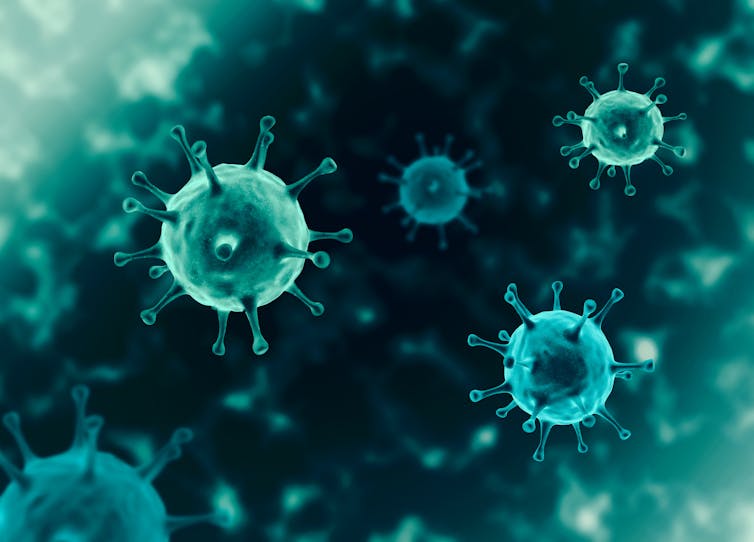 Microbes can pass from animals to humans, causing disease pandemics.
Shutterstock
Microbes can pass from animals to humans, causing disease pandemics.
Shutterstock
Humans costs are mounting
The report is the result of a week-long virtual workshop in July this year, attended by leading experts. It says a review of scientific evidence shows:
…pandemics are becoming more frequent, driven by a continued rise in the underlying emerging disease events that spark them. Without preventative strategies, pandemics will emerge more often, spread more rapidly, kill more people, and affect the global economy with more devastating impact than ever before.
The report says, on average, five new diseases are transferred from animals to humans every year – all with pandemic potential. In the past century, these have included:
- the Ebola virus (from fruit bats),
- AIDS (from chimpazees)
- Lyme disease (from ticks)
- the Hendra virus (which first erupted at a Brisbane racing stable in 1994).
The report says an estimated 1.7 million currently undiscovered viruses are thought to exist in mammal and avian hosts. Of these, 540,000-850,000 could infect humans.
But rather than prioritising the prevention of pandemic outbreaks, governments around the world primarily focus on responding – through early detection, containment and hope for rapid development of vaccines and medicines.
 Governments are focused on pandemic responses such as developing vaccines, rather than prevention.
Shutterstock
Governments are focused on pandemic responses such as developing vaccines, rather than prevention.
Shutterstock
As the report states, COVID-19 demonstrates:
…this is a slow and uncertain path, and as the global population waits for vaccines to become available, the human costs are mounting, in lives lost, sickness endured, economic collapse, and lost livelihoods.
This approach can also damage biodiversity – for example, leading to large culls of identified carrier-species. Tens of thousands of wild animals were culled in China after the SARS outbreak and bats continue to be persecuted after the onset of COVID-19.
The report says women and Indigenous communities are particularly disadvantaged by pandemics. Women represent more then 70% of social and health-care workers globally, and past pandemics have disproportionately harmed indigenous people, often due to geographical isolation.
Read more: The next global health pandemic could easily erupt in your backyard
It says pandemics and other emerging zoonoses (diseases that have jumped from animals to humans) likely cause more than US$1 trillion in economic damages annually. As of July 2020, the cost of COVID-19 was estimated at US $8-16 trillion globally. The costs of preventing the next pandemic are likely to be 100 times less than that.
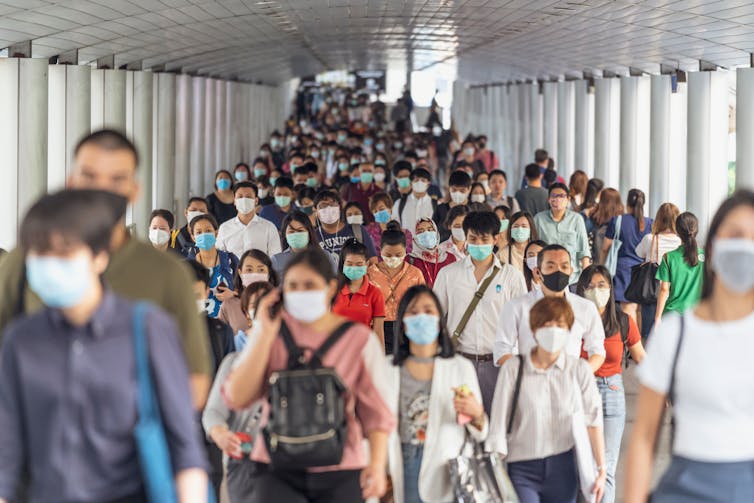 The cost to governments of dealing with pandemics far outweighs the cost of prevention.
Shutterstock
The cost to governments of dealing with pandemics far outweighs the cost of prevention.
Shutterstock
A way forward
The IPBES report identifies potential ways forward. These include:
• increased intergovernmental cooperation, such as a council on pandemic prevention, that could lead to a binding international agreement on targets for pandemic prevention measures
• global implementation of OneHealth policies – policies on human health, animal health and the environment which are integrated, rather than “siloed” and considered in isolation
• a reduction in land-use change, by expanding protected areas, restoring habitat and implementing financial disincentives such as taxes on meat consumption
• policies to reduce wildlife trade and the risks associated with it, such as increasing sanitation and safety in wild animal markets, increased biosecurity measures and enhanced enforcement around illegal trade.
Societal and individual behaviour change will also be needed. Exponential growth in consumption, often driven by developed countries, has led to the repeated emergence of diseases from less-developed countries where the commodities are produced.
So how do we bring about social change that can reduce consumption? Measures proposed in the report include:
education policies
labelling high pandemic-risk consumption patterns, such as captive wildlife for sale as pets as either “wild-caught” or “captive-bred” with information on the country where it was bred or captured
providing incentives for sustainable behaviour
increasing food security to reduce the need for wildlife consumption.
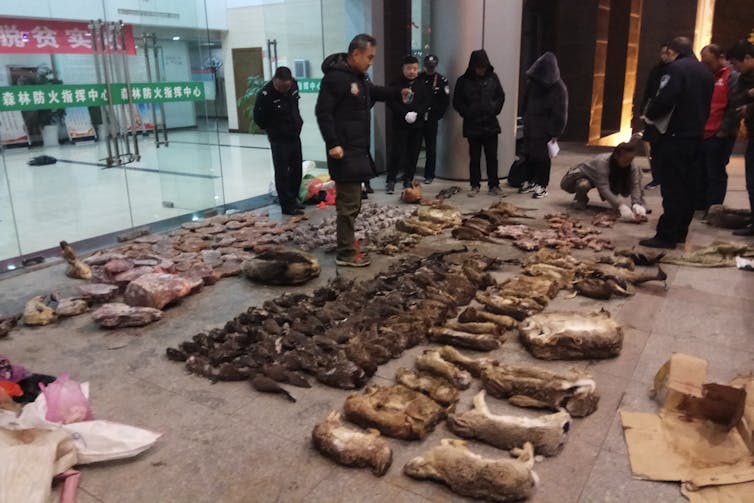 Cracking down on the illegal wildlife trade will help prevent pandemics.
AP
Cracking down on the illegal wildlife trade will help prevent pandemics.
AP
An Australian response
Australia was one of the founding member countries of IPBES in 2012 and so has made an informal, non-binding commitment to follow its science and policy evidence.
However, there are no guarantees it will accept the recommendations of the IPBES report, given the Australian government’s underwhelming recent record on environmental policy.
For example, in recent months the government has so far refused to sign the Leaders’ Pledge for Nature. The pledge, instigated by the UN, includes a commitment to taking a OneHealth approach – which considers health and environmental sustainability together – when devising policies and making decisions.
The government cut funding of environmental studies courses by 30%. It has sought to reduce so called “green tape” in national environmental legislation, and its economic response to the pandemic will be led by industry and mining - a focus that creates further pandemic potential.
Read more: New polling shows 79% of Aussies care about climate change. So why doesn't the government listen?
Finally, Australia is one of few countries without a national centre for disease control and pandemics.
But there are good reasons for hope. It’s within Australia’s means to build an organisation focused on a OneHealth approach. Australia is one of the most biologically diverse countries on the planet and Australians are willing to protect it. Further, many investors believe proper environmental policy will aid Australia’s economic recovery.
Finally, we have countless passionate experts and traditional owners willing to do the hard work around policy design and implementation.
As this new report demonstrates, we know the origins of pandemics, and this gives us the power to prevent them.
Authors: Katie Woolaston, Lawyer, Queensland University of Technology

















