

Universities in crisis? They've been there before, and found a way out
- Written by Gwilym Croucher, Senior Lecturer, Melbourne Centre for the Study of Higher Education, University of Melbourne
This is an edited extract of a new history, Australian Universities: A history of common cause, by Gwilym Croucher and James Waghorne (UNSW Press). In the early 1950s the universities faced an acute financial crisis, forcing them to find creative ways to lobby the Menzies government. The outcome was a resounding affirmation of the national importance of universities.
Unresolved problems of Commonwealth support for universities came to a head in 1952, when the funding recommended by the 1950 Mills Committee expired. Despite his oft-expressed affection for Australian universities, Robert Menzies’ refusal to appoint a standing committee to manage university funding or new inquiry left future Commonwealth support and funding uncertain. The government’s practice of delaying the passage of the States Grants (Universities) Act until just in time for the following year tested universities’ nerve.
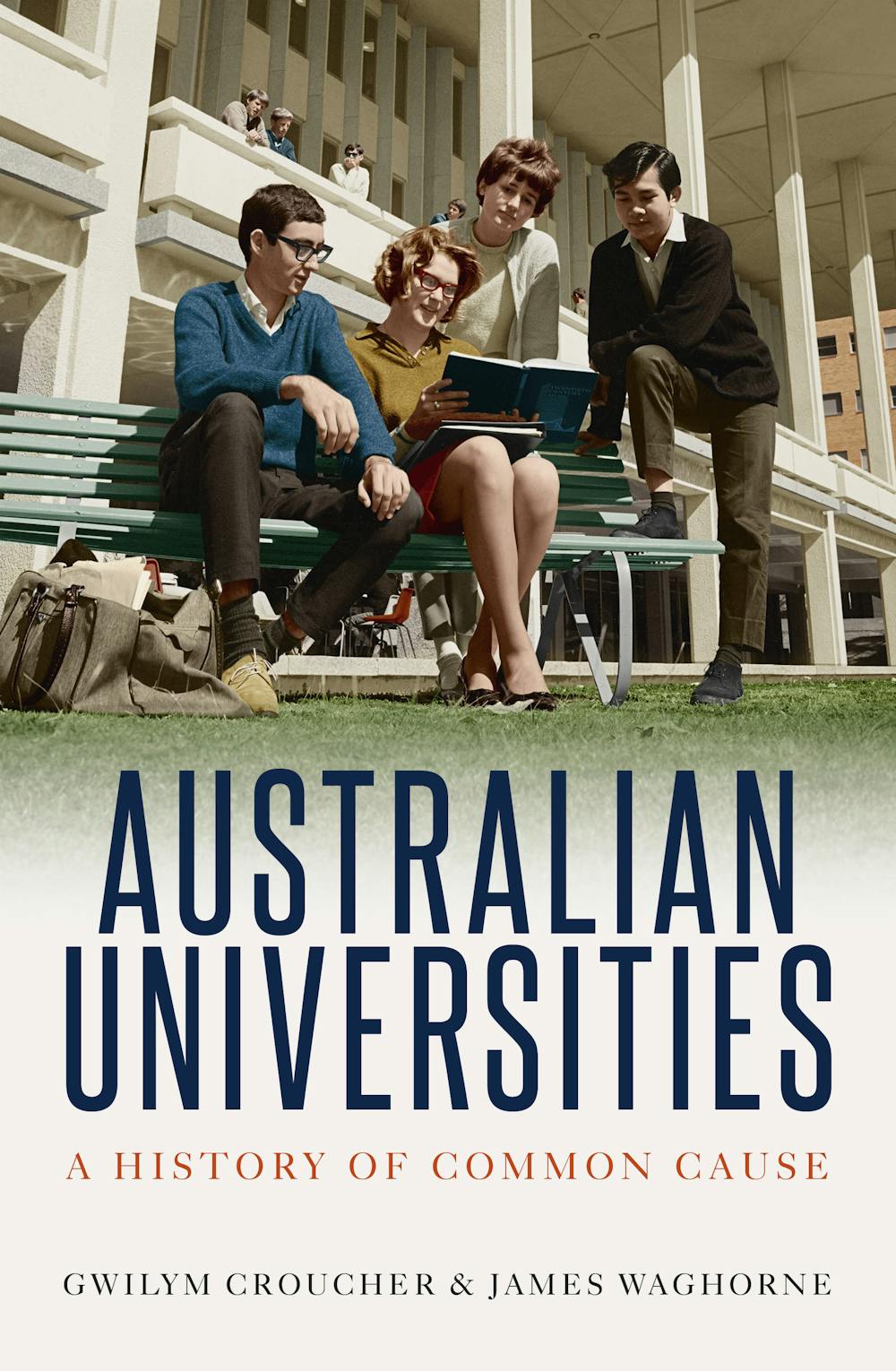 The new history of Australian universities.
UNSW Press
The new history of Australian universities.
UNSW Press
Coupled with this uncertainty was the problem of inflation, which had soared after the previous Labor government’s wage controls were lifted. The Commonwealth allocations so precisely calibrated in the middle of 1950 were increasingly inadequate. By 1952, the Australian Vice-Chancellors’ Committee (AVCC, predecessor of Universities Australia) estimated inflation had reduced the effective Commonwealth allocation by “up to 40%”.
In October 1951 universities used the opportunity of the ceremony installing the first ANU chancellor, Stanley Melbourne Bruce, to send a deputation to the prime minister to urge him to initiate a “co-ordinated plan of development”. Menzies was unavailable. The visiting vice-chancellors had to be content with Paul Hasluck, minister for territories, as the prime minister’s representative.
The UWA vice-chancellor, Sir George Currie, later confessed to other universities that he “was not optimistic regarding the result”. Hasluck indicated the Commonwealth had limited interest in establishing a new committee that might bind it to increasing funding.
Their discreet appeals having failed, universities were compelled to adopt a more public stance. This meant a degree of co-ordinated public action universities had only infrequently practised. The University of Sydney appointed communications professionals to develop the public case.
They were not alone, though, in public advocacy. During a speech on the responsibility of science in the modern world, Ian Clunies Ross, head of the CSIRO and former Sydney professor, “turned an elegant celebration on the traditional role of the university into an urgent appeal for help”.
Facing a pressing funding shortfall, universities took the unprecedented step of preparing a booklet, A Crisis in the Finances and Development of the Australian Universities. Signed by vice-chancellors, it set out a reasoned case on university finances.
The publication shed the previous restraint of the AVCC’s public statements and presented the situation facing universities as a “crisis”. The combination of the loss of Commonwealth funding and rising inflation meant universities were worse off in real terms than they had been in 1939. The booklet presented concerns to the public, and made the case that the public should value universities’ contribution:
Universities are destined to play an increasingly important role in Australian development. Their future is a matter of grave concern to you and to every other member of the community. Yet there is an alarming degree of public apathy regarding their affairs. While they are accepted as an integral part of our educational system, there is little public appreciation of the wide nature of their responsibilities to the community.
The universities argued their role had expanded in the years after the second world war and they now performed many functions of vital national significance. Their tasks of transmitting knowledge to students, along with the training of professionals with technical expertise, such as “architects, engineers, scientists, doctors, dentists, lawyers, teachers, economists”, were now undertaken to meet national priorities.
Another role was in Commonwealth-supported research. Universities distinguished their contribution from the CSIRO’s mission-oriented investigation of specified problems. Universities had the freedom to advance knowledge and make discoveries where the end result was unknown. Moreover, they were the primary source of “specialist training in professions and science” essential for the national research enterprise.
All these benefits crossed state boundaries and had wide public utility. Research, for example, was not the private work of individuals, but rather provided a “threefold advantage”: in “advancing knowledge”, training research workers for government and industrial employment, and “indirectly maintaining the interest and vigour of the staff with a benefit to teaching standards”. Acknowledging that research did not always produce immediate economic benefits, they argued that their research training provided an essential prerequisite for growth of the economy.
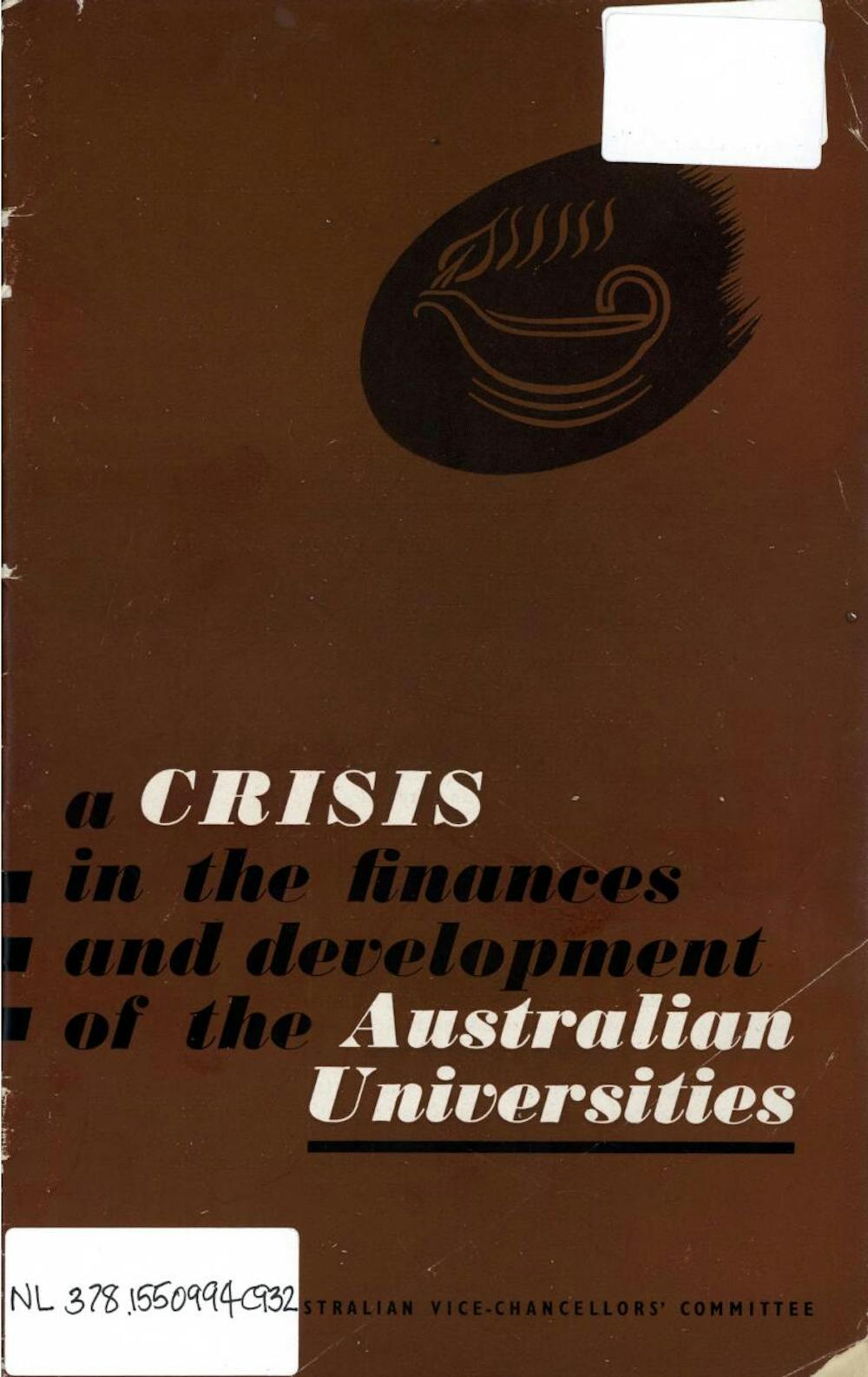 The universities distributed 2,000 copies of the Crisis booklet in their campaign to build support for increased funding.
Trove/National Library of Australia
The universities distributed 2,000 copies of the Crisis booklet in their campaign to build support for increased funding.
Trove/National Library of Australia
Two thousand copies of the Crisis booklet were distributed to politicians, university governing bodies, professors and others “interested in increasing government support”. A media statement was drafted emphasising the problem of inflation. Journalists were encouraged to quote from the booklet as the official position of Australian universities.
In the wake of the publication of the booklet, Menzies reiterated his support for Australian universities. More promisingly, he indicated broad support for an immediate 20% increase in “second level” Commonwealth assistance, which benefited the smaller universities, and the establishment of a committee to respond to immediate needs and prepare a long-term plan for university development.
Yet by the following February the process had slowed. Universities became increasingly frustrated.
The 1953 Premiers’ Conference was scheduled for the day after the universities met, and the vice-chancellors telegraphed the Secretary of the Prime Minister’s Department, Allen Brown: “would it be possible to obtain the Prime Minister’s views on additional assistance for universities in current year”. Brown telephoned in reply that the Premiers’ Conference would be dealing with “weighty problems” and unfortunately would not have time to consider universities’ appeal.
The plight of universities was discussed at the conference and, in response to appeals from Victoria for more support, Menzies replied that they had done well “without a Commonwealth grant”. Left with little recourse, the vice-chancellors again wrote to the prime minister, reiterating their requests.
As universities sought to build a case for federal funds, they faced growing internal pressures to raise academic salaries. These had declined in real terms as inflation eroded their value. Some disciplines struggled to attract quality candidates.
In response, in 1952 staff formed a Federal Council of University Staff Associations of Australia (FCUSAA). In 1953 it pressed universities to support its campaign for wage increases.
In this, universities were hamstrung by their separate relationships with their respective state governments. While some universities, such as Sydney and Melbourne, had independently granted wage increases, others, such as Adelaide and Western Australia, were not in a financial position to do so. Nevertheless, universities supported the proposal with a statement of principle that academic salaries were “inadequate in view of changed economic conditions”.
While the funding impasse continued, the weight of the number of enrolments that had grown since the second world war squeezed operations, leaving little capacity to expand universities’ activities in line with international trends. In response to the deteriorating state of affairs, the AVCC conducted its own survey of the needs of universities to prepare for the appointment of a full government inquiry and to provide greater specificity to universities’ requests for funding in the meantime. The task of compiling a “Survey of University Needs” proved challenging and there was no certainty the members would agree to what emerged.
As the survey was being compiled, the AVCC prepared a public statement on the absolute minimum requirements of Australian universities. The timing was significant. On the eve of the May 29 1954 federal election, Menzies responded that he was “anxious not to involve the Commonwealth government in the internal affairs of universities”.
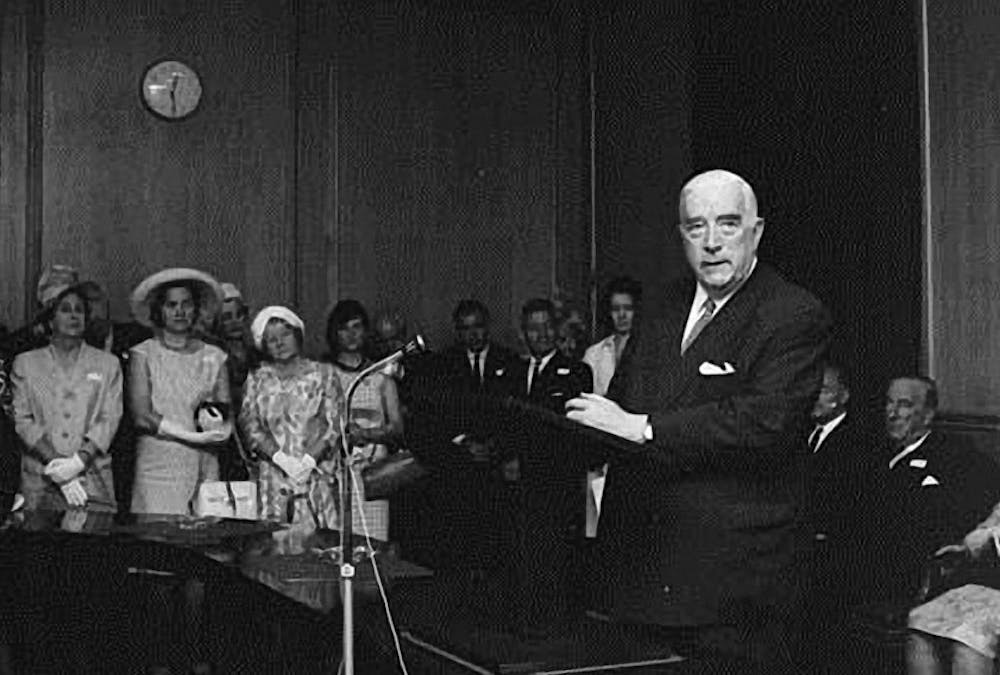 Universities had to work hard to change Prime Minister Robert Menzies’ mind about funding.
National Archives of Australia, CC BY
Universities had to work hard to change Prime Minister Robert Menzies’ mind about funding.
National Archives of Australia, CC BY
The AVCC report sought to answer profound questions about the shape and character of the whole system, such as the “optimum size of a university”, the “essential” facilities, what “special types of university” were necessary, considerations in determining the location of these universities, what residential component was important, what departments were “too expensive to be duplicated”, and where new facilities and departments were needed to overcome “overcrowding”.
It concluded that each should commence with Arts and Science, plus “at least one other faculty reflecting the needs of the district where the university or college is located”. These departments should be headed by professors and as “adequately staffed as possible”. Staff–student ratios should be as low as possible, with 2,500 to 3,000 students considered optimal, even though the Universities of Sydney and Melbourne had already grown to twice this size.
The report also acknowledged that larger universities, with more extensive offerings and a broad range of departments, had stronger reputations. The tension between good education and reputation was difficult to resolve.
At the March 1956 meeting, the AVCC chair, George Paton, announced the plans for university co-ordination would be shelved. He considered them no longer “desirable at the present stage” and went on to explain that Menzies had joined him for a private dinner at the Melbourne staff club, University House, at which he agreed to appoint a new inquiry, subject to approval from the states. Menzies asked universities for a list of names of “persons in the United Kingdom who would be suitable for appointment as chairman of such a committee”.
This breakthrough was greeted with acclamation by universities, which drew up a list at the top of which was the chair of the University Grants Committee in Britain, Sir Keith Murray. Vice-chancellors had been instrumental in the appointment of Murray, and Murray sought guidance from them upon his arrival.
Universities set out a template for the “ideal conditions” for a visit to an Australian university, including the time for a tour of the facilities and the order in which to speak to interest groups. Each visit began with an official exposition of the university’s submission, followed by informal talks with professorial and then non-professorial staff, then a meeting with student representatives. Finally, a formal meeting would be held with a university’s governing body, with subsequent informal conversations to “clear up points of doubt”.
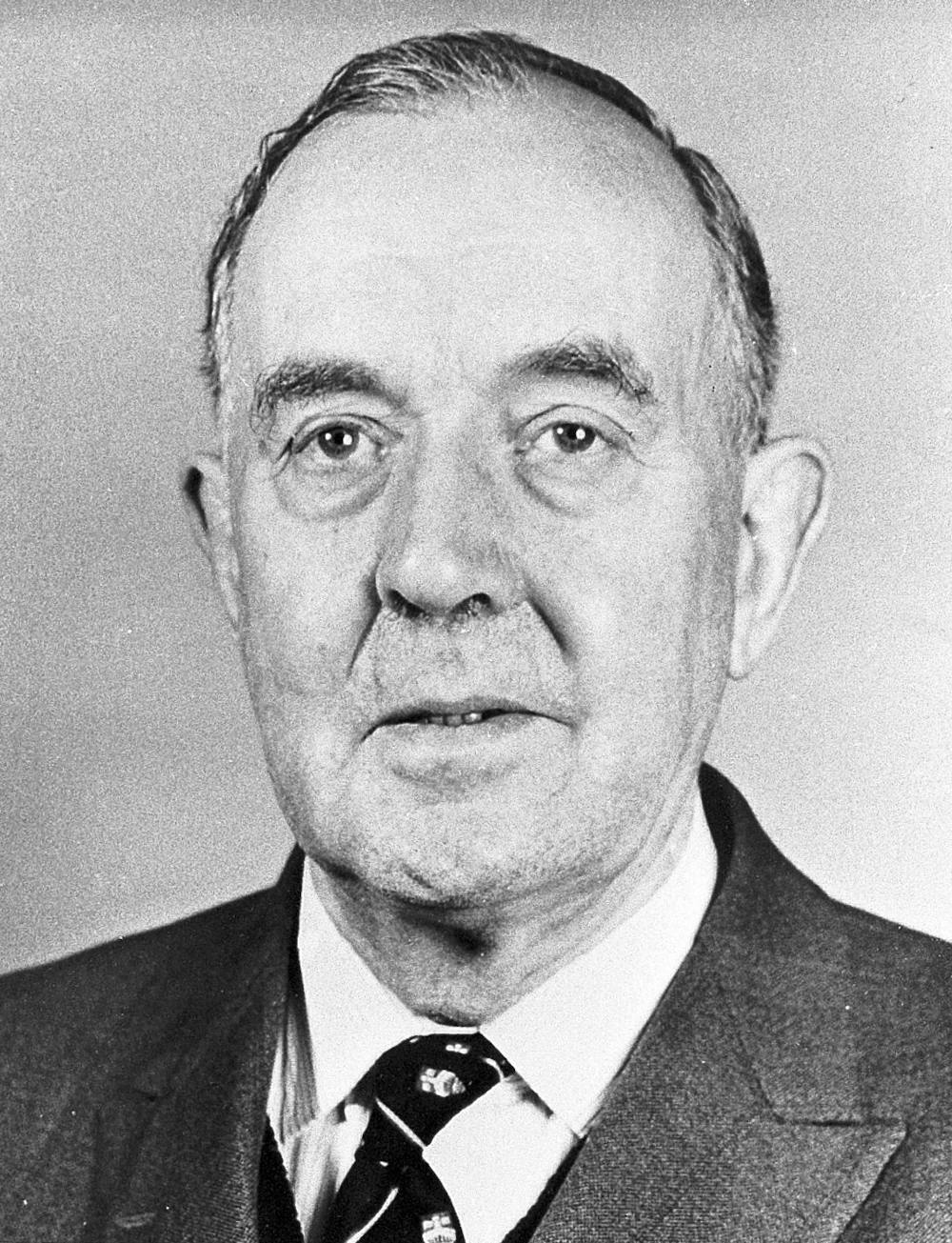 Sir Keith Murray agreed with vice-chancellors that ‘the problems appeared to be immediate and large’.
Wikipedia, CC BY
Sir Keith Murray agreed with vice-chancellors that ‘the problems appeared to be immediate and large’.
Wikipedia, CC BY
Receiving this advice with gratitude, Murray agreed in a way that gave comfort to vice-chancellors that “the problems appeared to be immediate and large”. “Was anybody thinking in revolutionary terms?” he asked.
The universities’ planning work that went into formulating a co-ordinated approach was not wasted. It formed the basis of the AVCC submission to the Murray Committee. Drafted by Paton, the report emphasised the need for “long-range” planning, so universities were not “faced with a similar problem in two years’ time”, as they had been after the Mills Inquiry.
Although constitutional impediments prevented the “translating” of the University Grants Committee into Australia directly, the AVCC submission urged Murray to investigate the creation of an equivalent body. To clarify this for the British members of the committee, Paton explained:
If the Universities are to develop as they should, we must of necessity depend more on the Commonwealth for our financial requirements, while the Commonwealth has the superior power over taxation. But we are equally anxious that anything the Commonwealth might contribute should not merely ease the financial responsibilities of the States towards the Universities.
The Murray Committee considered the vice-chancellors’ submission alongside those of student groups and industry representatives, and undertook the review at remarkable speed with the support of Menzies. The final report drew particular attention to the vice-chancellors’ request for a similar organisation to the British University Grants Committee.
Menzies adopted the recommendations within three days of the report’s release. The government pledged to establish a permanent body with the support of the state governments. The body would reside in the Prime Minister’s Department, separate from the Office of Education, so as to distinguish it from the provision of primary and secondary education. It would have its own secretariat and, although Murray recommended that it act informally, at least at the beginning, it would be established as a statutory authority in 1959.
This went much of the way to meeting the vice-chancellors’ request, although they might have preferred the body to have a more public role.
The Murray Report cited Commonwealth estimates that the number of students would almost double over the following decade, following “rapid” population growth and the increasing numbers remaining in secondary school to matriculation. This, Murray argued, would require existing universities to take more students, as well as a new university in Sydney and Melbourne.
Yet this grossly underestimated the demand for higher education that came only a few years later. The [newly established] Australian Universities Commission immediately found itself grappling with a system growing more rapidly than anybody had imagined. New universities cast from the mould of the old would require unprecedented levels of public investment. In just five years a new committee of inquiry would be appointed to determine how this expansion could be supported.
An extract from Australian Universities: A history of common cause by Gwilym Croucher and James Waghorne, UNSW Press, November 2020, $39.99RRP.
Authors: Gwilym Croucher, Senior Lecturer, Melbourne Centre for the Study of Higher Education, University of Melbourne


















