

90% of buildings in bushfire-prone areas aren't built to survive fires. A national policy can start to fix this
- Written by Mark Maund, Research Affiliate, School of Architecture and Built Environment, University of Newcastle
Last week, the Royal Commission into National Natural Disaster Arrangements (the “bushfire royal commission”) handed down its anticipated final report, with 80 recommendations on managing future emergencies.
Last summer’s horror bushfire season claimed 33 lives, although the real cost in human life might have been greater when smoke-related health issues are taken into account. More than 3,000 houses were destroyed in the 24 million hectares that burned.
Read more: Summer bushfires: how are the plant and animal survivors 6 months on? We mapped their recovery
It’s clear Australia has a lot to learn about managing risk and adapting to future extreme seasons, and the most effective strategy is better planning where and how we live and build. As the royal commission noted, “planning decisions and exposure to risk are inextricably linked”.
But while the report is extensive, covering many aspects of natural disasters and planning around land use, the royal commission stops short of recommending a national town planning policy.
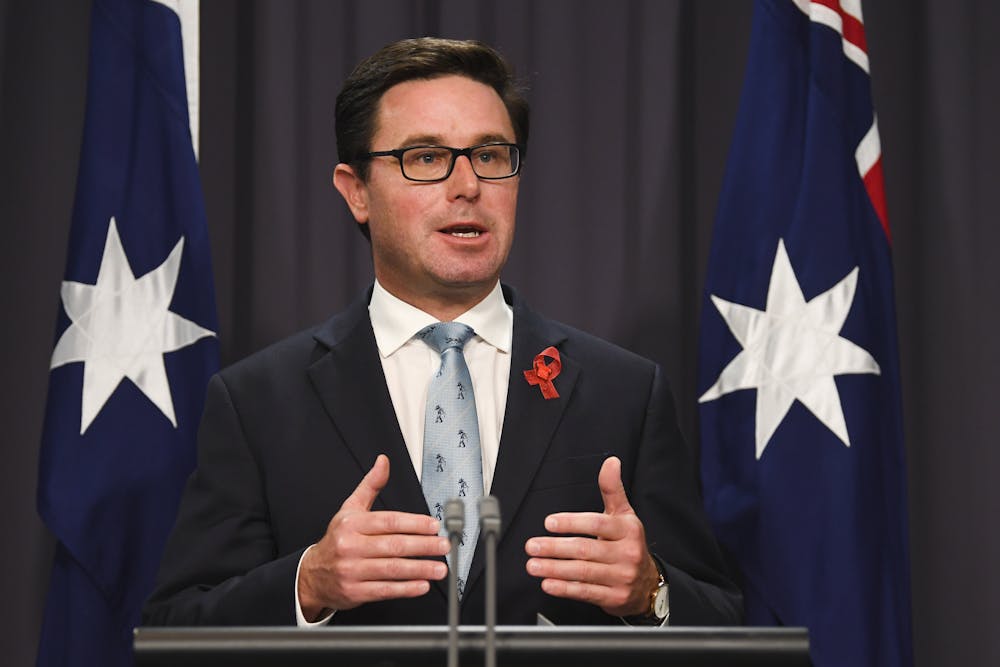 Federal emergency management minister David Littleproud said the government is committed to acting on the findings of the royal commission.
AAP Image/Lukas Coch
Federal emergency management minister David Littleproud said the government is committed to acting on the findings of the royal commission.
AAP Image/Lukas Coch
Recommendations on planning
The commission considered all natural hazards, including drought, storms and floods, as well as bushfires.
It found the Australian community expected national leadership, and it pleaded for action and unity from all levels of government to improve natural disaster arrangements as risk grows under climate change. Ultimately, it writes, the federal government should “enhance and support” state and local government.
Read more: We can build homes to survive bushfires, so why don't we?
The commission also determined where people choose to live affects the extent of damage and harm from a disaster, even if consequences aren’t felt until decades later. Its recommendations around planning and building include:
improved communication of risk and hazard information for prospective property buyers
guidance from insurers on what risk mitigation strategies will be recognised for existing buildings
mandatory consideration of natural disaster risk in land-use planning decisions by state, territory and local government
review of the National Construction Code and its standards to understand how effective they are in reducing risk.
Adopting these recommendations is important because, as the Bushfire Building Council estimates in the report:
90% of buildings in bushfire prone areas in Australia have not been built to bushfire planning and construction regulations as they were built prior to regulation being applied.
Inheriting risk
Prospective landowners inherit risk when they purchase property, so effectively communicating this is essential and would encourage better “buy in”. While this is already occurring in some states, requirements vary considerably and communication should move beyond risk awareness.
Purchasers should also be provided with a detailed understanding of measures that can be implemented to reduce risk. This could be, for example, annual reminders for property maintenance, such as pruning trees and cleaning gutters.
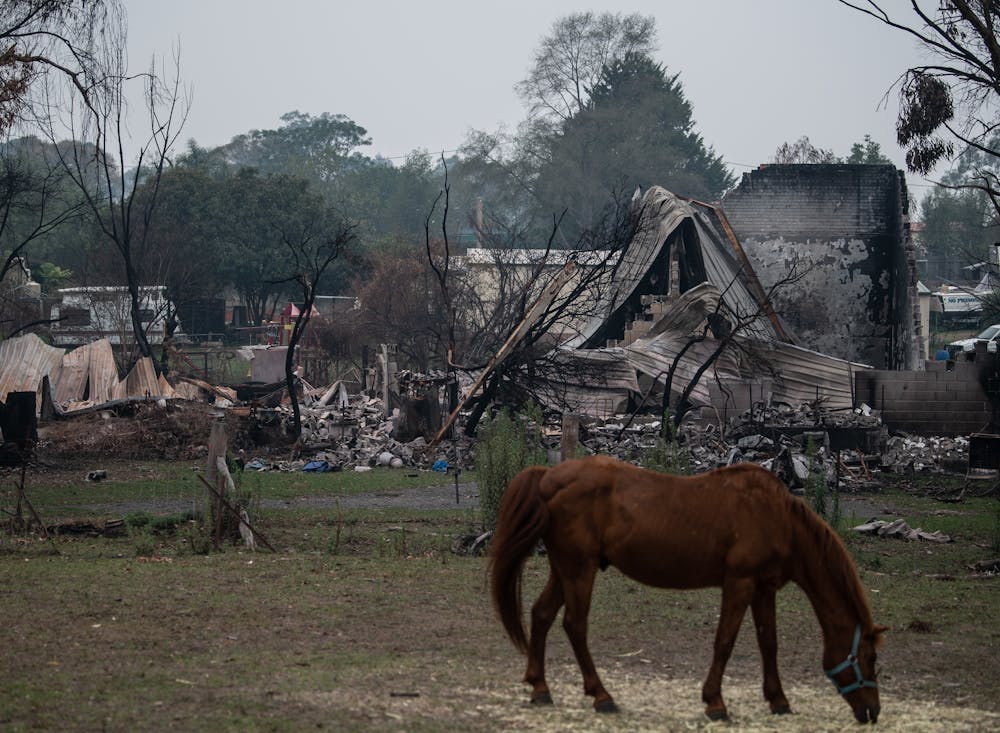 Bushfires swept through Cobargo on New Years Eve, 2019, killing two and destroying several homes and businesses.
AAP Image/James Gourley
Bushfires swept through Cobargo on New Years Eve, 2019, killing two and destroying several homes and businesses.
AAP Image/James Gourley
Insurance also should also play a larger role. By August 2020, almost 38,500 insurance claims valued at an estimated A$2.33 billion were lodged due to the bushfires.
Insurers need to provide guidance on what changes can be made to buildings to reduce risk, and we should encourage a consistent national insurance policy for these measures. This should be reflected in reduced insurance premiums.
Smarter town planning
Effective building standards are vital, but they should not be the primary mechanism for risk reduction. There must also be a focus on town planning to locate buildings in less hazard-prone areas.
Town planning functions and responsibilities are often managed by local government. However, state and territory governments still remain accountable to ensure local government has sufficient support.
Read more: The bushfire royal commission has made a clarion call for change. Now we need politics to follow
The importance of town planning in managing disaster risk has also been recognised by the United Nations, Australian Institute for Disaster Resilience, Planning Institute of Australia and NSW Rural Fire Service.
Despite these calls, homes continue to be built in high risk areas. As written in the royal commission’s report:
all states permit homes to be built in bushfire and flood prone areas, and the degree to which planning or building standards act to mitigate risk varies across jurisdictions.
Furthermore, the Insurance Council of Australia stated in the report that there’s “clear evidence of recent planning decisions placing communities at a known and obvious risk of disaster”.
For example, development for the suburb of Idalia in Townsville was only partially completed before it was inundated by a flood in February 2019. More than 3,300 homes were damaged.
Likewise, the town of Wytaliba lost about 25 homes in the recent bushfires, which is more than half of its total number of houses.
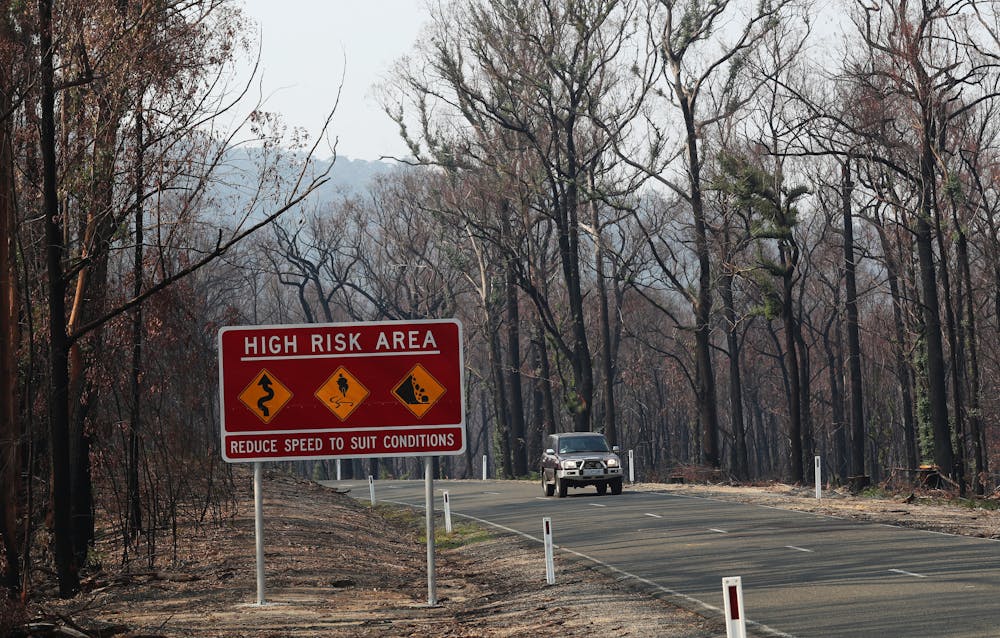 A national approach would allow communities to makes decisions within an agreed, evidence-based framework that’s understood by all stakeholders.
AAP Image/David Crosling
A national approach would allow communities to makes decisions within an agreed, evidence-based framework that’s understood by all stakeholders.
AAP Image/David Crosling
Why we need a national policy
The commission has provided recommendations on what needs to be done — now we need the how.
The royal commission recognises the role of state, territory and local government in planning. But having diverse planning policies means there are differences in where we locate buildings, creates confusion and exposes communities to different levels of risk.
This is why Australia needs a national approach, with a consistent national policy that all levels of government should be responsible for managing.
A national approach would avoid development in high-risk areas, while still providing housing, employment, food and water security and environmental protection.
It would allow communities to make decisions within an agreed, evidence-based framework that’s understood by all stakeholders — the community, emergency sector, government and insurance industry. And it would establish boundaries to the level of risk that’s acceptable.
This policy would include a combination of avoidance of high-risk areas, improved building standards and standardised risk assessments. Importantly, it would get support from politicians, government, professionals and the entire community to boost resilience.
It’s of the utmost importance Australia gets this right, as more extreme bushfire seasons are undoubtedly in our future. As the royal commission stated, “support is one thing — action is another”.
Read more: Set up national air fleet to fight fires, says royal commission, warning of worsening weather
Authors: Mark Maund, Research Affiliate, School of Architecture and Built Environment, University of Newcastle

















