

3 billion animals were in the bushfires' path. Here's what the royal commission said (and should've said) about them
- Written by Ashleigh Best, PhD Candidate and Teaching Fellow, University of Melbourne
The Black Summer bushfires were devastating for wildlife, with an estimated three billion wild animals killed, injured or displaced. This staggering figure does not include the tens of thousands of farm animals who also perished.
The bushfire royal commission’s final report, released on October 30, recognised the gravity of the fires’ extraordinary toll on animals.
It recommended governments improve wildlife rescue arrangements, develop better systems for understanding biodiversity and clarify evacuation options for domestic animals.
While these changes are welcome and necessary, they’re not sufficient. Minimising such catastrophic impacts on wildlife and livestock also means reducing their exposure to these hazards in the first place. And unless we develop more proactive strategies to protect threatened species from disasters, they’ll only become more imperilled.
What the royal commission recommended
The royal commission recognised the need for wildlife rescuers to have swift and safe access to fire grounds.
In the immediate aftermath of the bushfires, some emergency services personnel were confused about the roles and responsibilities of wildlife rescuers. This caused delays in rescue operations.
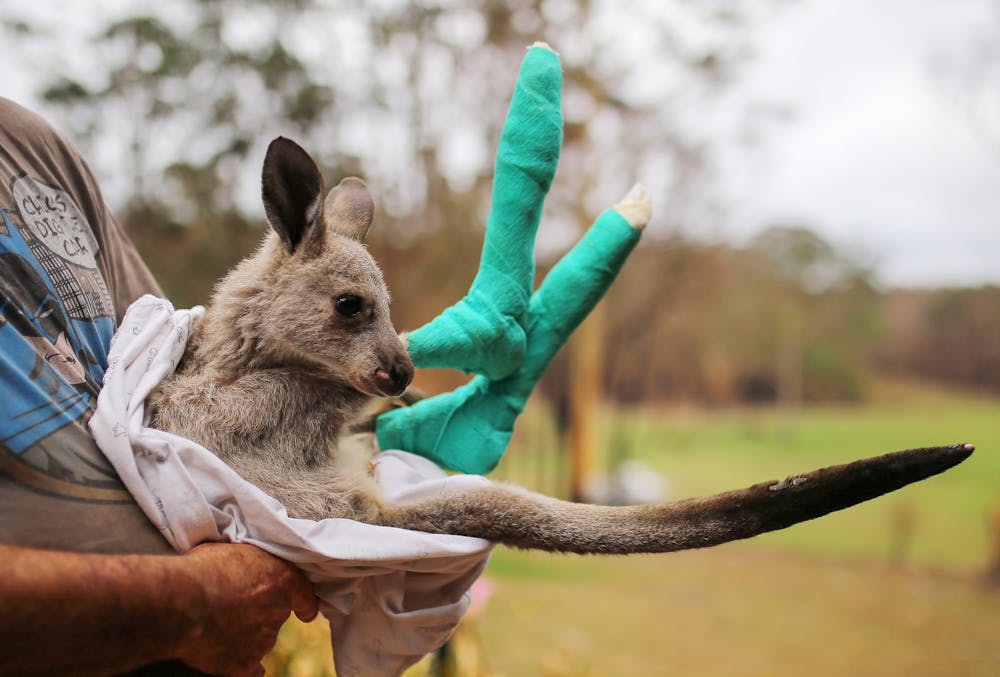 Australia does not have a comprehensive, central source of information about its native flora and fauna.
AAP Image/Steven Saphore
Australia does not have a comprehensive, central source of information about its native flora and fauna.
AAP Image/Steven Saphore
To address this issue, the royal commission sensibly suggested all state and territory governments integrate wildlife rescue functions into their general disaster planning frameworks. This would improve coordination between different response agencies.
Read more: The bushfire royal commission has made a clarion call for change. Now we need politics to follow
Another issue raised by the commission was that Australia does not have a comprehensive, central source of information about its native flora and fauna. This is, in part, because species listing processes are fragmented across different jurisdictions.
For example, a marsupial, the white-footed dunnart, is listed as vulnerable in NSW, but is not on the federal government’s list of threatened species.
To better manage and protect wild animals, governments need more complete information on, for example, their range and population, and how climate change threatens them.
As a result, the royal commission recommended governments collect and share more accurate information so disaster response and recovery efforts for wildlife could be more targeted, timely and effective.
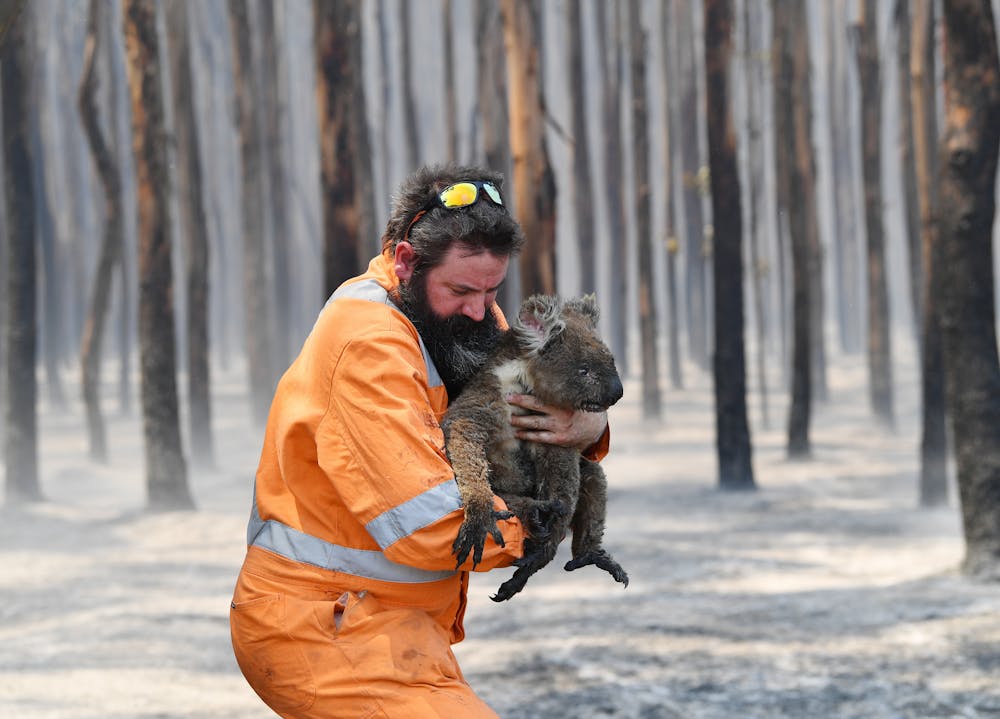 Adelaide wildlife rescuer Simon Adamczyk takes a koala to safety on Kangaroo Island.
AAP Image/David Mariuz
Adelaide wildlife rescuer Simon Adamczyk takes a koala to safety on Kangaroo Island.
AAP Image/David Mariuz
Helping animals help themselves
While promising, the measures listed in the royal commission’s final report will only tweak a management system for wildlife already under stress. Current legal frameworks for protecting threatened species are reactive. By the time governments intervene, species have often already reached a turning point.
Governments must act to allow wild animals the best possible chances of escaping and recovering on their own.
This means prioritising the protection and restoration of habitat that allows animals to get to safety. As a World Wildlife Fund report explains, an animal’s ability to flee the fires and find safe, unburnt habitat — such as mesic (moist) refuges in gullies or near waterways — directly influenced their chances of survival.
Read more: Summer bushfires: how are the plant and animal survivors 6 months on? We mapped their recovery
Wildlife corridors also assist wild animals to survive and recover from disasters. These connect areas of habitat, providing fast moving species with safe routes along which they can flee from hazards.
And these corridors help slow moving species, such as koalas, to move across affected landscapes after fires. This prevents them from becoming isolated, and enables access to food and water.
 An animal’s ability to flee fires determines whether it survives.
Shutterstock
An animal’s ability to flee fires determines whether it survives.
Shutterstock
Hazard reduction activities, such as removing dry vegetation that fuels fires, were also a focus for the royal commission. These can coexist with habitat conservation when undertaken in ecologically-sensitive ways.
As the commission recognised, Indigenous land and fire management practices are informed by intimate knowledge of plants, animals and landscapes. These practices should be integrated into habitat protection policies in consultation with First Nations land managers.
The commission also suggested natural hazards, such as fire, be counted as a “key threatening process” under national environment law. But it should be further amended to protect vulnerable species under threat from future stressors, such as disasters.
Governments also need to provide more funding to monitor compliance with this law. Another World Wildlife Fund report, released today, warns that unless it is properly enforced, a further 37 million native animals could be displaced or killed as a result of habitat destruction this decade.
And, as we saw last summer, single bushfire events can push some populations much closer to extinction. For example, the fires destroyed a large portion of the already endangered glossy black-cockatoo’s remaining habitat.
What about pets and farm animals?
Pets and farm animals featured in the commission’s recommendations too.
During the bushfires, certain evacuation centres didn’t cater for these animals. This meant some evacuees chose not to use these facilities because they couldn’t take their animals with them.
To guide the community in future disasters, the commission said plans should clearly identify whether or not evacuation centres can accommodate people with animals.
Read more: Seven ways to protect your pets in an emergency
Evacuation planning is crucial to effective disaster response. However, it is unfortunately not always feasible to move large groups of livestock off properties at short notice.
For this reason, governments should help landholders to mitigate the risks hazards pose to their herds and flocks. Researchers are already starting to do this by investigating the parts of properties that were burnt during the bushfires. This will help farmers identify the safest paddocks for their animals in future fire seasons.
Disasters are only expected to become more intense and extreme as the climate changes. And if we’re to give our pets, livestock and unique wildlife the best chance at surviving, it’s not enough only to have sound disaster response. Governments must preemptively address the underlying sources of animals’ vulnerability to hazards.
Read more: How we plan for animals in emergencies
Authors: Ashleigh Best, PhD Candidate and Teaching Fellow, University of Melbourne

















