Australia is lagging on climate action and inequality, but the pandemic offers a chance to do better
- Written by John Thwaites, Chair, Monash Sustainable Development Institute & ClimateWorks Australia, Monash University
As Australia plans its recovery from COVID-19, our strategies should be based on a broader set of priorities than we have used in the past.
The Sustainable Development Goals (SDGs), agreed to by all countries at the United Nations, provide a set of objectives and targets that can serve as a blueprint to “build back better” after the pandemic.
This week, a report card is being released on Australia’s progress toward achieving these goals. It also highlights the potential impact of COVID-19 on our ability to meet our SDG targets by 2030.
The report shows Australia is performing well in health and education but failing in climate, environment and areas linked to social inequality.
The good news is that trust in government has risen significantly since the pandemic began, no doubt reflecting in part Australia’s relatively good response to the crisis.
Australians are proud of what we have been able to achieve, and this trust and optimism will be needed as we try to tackle some of the stubborn challenges highlighted in the report.
Why targets are critical
In adopting the SDGs, all countries (including Australia) recognised the need to take a long-term and integrated approach to national planning informed by data and evidence.
Central to this approach is the setting of economic, social and environmental targets for 2030, which help to provide clear signposts for where we want to go.
Targets are critical. They set the priorities and level of ambition, encourage a shift from short- to long-term thinking, provide investment certainty and mobilise people to collaborate to solve problems.
They also enable a clear picture of where we are on track or off track, and the scale and pace of change needed.
Read more: Australia falls further in rankings on progress towards UN Sustainable Development Goals
With only 10 years left to achieve the SDGs, Australia still lacks national targets for many of the specific goals and this is undermining our ability to plan effectively for our future.
The report card makes three important contributions:
1) it proposes an initial set of 2030 targets for Australia across economic, social and environmental indicators
2) it assesses Australia’s progress towards these targets over the past two decades, highlighting where we are falling behind and where accelerated action is needed
3) it evaluates the affects of COVID-19 on Australia’s capacity to achieve the SDGs.
Where Australia is falling behind
Our key findings in this week’s report show where Australia needs to focus its energies to meet our SDGs.
Social challenges
Australians are living longer but are more obese and, since the pandemic, drinking more alcohol.
Domestic violence has increased during COVID-19.
Homicide rates have halved since 2000, yet the prison population has increased by 32% since 2006, with Indigenous Australians vastly over-represented.
Women have been disproportionately affected by the pandemic, experiencing more psychological distress and a greater chance of job disruption.
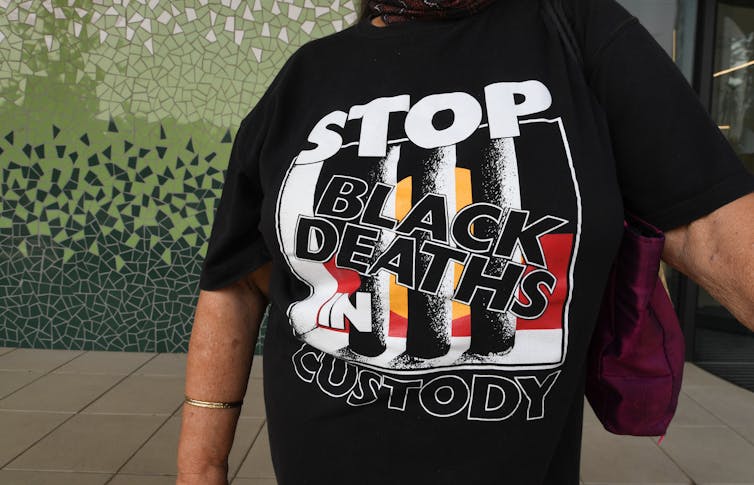 Indigenous prisoners account for just over a quarter of the total Australian prisoner population.
Peter Rae/AAP
Indigenous prisoners account for just over a quarter of the total Australian prisoner population.
Peter Rae/AAP
Environmental challenges
Australia’s greenhouse gas emissions have declined only marginally since 2000 and little progress has been made since 2013. Australia is not on track to meet a 2030 emissions target consistent with the Paris Agreement objective to keep global warming to well below 2 degrees Celsius.
Australia’s per capita material footprint is one of the highest in the world — more than 70% above the OECD average — and rising.
Hard coral cover on the Great Barrier Reef has declined and the number of species now threatened has increased since 2000.
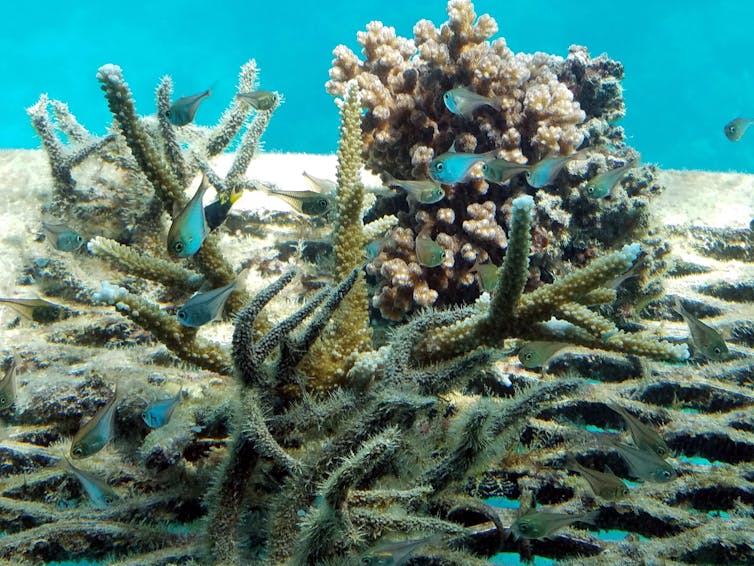 Marine heat waves resulted in severe bleaching events on the Great Barrier Reef in 2016 and 2017.
Stringer/AP
Marine heat waves resulted in severe bleaching events on the Great Barrier Reef in 2016 and 2017.
Stringer/AP
Economic challenges
Women, young people and those without high school qualifications are more likely to have had their employment disrupted by COVID-19.
Australia’s relatively low levels of government debt will help in the COVID-19 recovery, yet household debt is well above the OECD average.
Wealth inequality is getting worse with the share of household net worth of the bottom 40% of the population declining by 30% since 2004.
Since 2012, middle-class wages and incomes have stalled.
COVID-19 has stymied trade, foreign investment and skilled migration, prompting the need for new drivers of growth.
An opportunity for major policy changes
This report comes at a pivotal moment. All countries are facing a series of complex and related crises — a global health emergency, climate change, growing inequality, unemployment and biodiversity decline.
COVID-19 has reduced pollution and greenhouse gas emissions, but emissions are now returning to pre-COVID-19 levels.
And increased public deficits and debt may constrain governments’ abilities to address social and environmental challenges in the coming decade.
Read more: Why more housing stimulus will be needed to sustain recovery
On the other hand, COVID-19 has given governments the chance to undertake much more significant interventions than previously thought possible.
Australia has a huge opportunity to design a recovery strategy that strengthens our resilience to future shocks, addresses many of the challenges of sustainable development that we have not properly dealt with, and ensures the country’s long-term, sustainable prosperity.
Authors: John Thwaites, Chair, Monash Sustainable Development Institute & ClimateWorks Australia, Monash University