

When health workers came up against COVID it laid bare gaps in their training
- Written by: Jed Montayre, Senior Lecturer (Nursing), Western Sydney University
COVID-19 turned 2020 on its head for all healthcare workers, particularly those at the front line of the pandemic response.
Unexpectedly, the need to control the spread of the coronavirus has consumed healthcare systems. The healthcare workforce’s pivotal role in our pandemic response has been in the public spotlight. The experience has exposed knowledge gaps in curriculums, bringing to the fore questions about the education and training of front line healthcare workers.
The pandemic has highlighted the importance of including infection control, mental healthcare and ageing and aged care in all educational programs for health professions.
Infection control
All healthcare disciplines are expected to include infection control contents and principles in the curriculum. However, the teaching of this content was not designed to address a pandemic of historic proportions. Nor are healthcare workers specifically taught to apply infection controls in their workplaces with a pandemic in mind.
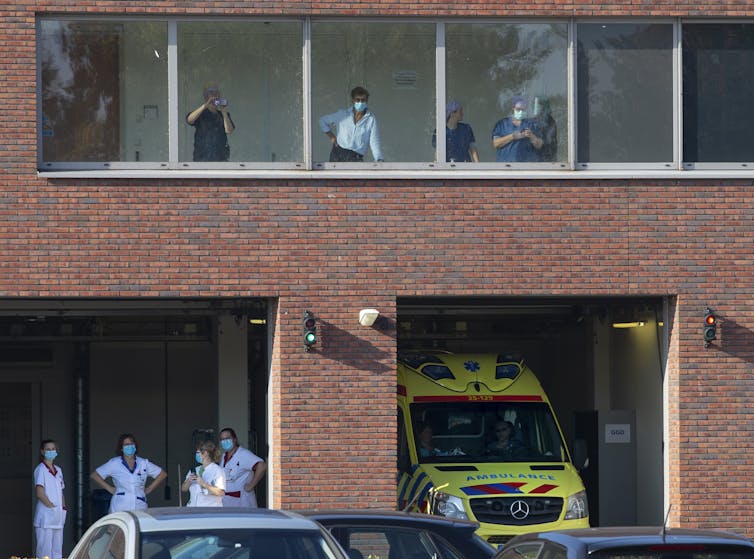 COVID-19 cases included many medical staff who weren’t fully prepared to cope with a pandemic.
Peter Dejong/AP/AAP
COVID-19 cases included many medical staff who weren’t fully prepared to cope with a pandemic.
Peter Dejong/AP/AAP
Read more: Rising coronavirus cases among Victorian health workers could threaten our pandemic response
Infection control protocol during this pandemic requires all front-line healthcare workers to wear protective personal equipment, observe strict hand hygiene and adhere to contact-tracing measures.
In addition to including the classic “chain of infection” in teaching healthcare, we need to ensure students can apply these concepts in specific clinical settings. For example, aged care homes have a different set of infection control challenges from hospitals. These include potential breaches of isolation and infection containment measures by COVID-positive residents visiting other residents, a lack of dedicated isolation rooms and staff with limited training.
Infection control goes beyond competence in the use of protective gear and isolation measures. Management skills are needed to ensure everyone follows recommended infection control practices within their organisations.
For example, registered nurses in aged care must oversee and manage staff adherence to infection control protocols with their facility. These workers include students, cooks and cleaners, so they too must have the essential infection control knowledge and training.
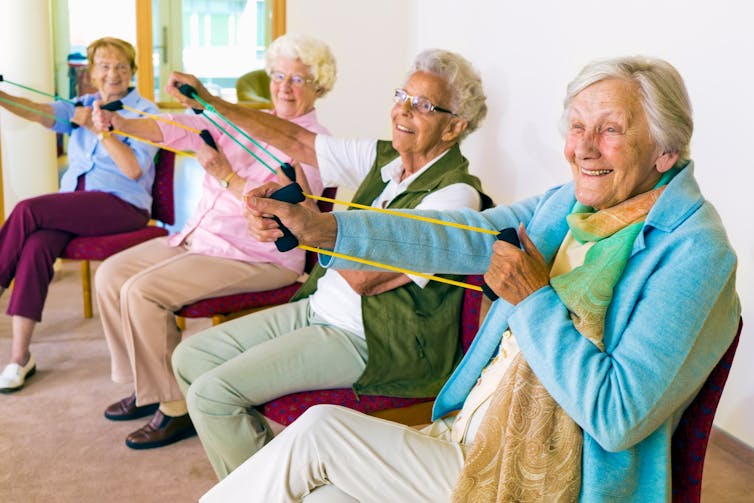 Aged care homes that acted decisively to implement measures appropriate for a pandemic protected their residents from COVID-19.
belushi/Shutterstock
Aged care homes that acted decisively to implement measures appropriate for a pandemic protected their residents from COVID-19.
belushi/Shutterstock
Ageing and aged care
Older people are unquestionably at greater risk of serious illness or death from COVID-19. To protect them, visits by family and friends are often curtailed, particularly in residential aged care facilities. Not surprisingly, loneliness and social isolation are increasing among older people.
Read more: Social isolation: The COVID-19 pandemic's hidden health risk for older adults, and how to manage it
Psychosocial issues like these underscore the importance of a focus on ageing and aged care in healthcare curriculums. In Australia, pre-pandemic evidence indicated a lack of ageing-related education for health professionals. This was highlighted by the Aged Care Royal Commission recommendation to integrate age-related conditions and aged care into healthcare curriculums as an accreditation requirement.
In the context of the COVID-19 pandemic, it is crucial that healthcare students are well prepared to provide optimal care for our most vulnerable age group.
Mental health
The mental health impacts of COVID-19 have affected all population groups. Preventing further mental health issues is now the main goal.
Read more: We can't ignore mental illness prevention in a COVID-19 world
However, not all healthcare programs include content that incorporates approaches to psychological distress and a potential mental health crisis. COVID-19 has exposed this gap in the education of healthcare workers who have had to attend to patients’ mental health needs during the pandemic.
 The lack of social contacts under COVID-19 restrictions has been challenging for people’s mental health.
Photographee.eu/Shutterstock
The lack of social contacts under COVID-19 restrictions has been challenging for people’s mental health.
Photographee.eu/Shutterstock
Education and training are essential as complex challenges can arise when non-expert healthcare workers manage mental health issues. There’s a need to consider the inclusion in healthcare curriculums of mental health education encompassing the lifespan and life transitions – for example, maternal mental health with pregnancy and childbirth during a pandemic.
Building in pandemic preparedness
The emergence of COVID-19 has highlighted the need for healthcare curriculums to include pandemic preparedness.
Preparedness of course includes clinical competence of healthcare workers. However, a successful pandemic response also requires building resilience at a time of change in health systems. Students need to be prepared for changes in health-service delivery such as the use of telehealth and digital platforms.
Access to healthcare must be maintained even in the midst of a pandemic.
Read more: Even in a pandemic, continue with routine health care and don't ignore a medical emergency
Upholding human rights
COVID-19 has raised ethical and moral issues relating to the rights of every individual to health. The pandemic has exposed inequalities at every level – for example, rationing healthcare resources for older people. It’s vital that healthcare curriculums integrate content on upholding human rights during a pandemic.
Understanding the social determinants of health in a pandemic also helps provide contexts for infection control, care for vulnerable groups and prevention of mental health issues.
Attention to the most vulnerable groups, people and their families who experienced COVID-19 deaths, and an understanding of universal health coverage are fundamental for healthcare students during this pandemic and beyond.
Authors: Jed Montayre, Senior Lecturer (Nursing), Western Sydney University


















