

Australia's reptiles may be spreading rat poison through the food chain
- Written by: Michael Lohr, PhD Student - Wildlife Ecology, Edith Cowan University
Introduced rats and mice have probably troubled most of us at some time in our lives. These pesky invasive rodents are found around the world. We usually target them with toxic baits to stop them spreading disease and causing environmental or commercial damage.
In some instances rat baits are useful. They can protect crops, reduce the spread of disease, keep the contents of your pantry from disappearing, or even protect endangered wildlife on islands where rats have invaded.
These baits are freely available to homeowners and are used liberally by pest controllers. However, they have potentially deadly consequences for native predatory animals that eat poisoned rats and mice.
Our new research shows that this secondary poisoning may be worsened in Australia by reptiles, which are extremely effective at spreading these poisons up the food chain – a process that may even have consequences for human health.
Read more: Hidden housemates: rats in the ranks
While little is known about how well reptiles tolerate rodent baits, several studies have suggested that at least some reptiles are extremely resistant. In a toxicity study using one lizard species, all of the test subjects survived an incredibly high dose of the strongest poison on the market – over 4,000 times the poison per body weight needed to kill most rats.
This is probably good news for the lizards, but eating poison-supercharged reptiles may be a serious concern for their predators – and for us.
Humans eat lizards too
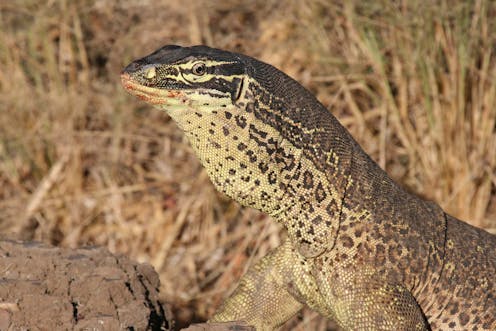
During a rat eradication program in the Montebello Islands, one goanna species was seen eating poisoned rats – without apparent ill effect – to the point that the green dye used in the bait was visible in their droppings. Unfortunately, this species of goanna is an important traditional food in Indigenous communities throughout Australia. To make matters worse, these poisons usually build up in commonly eaten parts of the goannas, like fat and liver tissue.
The risks associated with sublethal human exposure to rodent baits are not well known. However, recent studies in some wildlife species show that even mild chronic exposure to the longer-lasting poisons can lead to dangerous changes in the immune system.
With so many unknowns in a potentially dangerous situation, more research is urgently needed. We need to know how often and how severely the reptiles that humans eat are exposed to poison. Otherwise, some Indigenous people may have to choose between losing traditional hunting practices and risking exposure to rat poison.
Poison in the food web
In our research, we reviewed all published examples of wildlife deaths from exposure to rat bait. We found that rat poison has killed members of at least 32 native wildlife species in Australia. There are probably many more; only a few studies have looked at this problem in Australia, compared with other parts of the world.
We found that a small species of owl called the Southern Boobook is exposed to rat poison frequently, and sometimes lethally, in developed areas of Western Australia. Scavengers and prolific predators of rodents are likely to be even worse off – and these predators include a variety of threatened or endangered species such as Masked Owls, Tasmanian Devils and various species of quolls.
Most deaths will occur far from the original bait, as the poison travels through other species in the food web to reach its final destination. Without a better understanding of how baits affect Australian predators, we are unlikely to appreciate the scale of this invisible threat.
Read more: Killing cats, rats and foxes is no silver bullet for saving wildlife
At present, powerful rat poisons are available at most supermarkets and hardware stores. The Australian Pesticides and Veterinary Medicines Authority is now reviewing how these are regulated because of concerns about human health and impacts on wildlife populations.
Other countries like the United States and Canada have already restricted the stronger poisons to licensed pest controllers. They have banned outdoor use and require lockable bait boxes to keep children and pets away from baits.
These steps might not be enough to overcome Australia’s unique risks, but allowing the current situation to continue is guaranteed to result in more poisonings of wildlife – and possibly unseen and unstudied effects on humans too.
Authors: Michael Lohr, PhD Student - Wildlife Ecology, Edith Cowan University


















