

Victoria may have eliminated COVID-19, but eradication is a distant dream
- Written by: Michael Toole, Professor of International Health, Burnet Institute
Today Victoria satisfied a common definition of elimination for COVID-19, recording its 28th consecutive day of zero new cases. While there is no international definition of elimination, two average incubation periods without community transmission is widely accepted as local elimination, especially in a geographically isolated country like Australia.
It’s a remarkable achievement following a severe second wave which peaked at daily new case rates of around 700 in early August. But elimination is not eradication, and we can expect the virus to return at some point, as has happened in several countries that previously boasted minimal or no community transmission.
So how did Victoria get here, and what can it do to keep numbers as low as possible?
Elimination is not eradication
There’s no universal definition of elimination. As applied to other infectious diseases such as polio and measles, it means a prolonged period of zero local transmission in a country or region. For measles, the World Health Organisation (WHO) is very exacting and demands no community transmission for 36 months.
With more than 500,000 new daily COVID cases being reported globally, preventing new local transmission in Victoria will depend on the state building a virus-proof defence.
Several countries have shown the virus can return after a long period of minimal local transmission. The most pertinent example is New Zealand, which experienced 102 consecutive days of zero community transmission before a cluster cropped up in Auckland on August 11. Israel, South Korea, Vietnam and Hong Kong have also experienced reemergence of the virus following significant periods of minimal community transmission. And this month, we witnessed a cluster in suburban Adelaide that originated in a quarantine hotel, after South Australia had experienced many months of no community transmission.
Indeed elimination doesn’t mean the virus is completely gone. For example, Australia eliminated local transmission of polio in 1972. But it wasn’t until 30 years later, in 2002, that the WHO declared Australia polio-free.
Almost 20 years after that declaration, we still can’t say we’ve eradicated polio because eradication refers to the global removal of a human pathogen; only smallpox has achieved that status. One strain of the polio virus continues to circulate in Afghanistan and Pakistan. In 2007, a 22-year-old student from Pakistan was diagnosed with polio at Box Hill Hospital in Melbourne’s East.
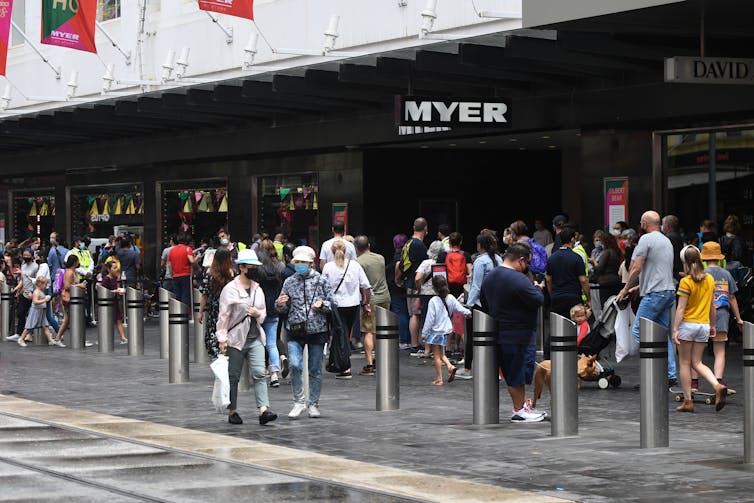 Victorians are now enjoying relative freedom as coronavirus restrictions eased significantly.
Erik Anderson/AAP
Victorians are now enjoying relative freedom as coronavirus restrictions eased significantly.
Erik Anderson/AAP
So, how did we get to zero?
Since the grim height of Victoria’s second wave in July and August, several coordinated interventions have eventually borne fruit. One of the most important was the strengthening of the test-trace-isolate-support system. While details are emerging during the parliamentary inquiry into Victoria’s hotel quarantine system, some of the features of this strengthening are known:
decentralisation through regional hubs and metropolitan public health units
increased engagement and involvement of communities, through programs aimed at public housing estates and local initiatives led by GPs and community health centres
adoption of “upstream” contact tracing, identifying contacts of index cases before they developed symptoms as well as after developing symptoms. In both groups, contacts of contacts were identified. This led to the rapid control of clusters such as those in Kilmore and Shepparton.
Other important initiatives included the joint federal-state Victorian Aged Care Response Centre, which eventually managed the explosive outbreaks in residential aged care facilities, and more effective infection prevention and control in health-care settings.
And there were the containment measures that kept people from intermingling. Stage 3 restrictions were reimposed on July 8, limiting the reasons people could leave home. A study published in early August found these restrictions averted between 9,000 and 37,000 cases. From July 23, masks were mandatory at all times outside the home. On August 2, stage 4 restrictions and a night curfew effectively shut down Melbourne. From then on, the number of new cases steadily declined.
Perhaps the greatest achievement of Victoria’s response was to maintain a strong health focus amid a chorus of criticism, much of it from Canberra or the Sydney-based media, pushing the “economy first” mantra. In fact, data show countries that managed to protect the health of their citizens have generally protected their economy more effectively.
Read more: Data from 45 countries show containing COVID vs saving the economy is a false dichotomy
How can we stay where we are?
The first requirement is an effective quarantine system for returned travellers. With cases surging globally, the proportion of travellers who are infected will increase significantly from the 0.7% reported between March and August. This will require arrangements that employ well-trained and adequately paid workers who are regularly monitored by infection control and occupational health and safety experts. The advance contact tracing, which will identify the close contacts of staff before they might test positive for the virus, announced by Premier Daniel Andrews would be a useful adjunct as long as confidentiality is assured.
Crucially, experienced teams of contact tracers must be on standby. They need to maintain the rigorous standards developed over the past few months and engage in simulation exercises that test their capacities. They must retain a focus on community trust and avoid the vilification of individuals that marred the South Australian response.
What’s more, the state must sustain proven containment measures such as physical distancing, hand hygiene, masks indoors, and getting tested if you have symptoms.
Australia is an almost COVID-free oasis, surrounded by a tsunami of virus. Maintaining this status for the next six months or so, while at the same time opening up, will be a huge challenge. Recent responses in Victoria, NSW and SA suggest we are up to it.
And as the story of the sharp-eyed doctor in Adelaide showed us — when she tested a patient in the emergency room who’d initially felt “weak” but had very few COVID symptoms, alerting authorities to the previously silent spread of the virus — to maintain elimination we’re also going to need a little luck.
Read more: South Australia's 6-day lockdown shows we need to take hotel quarantine more seriously
Authors: Michael Toole, Professor of International Health, Burnet Institute


















