

six rules for improving city bus services
- Written by: Jason Byrne, Professor of Human Geography and Planning, University of Tasmania
Public transport that is safe, efficient and effective is a core priority when it comes to city-building. While trains get a lot of attention, buses can also deliver successful public transport services – if we can overcome some common problems.
Read more: Which transport is the fairest of them all?
Problems with bus services
The main issues arise because buses share roads with cars. This tends to reduce the efficiency of bus travel, unless given a dedicated corridor like trains. Road congestion leads to frequent stopping, long journey times and delays in passenger pick-up and drop-off. Other issues include limited off-peak service, poor-quality shelters and unreliable timetables.
None of these problems is insurmountable. With some clever planning and targeted investment, buses can play a key role in public transport. Planners call this “service-based network planning”.
Six principles for better service
Here we offer six principles for making buses better. Research shows that to meet people’s everyday mobility needs, such as dropping children at school, doing shopping, running errands and so on, bus services must be flexible, convenient, safe, reliable, efficient and integrated.
1. Flexibility is a key requirement. People need to be able to use buses for multiple trips – in succession. Rigid timetables and set routes can make buses less appealing and less effective.
New developments such as “on-demand” services and driverless buses offer the potential for better service delivery. For instance, Singapore intends that driverless buses will act as shuttles, funnelling people from neighbourhoods to rapid transit services.
 A rapid transit bus station in Curitiba, Brazil.
Mariordo/Wikimedia Commons, CC BY-SA
A rapid transit bus station in Curitiba, Brazil.
Mariordo/Wikimedia Commons, CC BY-SA
2. Convenience is also vitally important. Having to wait a long time, especially if it’s in scorching sun, drenching rain, chilly wind or alone in the dark, deters people from using buses.
Services must enable easy access and use, and must be priced fairly. Shelters should be comfortable, attractive and visible (not just glorified billboards).
The use of smart phone apps to request schedules, locate services, plan journeys, navigate the transport network – using real-time journey maps and multi-language platforms, for example – and pay for trips can improve convenience. When combined with flexible pick-up and drop-off locations (off-peak or at night), this can better integrate buses into our busy lives.
Flexi-fares (for demand management), “tap and go” payment systems, shopper or family passes, free on-board wifi and USB recharging ports can also improve convenience.
3. Passenger safety is related to the above point. Buses should be accessible to a wide variety of people, such as vision-impaired and mobility-challenged, and everyone should feel safe. Safety can be improved in many ways. These include co-locating park-and-ride facilities with neighbourhood shopping centres, schools, higher-density housing, recreation areas and other centres of activity, which maximises “passive surveillance”.
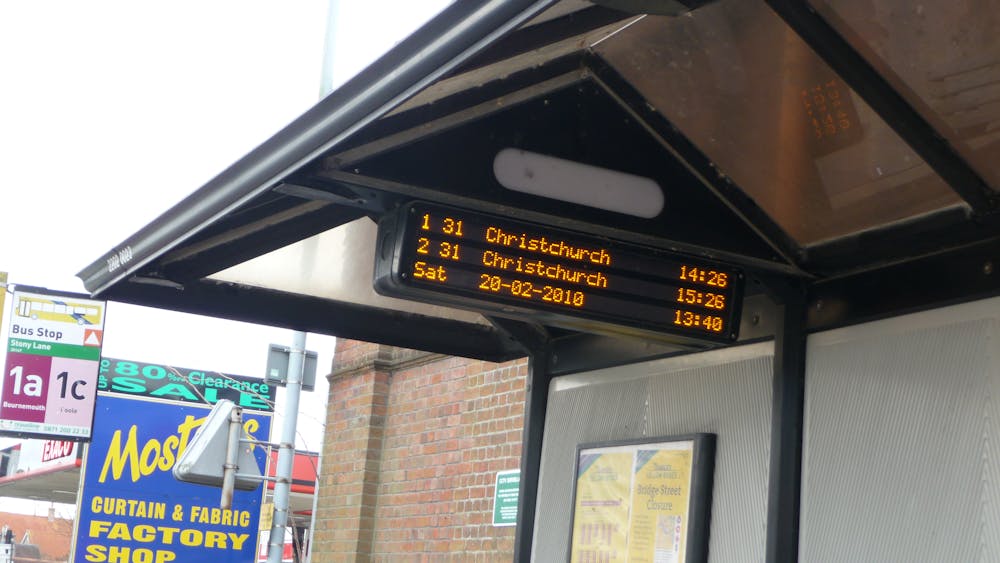 Purewell bus stop displays real-time information about services in Dorset, UK.
Arriva436/Wikimedia Commons, CC BY-SA
Purewell bus stop displays real-time information about services in Dorset, UK.
Arriva436/Wikimedia Commons, CC BY-SA
4. Reliability is an important requirement for people to use buses. Transit systems must be designed so the buses run on time. And many bus rapid transit systems around the world deliver fast and reliable services.
More than 40 cities now have rapid transit bus systems. These include Adelaide in Australia, Curitiba in Brazil, Seoul in Korea, Cape Town in South Africa, Ottawa in Canada, Los Angeles in USA, and Bogota in Colombia, which is among the largest by passenger volume.
Key here are measures such as dedicated bus lanes (e.g. the Brisbane Busway), peak-hour clearways, city clipper services (e.g. crosstown with limited stops), traffic signals that give priority to buses, and flexi lanes for peak demand. These can be paired with “real-time service” displays indicating the next available bus, and even congestion charging.
Read more: Delay in changing direction on how we tax drivers will cost us all
5. Efficiency is a key driver of public transport use and delivery. Many bus services are contracted (albeit with subsidies) so need to “pay their way”. Savings can be achieved by switching fuel (to biofuel or hydrogen, for example). Hybrid and electric bus fleets use less or no fuel.
Using all doors for boarding can reduce trip times, as can new seating configurations. Flexible payment options, using systems such as “tap and go”, can eliminate “fare fumbling”.
A simple measure to handle variable demand is versatile vehicle fleets. Examples such as Hong Kong’s light buses and the Swiss town of St Gallen’s high-capacity, bi-articulated trolleybus vehicles show this improved efficiency.
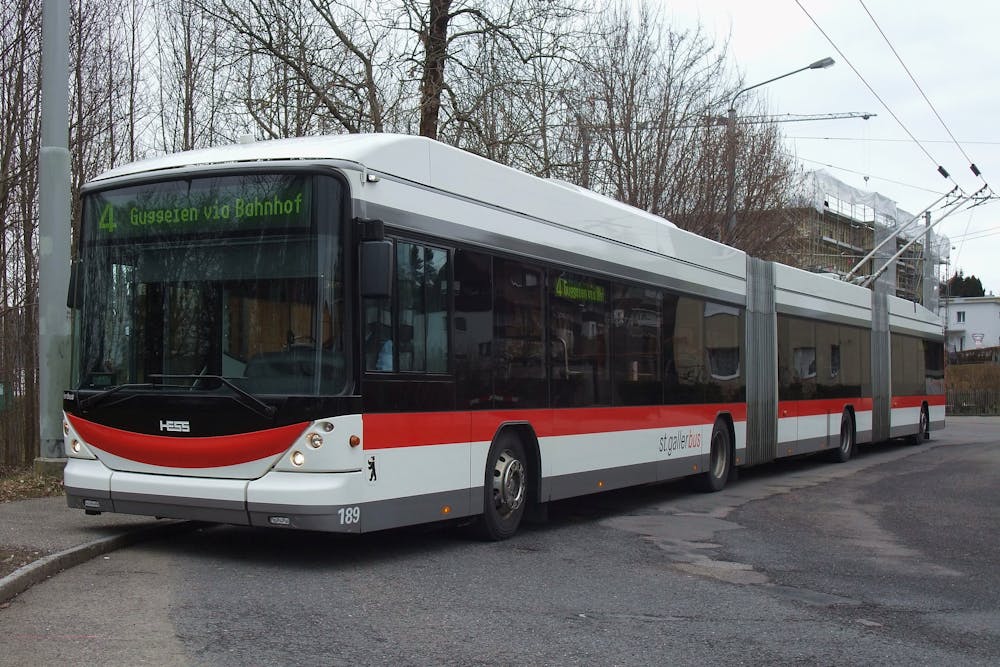 Jumbo double-articulated trolley buses operate in St Gallen, Switzerland.
Kecko/Flickr, CC BY
Jumbo double-articulated trolley buses operate in St Gallen, Switzerland.
Kecko/Flickr, CC BY
6. Network integration is crucial if buses are to work. This means passengers should be able to transfer easily between walking, cycling, private vehicles, car sharing (e.g. Uber), ferries, trains and other buses.
Fare systems should be designed for easy transfer. Transfers should be free or low-cost within set time periods.
And bus transit should be better integrated into cities. Initiatives such as transit-oriented development combine transport with housing, recreation, education, commercial activities and other land uses.
Read more: 'The 30-minute city': how do we put the political rhetoric into practice?
The future of bus transit
Of course, not all these solutions will work for every city. Smaller and midsize cities are arguably better positioned to take advantage of bus transit, though it works in larger metro areas too. For example, Guangzhou in China has bus rapid transit.
Not many cities can afford to implement these solutions all at once. While some commentators have suggested buses could soon be history, cities like Brisbane, Australia, are experimenting with hybrid bus transit systems. The vehicles and stations have the look and feel of light rail, but retain the flexibility of buses.
With careful planning and phased implementation, bus transit can help make cities healthier, more efficient and more sustainable.
Authors: Jason Byrne, Professor of Human Geography and Planning, University of Tasmania
Read more http://theconversation.com/dont-forget-buses-six-rules-for-improving-city-bus-services-94984




















