What will Australia's COVID vaccination program look like? 4 key questions answered
- Written by Allen Cheng, Professor in Infectious Diseases Epidemiology, Monash University
The Pfizer/BioNTech, Moderna and AstraZeneca/University of Oxford groups have all recently announced their COVID vaccine candidates have demonstrated high levels of efficacy in phase 3 trials. These developments have focused attention on how a COVID vaccine might be rolled out in Australia.
It’s important to emphasise these trials have not yet been completed, and we only have a few headline results. But the information we do have is promising, and pending scrutiny from the Therapeutic Goods Administration (TGA), it’s looking increasingly hopeful we’ll have several COVID vaccines available in Australia during 2021.
To make this happen, a lot goes on behind the scenes. Australia’s national strategy for the delivery of a COVID vaccine encompasses the whole process: from research and development, to purchase and manufacturing, to international partnerships, to regulation and safety, to administration and monitoring.
Here’s a summary of some of the things you might be wondering about how this all works.
1. Which vaccines will we get?
Currently, there are more than 200 vaccine candidates around the world, 48 of which are in clinical trials.
To ensure Australians will have access to COVID-19 vaccines, the federal government has established agreements with suppliers of four of the most promising vaccine candidates. The vaccines have been carefully assessed on advice from a Science and Industry Technical Advisory Group.
So far, the vaccines we’ve signed up to include the AstraZeneca/University of Oxford vaccine, the CSL/University of Queensland vaccine, the Novavax vaccine, and the Pfizer/BioNTech vaccine.
Read more: What do we know about the Novavax and Pfizer COVID vaccines that Australia just signed up for?
These agreements will only progress should the vaccines prove safe and effective, as assessed by the TGA, which will look at the quality of the vaccine, the degree of protection it offers, and its safety.
In addition to the four pre-purchase agreements, the federal government has signed up to the global vaccine initiative COVAX, which supports vaccines for all participating countries and grants us access to a range of additional leading candidates.
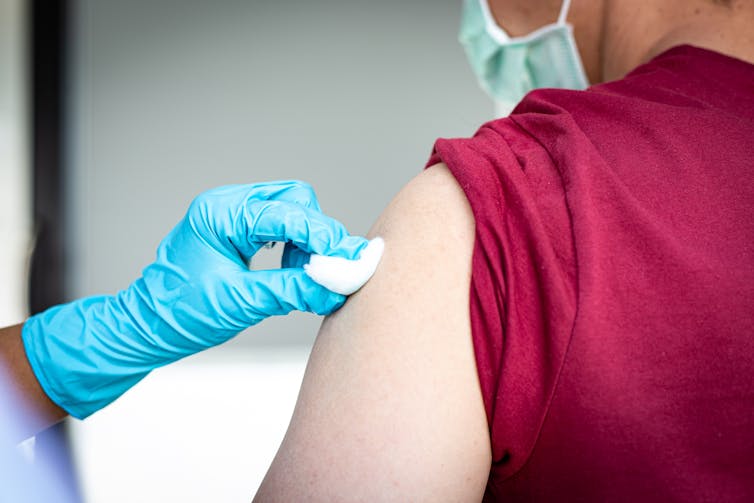 Trials are ongoing, but we may soon have an approved COVID-19 vaccine.
Shutterstock
Trials are ongoing, but we may soon have an approved COVID-19 vaccine.
Shutterstock
2. Once we get a vaccine, who will receive it first?
The intent is that a vaccine will eventually be available for anyone who wants to be vaccinated. But it’s likely the initial supply will be limited, so we’ll need to make decisions around which groups will receive the vaccine first.
This will depend on the characteristics of the available vaccines as well as principles we use to define priority populations. These include using vaccines in those who will benefit the most, ensuring equitable access, and reciprocity (the obligation to those who bear additional risks as part of the COVID-19 response).
Australia’s COVID-19 vaccination policy sets out target groups including people who are at higher risk of severe disease and death from COVID-19 (especially older people), those at greater risk of exposure and transmission (health-care and aged-care workers) and other essential workers required to maintain the functioning of society (such as police).
The exact priority order may depend on whether the vaccine works as well in older people, whether it protects against infection (and therefore transmission) or only severe disease, and where infections are occurring when vaccines become available.
3. How will people get it?
We’re likely to need a range of vaccination providers and sites to ensure timely access for the population.
Distribution may be complicated by different storage requirements — for example, the Pfizer vaccine needs to be stored at -70℃. While this might sound like a major hurdle, the Ebola vaccine required similar storage conditions and was successfully delivered in West Africa. But this is something we need to take into account.
People involved in vaccine distribution and administration will need additional training in the specifics of these new vaccines. This workforce will be crucial to a successful COVID-19 vaccine program, particularly if we need to set up additional clinics.
As it’s likely we’ll need two vaccine doses, keeping records on who has received a vaccine so reminders can be sent for the second dose will be important.
 Health-care workers may be among the priority groups to receive a COVID-19 vaccine.
Shutterstock
Health-care workers may be among the priority groups to receive a COVID-19 vaccine.
Shutterstock
4. How will we know if it’s safe?
Current clinical trials are including up to 30,000-40,000 participants, of which roughly half receive the vaccine.
Studies of this size are sufficient to identify common adverse events (like a sore arm or fever, which we’re seeing reported in some patients). But to pick up serious but very rare side effects, ongoing monitoring of vaccine safety will be important.
Existing national and state-based surveillance programs will monitor the safety of COVID-19 vaccines. For example, the AusVaxSafety system sends text messages to those who have received vaccines to check on side effects, and SAFEVAC is a network of experts who assess reports of adverse events and can provide clinical advice.
Using the Australian Immunisation Register to record COVID vaccinations will also be crucial to monitoring safety and effectiveness.
Read more: From adenoviruses to RNA: the pros and cons of different COVID vaccine technologies
Finally, we’ll need to communicate with the public about what we know, as well as the uncertainties, as a vaccine is rolled out. This involves identifying which groups need information, developing and disseminating evidence-based resources, and supporting health-care providers to facilitate discussions with patients. We’ll also need strategies to manage negative messaging and misinformation.
Although we provide millions of doses of the influenza vaccine each year, the COVID-19 immunisation program will be more complex than any other in Australian history. Considerable work is being done in preparation for the moment an effective and safe vaccine becomes available.
Authors: Allen Cheng, Professor in Infectious Diseases Epidemiology, Monash University