what people with disability told us about their experiences of disasters and emergencies
- Written by Michelle Villeneuve, Associate Professor, University of Sydney
Australians with disability are disproportionately affected by disasters such as fire, floods, cyclones and heatwaves. Yet we rarely hear their perspectives and insights on what’s needed to ensure they’re not left stranded when disaster strikes.
So in 2019 we hosted seven community engagement forums in four Queensland communities to find out more about the experiences of people with disability in emergencies. The 190 participants included 66 people with disability. Our research was published this week in the International Journal of Disaster Risk Reduction.
Out of the 66 people with disability we spoke to, only a handful had taken emergency preparedness steps such as:
- documenting instructions for support workers in an emergency
- holding household emergency meetings
- planning evacuation routes.
Australia has no nationally consistent standards to ensure access and inclusion of people with disability in disaster risk reduction. Too often, people with disabilities are left out of the conversation until it’s too late.
Our study participants with disability called for “disability-specific” training and tools (including funding) to help them build emergency preparedness plans.
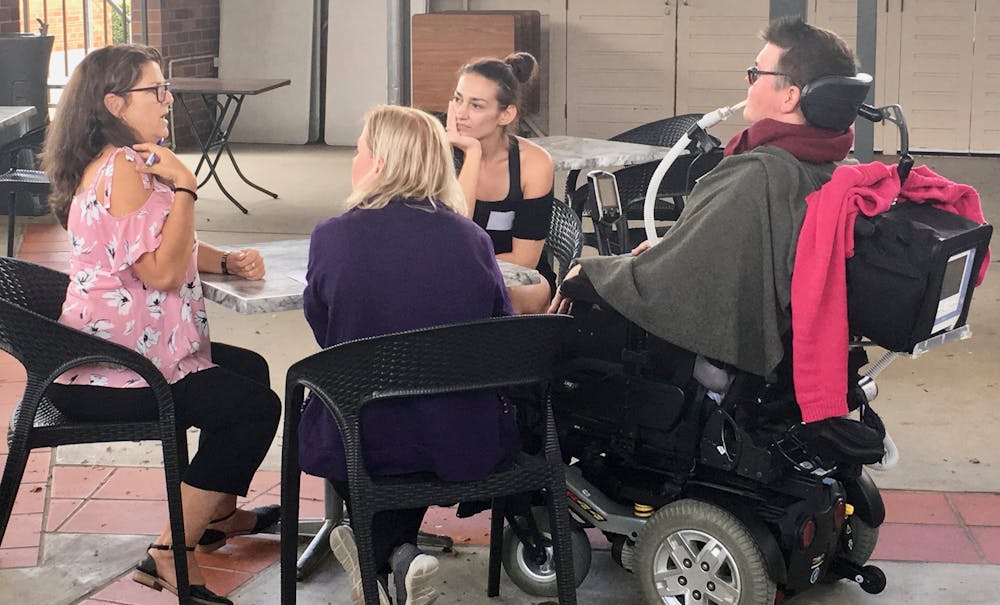 Australia has no nationally consistent standards to ensure access and inclusion of people with disability in disaster risk reduction.
Images provided by the Disability Inclusive and Disaster Resilient Queensland Project.
Australia has no nationally consistent standards to ensure access and inclusion of people with disability in disaster risk reduction.
Images provided by the Disability Inclusive and Disaster Resilient Queensland Project.
Preparedness builds confidence - but most ‘don’t have a plan’
For people with disability, having an emergency preparedness plan can help build confidence. One person observed:
I noticed that that person felt very confident about how things would progress if there was an emergency because she knew what she would take from her apartment. She had a circle of support around her who understood what her support needs were, and I just picked up on a really strong sense of security and confidence, actually, because it was probably the most fleshed-out plan that I heard.
Another said:
They’ve set themselves up as being self-sufficient, and they had basically emergency kits done up […] They basically had a DEB, a disability emergency bag, done up with the missing pieces. Now they’re prepared for it.
However, most participants with disability reported they “don’t have a plan”, acknowledging emergency plans are “in our heads”. Their plans tend not to have been formalised, communicated to others, or practised to see if they work.
 Most participants with disability reported they ‘don’t have a plan’.
Images provided by the Disability Inclusive and Disaster Resilient Queensland Project.
Most participants with disability reported they ‘don’t have a plan’.
Images provided by the Disability Inclusive and Disaster Resilient Queensland Project.
Research shows people with disability are two to four times more likely to die or be injured in a disaster than the general population.
They experience higher risk of injury and loss of property, and greater difficulty with evacuation and sheltering. They generally require more intensive health and social services during and after disasters.
Stigma and discrimination marginalise people with disability from mainstream social, economic and cultural participation. Distressing examples from our study in Queensland reinforced this. One person told us:
That [person] … he’s in a wheelchair. He’s got a unit in [area of town]. Don’t have family, he was under water. His carer was gone; and then we heard that he was there. So, they went over there, and they found him in the water sitting in his [wheel]chair by himself.
Another said:
That was our problem because we went five days, it’s just myself and my brother who has a learning disability, we were in the house for five days. Nobody checked on us.
Then the next person [I spoke to] didn’t feel any sense of community whatsoever. Felt totally isolated through the flood. Doesn’t live in town. Lives on acreage. Had challenges. Carers couldn’t get to him to look after him and the family. Immediate family had disabilities as well. And it would’ve been lovely if somebody had cared.
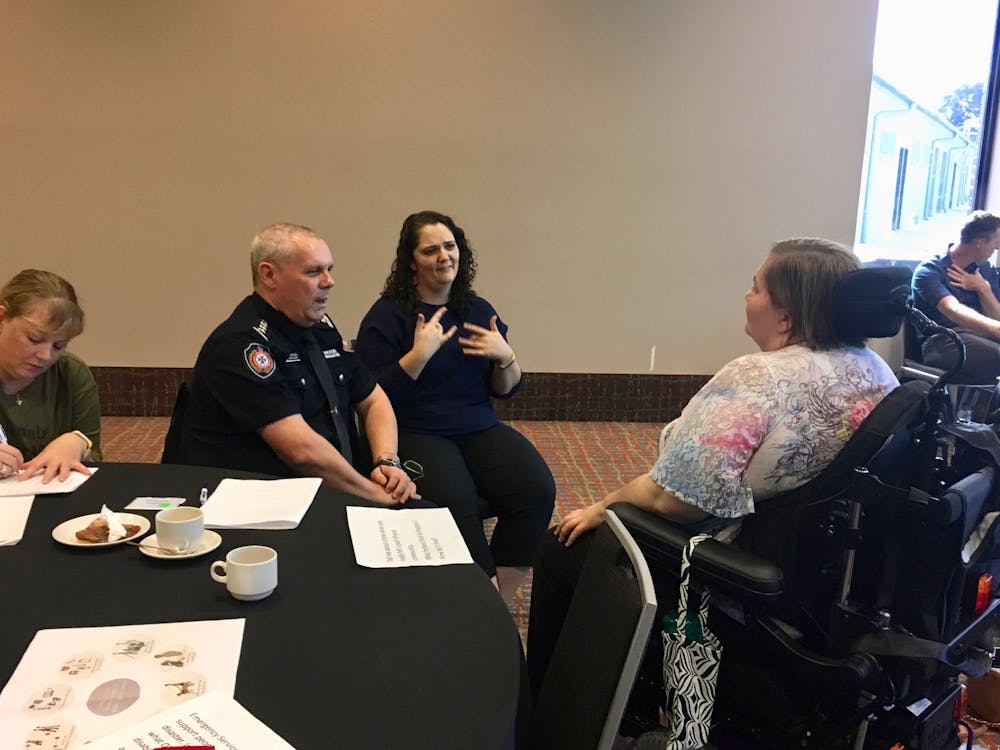 Research shows people with disability are more likely to die or be injured in a disaster.
Images provided by the Disability Inclusive and Disaster Resilient Queensland Project.
Research shows people with disability are more likely to die or be injured in a disaster.
Images provided by the Disability Inclusive and Disaster Resilient Queensland Project.
Excluded from community engagement
Despite facing disproportionate risk in emergencies, people with disability are often excluded from community engagement activities aimed at boosting self-reliance in a disaster.
A UN survey on disability and disasters found the majority of respondents with disability (85.57%) from 137 countries had not participated in community-level disaster risk reduction.
Only 20% were able to evacuate effectively, rising to 38% when appropriate information was available.
What did people with disability recommend?
First, people with disability want access to the same information others receive. As one interviewee said:
We do a lot of education. I just don’t think it’s tailored to people with disabilities, for sure it’s not.
Another said:
The other thing, which is an eye-opener for me as well, is that you tend to put disability in one group. But I spoke to three different people who had three different disabilities, and you realise that the communication has to be targeted. Because those three people required completely different things. And the information they got was not in a mode which they could use.
The Disability Inclusive Disaster Risk Reduction Framework and Toolkit provides direction for government and emergency services to get started on creating resources in formats people with disability can use.
Second, people with disability want “disability-specific” tools and training, to help them develop a personal emergency preparedness plan.
We worked with the Queenslanders with Disability Network to co-design the Person-Centred Emergency Preparedness Workbook.
The workbook is a four-step conversation guide that helps people with disability to:
- identify their strengths and support needs in everyday life
- know their level of emergency preparedness and learn about their disaster risk
- plan for how they will manage their support needs in an emergency
- communicate the plan with the people in their support network and address gaps through collaboration.
Are you an Australian resident living with disability or chronic health condition? The University of Sydney is carrying out a project supporting people with disability to prepare for, respond to and recover from an emergency event such as pandemic, bushfire, flood etc. The researchers are keen to know how prepared you are for an emergency, what you can do for yourself and what supports you need in an emergency. Complete an online survey here. If you prefer a telephone survey, please email your name and contact number to kcha8811@uni.sydney.edu.au
This article was co-authored by Michelle Moss, Director of Policy and Strategic Engagement at the Queenslanders with Disability Network.
Authors: Michelle Villeneuve, Associate Professor, University of Sydney