The Oxford/AstraZeneca vaccine is the first to publish peer-reviewed efficacy results. Here's what they tell us — and what they don't
- Written by Kirsty Wilson, Postdoctoral Research Fellow, RMIT University
The Oxford/AstraZeneca vaccine this week became the first major COVID vaccine candidate to have efficacy results from phase 3 trials published in a peer-reviewed journal.
The vaccine, AZD1222, is a viral vector vaccine. Researchers took an adenovirus from chimpanzees and modified it with the aim of training the immune system to mount a strong response against SARS-CoV-2 (the virus that causes COVID-19).
The Lancet paper confirms interim analysis AstraZeneca released last month showing the vaccine is safe and has an overall efficacy of 70% in protecting against symptomatic COVID-19.
Let’s take a look at these latest results — and why they’re important.
Safety first
The published article consolidated safety data across four human trials with 23,848 volunteers from Brazil, South Africa and the United Kingdom.
Only three people experienced serious adverse events (which were possibly related to the vaccine, but we don’t know for sure) over more than three months of follow-up. Each of these cases is recovering or has recovered.
While safety monitoring will be ongoing, this analysis gives us confidence the Oxford/AstraZeneca vaccine is safe.
Efficacy
The authors also analysed efficacy data for two of the above trials with a total of 11,636 participants. The follow-up period of the remaining two trials hasn’t yet been long enough to get a good sense of the vaccine’s efficacy — but this data will be coming.
Among the participants, there were 131 cases of symptomatic COVID-19. This included 30/5,807 (0.5%) in the vaccine group, and 101/5,829 (1.7%) in the control group. Based on the formulae researchers use to calculate how well vaccines work in clinical trials, this equates to an efficacy of 70%.
Of ten COVID-related hospital admissions, none were among the AZD1222 vaccine recipients — they were all people who received the placebo.
Although these numbers are small and will need confirmation with further data, this indicates the vaccine has strong potential to prevent severe COVID-19 disease.
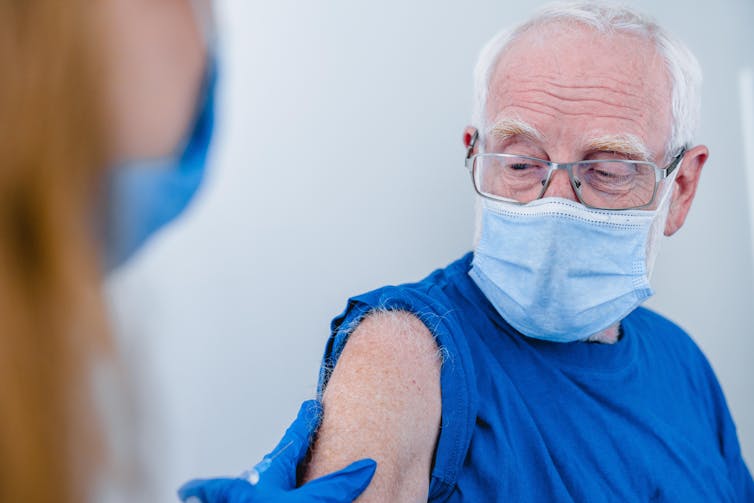 The study looked at the vaccine’s safety and efficacy at preventing symptomatic COVID-19.
Shutterstock
The study looked at the vaccine’s safety and efficacy at preventing symptomatic COVID-19.
Shutterstock
The dosing debacle
While 70% is the overall efficacy figure, we learnt in AstraZeneca’s interim analysis that there were actually two separate dosing regimens. Variation in dose measurement methods — widely reported to have been an error — meant some participants received half of the expected dose for their first of the two shots.
The latest analysis confirmed that for people who received the low dose initially, followed by the standard dose, the vaccine displayed 90% efficacy, compared to 62.1% in participants who received the full dose at both time points.
While this error appears to have had a positive outcome, it’s concerning that we don’t really understand why the regimen with the half dose worked better.
The full, higher first dose may have induced more antibodies that recognise the vaccine’s chimpanzee adenovirus components than the half first dose did, and it’s possible these “anti-vaccine vehicle” antibodies could have interfered with the efficacy of the booster dose. This is a recognised concern when using adenoviruses as vaccine components.
Alternatively, the Lancet authors speculate the low dose may have induced a different type of immune response that we are yet to know about. If this were the case, it could raise questions for other vaccine developers too about the way the immune system behaves.
Read more: How to read results from COVID vaccine trials like a pro
A unique candidate
It’s exciting the Oxford/AstraZeneca vaccine could potentially work comparably well to the other front-runners from Pfizer/BioNTech and Moderna, because this vaccine is one of the most practical vaccines to produce, store and distribute.
It only needs to be stored at 2-8°C — so in a normal fridge — compared to the mRNA-based vaccines, which need to be stored around -70°C.
It’s also the cheapest so far, at about US$4 a dose (roughly A$5), making it highly attractive for global deployment. Oxford/AstraZeneca has an agreement with the COVAX facility which will enable equitable access for countries who may not be able to afford the more expensive mRNA vaccines from Pfizer and Moderna.
 The Oxford/AstraZeneca vaccine would be easier than some of the other candidates to store and distribute.
Shutterstock
The Oxford/AstraZeneca vaccine would be easier than some of the other candidates to store and distribute.
Shutterstock
Australia has signed a deal to receive 3.8 million doses of the Oxford/AstraZeneca vaccine should it be approved for use. Meanwhile, biotechnology company CSL has been upscaling its manufacturing capacity for this vaccine, which will enable it to produce a further 30 million doses in Australia next year.
If a lower initial dose is recommended, this would also mean the available supply could be distributed to more people.
Some questions remain
One factor we still need to consider is the efficacy in older people (70 and above), as this age group is most susceptible to severe disease.
The current published efficacy results are mostly based on 18 to 55-year-olds. Although these trials do have older participants, they were recruited later, so collection of efficacy data for this group is ongoing.
A recent paper which looked at immune responses to the vaccine showed similar levels of antibodies across age groups (18-55, 56-69, and >70), which is encouraging. So it will be interesting to see efficacy results in older people as they become available.
Read more: Why the Oxford AstraZeneca vaccine is now a global gamechanger
Publication in a peer-reviewed journal means the data has been evaluated by expert independent reviewers whose job is to find any holes or problems. With this, the Oxford/AstraZeneca data now becomes more credible to the scientific community.
The data will likely encourage developers to move rapidly to request regulatory approvals for this vaccine, while awaiting further analysis on efficacy — and, importantly, how dosage affects this vaccine’s efficacy.
Authors: Kirsty Wilson, Postdoctoral Research Fellow, RMIT University