

Gas cooking is associated with worsening asthma in kids. But proper ventilation helps
- Written by: Ian Musgrave, Senior lecturer in Pharmacology, University of Adelaide
“You’re cooking with gas” is a familiar term associated with doing the right thing and doing it well. But is cooking with gas doing the wrong thing for our health?
Increasing evidence suggests cooking with gas may make asthma worse in children. However, proper use of range hoods could reduce that risk.
What’s in gas?
Gas is excellent for cooking — it switches on in an instant and is easily adjustable.
But burning gas produces a variety of byproducts, some relatively benign and some not so benign for human health. And that’s without even considering the wider health effects of climate change, to which burning fossil fuels such as gas is the major contributor.
Read more: 'Unjustifiable': new report shows how the nation's gas expansion puts Australians in harm’s way
The natural gas supplied to domestic appliances such as stoves is almost all methane, with traces of other hydrocarbons such as ethane and some nitrogen and carbon dioxide (CO₂).
Natural gas burns very efficiently, as you can see from the blue, non-smoky flames on your cooktop. The process releases CO₂ and water, with traces of other gases.
For every kilogram (1,000 grams) of CO₂ produced from burning natural gas, 34g of carbon monoxide, 79g of nitrogen oxides and 6g of sulfur dioxide are also released. Several studies have found formaldehyde is released too, but I couldn’t find any studies that stated how much.
Burning gas also releases microscopic particles of soot, often referred to as PM2.5 (particulate matter less than 2.5 micrometres in diameter). Cooking with gas stovetops produces twice as much PM2.5 than electric stoves.
Gas is much cleaner to burn than coal. Coal burning typically produces 125 times as much sulfur dioxide as gas, and around 700 times the PM2.5 levels.
There’s a link with asthma in kids
But while a gas stove is much less polluting than a coal fire, some of the emissions can nevertheless accumulate in the home, and potentially have significant health effects.
Nitrogen dioxide and PM2.5 particles in particular are associated with poor health. PM2.5 particles are released by bushfires, diesel exhaust and wood-burning heaters, among others. They get deep into the lungs, and the toxins carried on the particles get absorbed into the blood stream.
Read more: 'Like having a truck idling in your living room': the toxic cost of wood-fired heaters
It’s not clear whether gas stoves are a significant likely cause of health problems, because households have many other potential sources of indoor pollution too. Many homes use gas heaters, which generate similar emissions to stoves, and there are multiple sources of formaldehyde other than natural gas combustion (such as furniture, adhesives and carpets).
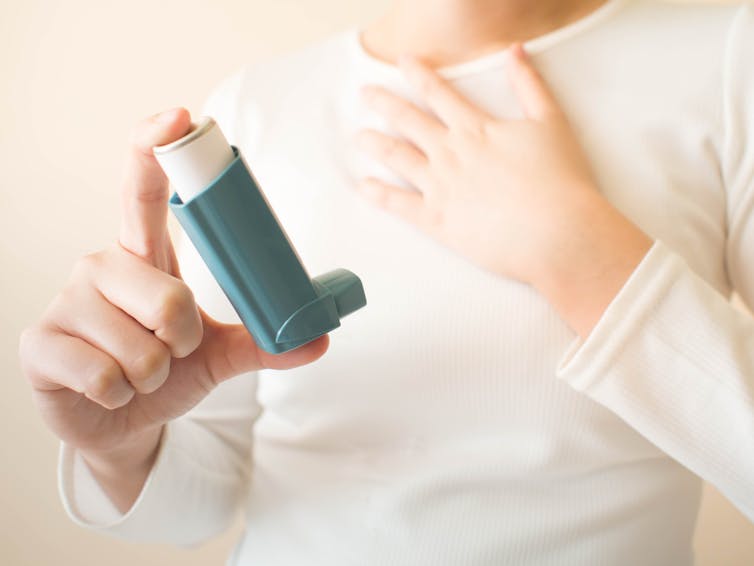 Evidence is mounting that gas stove use is associated with an increased risk of asthma in children.
Shutterstock
Evidence is mounting that gas stove use is associated with an increased risk of asthma in children.
Shutterstock
Untangling the health effects of gas stoves is therefore very complex. Because nitrogen dioxide and PM2.5 particles have a marked effect on breathing, a substantial amount of research has been directed to asthma.
The effects on gas stoves of adult asthma isn’t clear. A large study using the US Third National Health and Nutrition Examination Survey found no association between gas stove use and respiratory problems. A review of 45 epidemiological studies showed no consistent effect of gas stove use on respiratory health in adults.
But there is stronger evidence of effects on child health. One population study in the Netherlands showed gas cooking was correlated with increased risk of asthma in children. This study used meta-analysis, a statistical analysis that combines the results of multiple scientific studies to improve the detection of associations. The authors concluded:
children living in a home with gas cooking have a 42% increased risk of having current asthma, a 24% increased risk of lifetime asthma and an overall 32% increased risk of having current and lifetime asthma.
A US study showed gas cookers increase the amount of nitrogen dioxide inside the home and increased the use of night-time inhalers by children with asthma. But paradoxically there was no increase in asthma symptoms.
A 1980s study of children in six US cities found a strong association with smoking in the home and respiratory issues, but no such association with gas stove use.
But an Australian study in the Latrobe valley of 80 households with children between 7 and 14 years old showed an association between gas stove use and asthma. Children from households with gas stoves were around twice as likely to be diagnosed with asthma as children from households without gas stoves. However, this study couldn’t show whether gas stove use caused asthma. The authors suggested the nitrogen dioxide exposure may increase sensitivity to allergens.
Another Australian study, from 2018, gives an estimate of how strong the risk is (as opposed to the association).
It used modelling to determine the proportion of asthmatic Australian children whose asthma could be attributed to exposure to gas stoves. It used the prevalence of asthma in Australian children, the prevalence of gas cooking in Australia, and the risk from the Netherlands meta-analysis of asthma association with gas stoves described above.
The authors estimated 12.3% of the asthma in children who were exposed to gas stoves was due to the stove exposure itself.
Again, this analysis cannot say whether gas stove exposure caused asthma, or exacerbated existing cases.
Can we reduce the risk?
Almost certainly. Good ventilation will reduce levels of nitrogen dioxide and PM2.5 particles in your home.
Most modern houses are better insulated than the draughty homes of my youth, but better insulation means more accumulation of household pollutants. Fortunately, many modern homes also have modern stoves with a range hood. If properly installed, this will exhaust the nitrogen dioxide and PM2.5 particles. But the key issue is having them installed properly and using them — a hood that isn’t turned on won’t remove these pollutants.
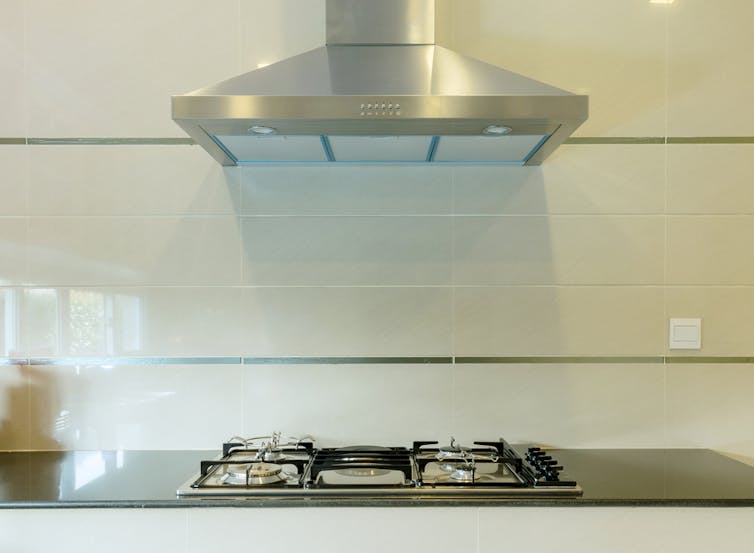 When used, range hoods can be effective at reducing particles released when cooking with gas.
Shutterstock
When used, range hoods can be effective at reducing particles released when cooking with gas.
Shutterstock
The 2018 study on the prevalence of gas cooking in Australia found using a high-efficiency range hood could reduce the risk of childhood asthma due to gas stoves from 12.8% to 3.4%.
However, it also found 44% of people in Melbourne with range hoods said they didn’t use them regularly.
Even if you don’t have access to a range hood, improving natural airflow in houses will not only reduce the products of gas burning that are associated with asthma, but will also reduce other household pollutants with overall health benefits.
Read more: 5 tips for ventilation to reduce COVID risk at home and work
While there’s no need to rip out your gas stove, you can certainly take simple actions to reduce the risk, particularly if you have children or if anyone in your home is asthmatic.
And when it comes time to replace the stove, consider a non-gas appliance as it will have fewer health implications and reduce your carbon footprint too.
Authors: Ian Musgrave, Senior lecturer in Pharmacology, University of Adelaide


















